
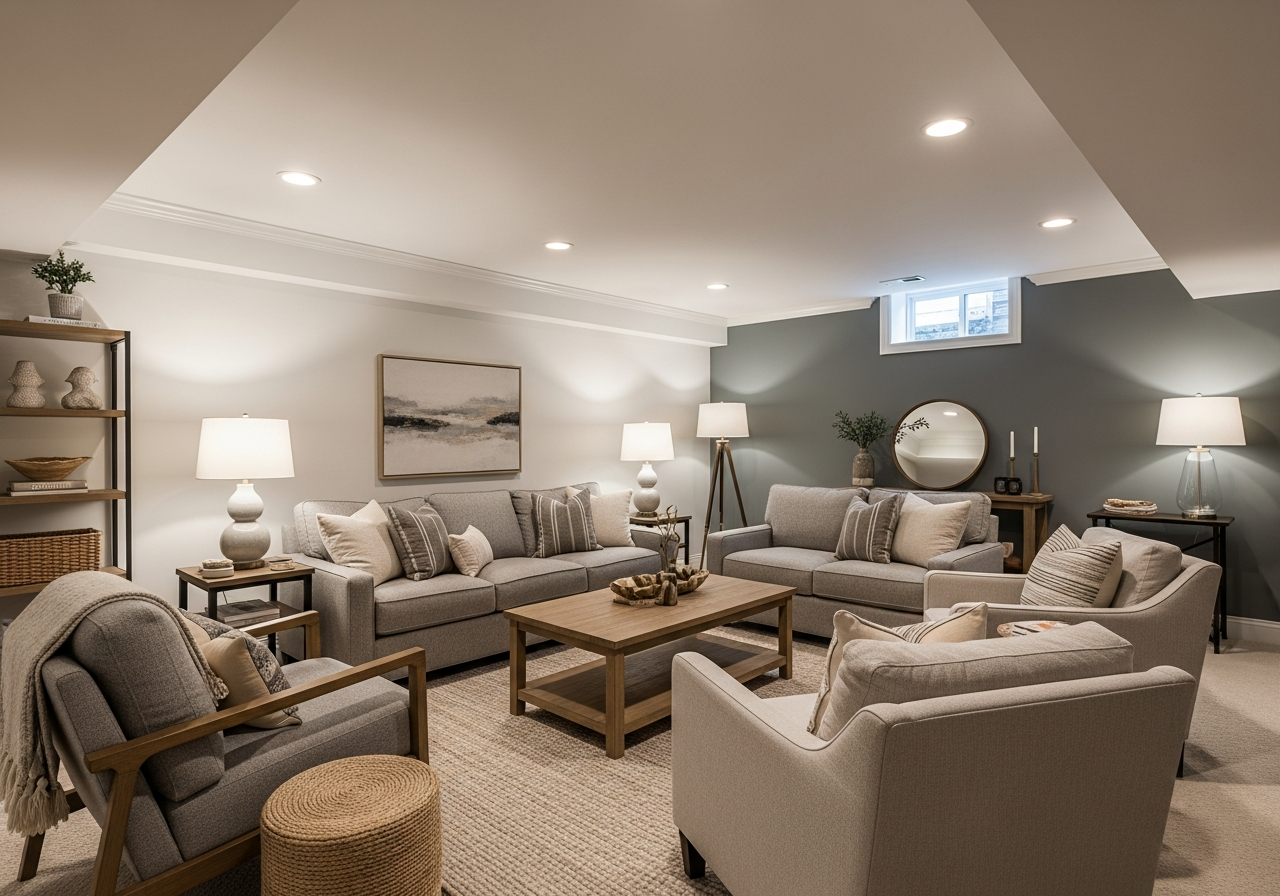

What Makes Basement Family Room Paint Colors Different
Basement family rooms face unique challenges that make choosing the right paint color more complicated than in other parts of your home. Unlike upstairs rooms bathed in natural sunlight, basements often have low light or no windows at all. This lack of natural light means colors can look different, sometimes dull or flat.
Another key factor is moisture and humidity. Basements tend to be damper, which can affect paint durability and finish. Picking the right type of paint along with the right color helps avoid problems like peeling or mildew build-up.
How the ceiling looks also matters. Paint color affects the perceived height of a room, making a basement feel taller or more cramped. Since most basements have low ceilings, choosing the color to make the ceiling appear higher can improve comfort and space perception.
Lastly, the kind of artificial lighting in a basement—whether warm or cool—impacts how paint colors show up. Some colors might look perfect in daylight but change dramatically under LED, fluorescent, or incandescent lights.
Understanding Light Reflectance Value (LRV)
Light Reflectance Value, or LRV, measures how much light a paint color reflects. It’s a number from 0 to 100, where 0 absorbs all light, making the color very dark, and 100 reflects all light, making it very bright. In basements, a higher LRV means the room looks brighter and more open without extra lighting.
For basement family rooms, an ideal LRV is usually between 50 and 80. Colors in this range help reflect enough light to brighten the space, yet not so bright that they feel stark or clinical. Using paint colors with an LRV below 50 can make the basement feel smaller and darker, which isn’t usually desirable.
Common Basement Lighting Challenges
Most basement rooms have at best small windows and sometimes none at all. That limited natural light means walls can appear dull or shadowed. Relying heavily on overhead lighting—such as recessed lights or ceiling fixtures—is common, but these lights cast focused or harsh shadows depending on their placement.
The lack of natural sunlight also causes colors to shift. What looks soft and warm outside might look cold or flat indoors under artificial lighting. For these reasons, picking basement paint colors requires careful attention both to natural and artificial light sources.
Top Light Paint Colors for Basement Family Rooms
Light colors can transform a basement family room, making it feel open and welcoming despite low light. These shades bounce whatever light is available around the room, counteracting any darkness or gloom.
Starting with whites and off-whites that have warm undertones adds softness and avoids a sterile look. Whites with too much blue or gray can feel cold in a basement’s low light. Some of the best whites have subtle cream or beige tones that complement cozy lighting.
Soft grays are another excellent choice. These hues offer a neutral backdrop without feeling harsh or chilly. The right gray brings understated elegance and pairs well with furniture and decor in darker or brighter colors.
Pale neutrals that blend gentle beige, taupe, or greige offer subtle color while keeping the space feeling light and fresh. They provide just enough variation to keep walls from looking washed out.
Warm Whites That Work
Benjamin Moore White Dove has an LRV of 85, making it a favorite for basement rooms. Its warm undertones brighten a space while adding an inviting creaminess that feels far from stark.
Sherwin-Williams Alabaster is another warm white option with an LRV of 82. It’s soft and clean, helping boost natural light and harmonizing beautifully with most flooring and furnishings.
Versatile Light Grays
Benjamin Moore Revere Pewter, with an LRV of 55, is a popular light gray that reads as warm and approachable rather than cold. Its slight brown undertones are perfect for giving basement rooms subtle depth without overpowering.
Sherwin-Williams Agreeable Gray offers an LRV of 60 and is a perfect choice when you want color but don’t want it to dominate. It’s balanced and pairs well with nearly any accent color or natural light condition.
Bold and Dark Basement Family Room Paint Colors
Dark colors in basement family rooms can work surprisingly well, turning a potentially gloomy space into a cozy, stylish retreat. Instead of fighting the basement’s naturally cave-like feel, embracing darker shades adds drama and a sense of peace.
Deep hues help make a space feel intimate and inviting. They absorb light rather than reflect it, but with smart lighting design, the room can maintain a warm ambiance. Dark paints work best in basements with adequate artificial lighting or when paired with lighter trim and furnishings to balance their strong presence.
Choosing the right dark color is essential. Classics like deep navy, charcoal gray, rich chocolate, or earthy greens often give the basement a sophisticated look. These colors bring out textures in fabric and woodwork, making the room feel layered and comfortable.
Before painting, test samples on walls under both daylight and evening lighting. This will show you how the color changes and help ensure it feels right all day long.
Accent Walls and Creative Painting Ideas
Using an accent wall in a basement family room offers a way to add bold color without overwhelming the space. This method creates a focal point and highlights architectural features like a fireplace, built-ins, orTV area.
Consider teal, deep plum, or olive green for an accent wall. They contrast well with light colors elsewhere and add visual interest. Another creative approach is using wallpaper or textured paint on just one wall to add character.
Painting the ceiling a lighter color than the walls can help open up a basement family room, while a darker ceiling can create a cocoon-like feel. Be mindful to keep the ceiling color related to the wall color to avoid visual clash.
Trim and molding painted in crisp white or a complementary neutral shade can brighten edges and bring polish to your decorated space.
Choosing the Right Finish and Paint Type
The finish of paint impacts how the color looks and how well it holds up in a basement’s humidity. Flat or matte finishes hide imperfections well but may not be as moisture-resistant.
Eggshell and satin finishes offer a nice compromise. They have a soft sheen, making rooms feel cozy but are easier to clean and handle moisture better than flat finishes. Semi-gloss can be useful for trim, doors, and high-traffic areas.
Using paints designed for damp areas, often labeled “mildew-resistant” or “bathroom paints,” helps reduce mold and mildew growth over time. These paints add protection important for basement environments.
How to Test and Choose Your Basement Paint Colors
Testing paint colors in your basement space before committing is crucial because lighting and surroundings can change how colors appear. Paint several large test patches on different walls and observe them throughout the day and evening.
Use large samples because small swatches can be misleading. Look for changes in undertone and brightness under artificial lights. Consider how the paint plays with your furniture, flooring, and décor.
If you’re unsure between similar colors, paint strips of both next to each other, then live with them for a few days. This helps you decide without guesswork.
Conclusion
Basement family room paint colors require careful selection to handle low light, moisture, and space-shrinking effects. Light colors with the right level of warmth and LRV brighten and open the space. Dark colors bring warmth and coziness when balanced with good lighting.
Focus on paint types that resist moisture and choose finishes that fit your room’s wear-and-tear. Test colors thoroughly under your basement lights and with your furnishings before committing. This approach ensures your basement family room feels bright, fresh, and comfortable for years to come.