

How to Choose the Best White Paint Color for Living Room Walls
Picking the right white paint for your living room is more than just grabbing the brightest can on the shelf. Different whites carry unique undertones that can change how your space feels and looks. The wrong white might make your room feel cold or dull, while the right one opens up the space with warmth and light. This guide will help you understand those subtle differences so you can choose the perfect white for your walls. You’ll learn how light, room direction, and your existing furniture all play a part in finding the best white paint color for your living room.
1. Why the Best White Paint Color for Living Room Matters More Than You Think
That “simple white” you picked might be why your living room feels cold, yellow, or just plain wrong. White paint isn’t just white—it has different undertones that affect your room’s mood and how light bounces around. If you don’t pay attention to these subtle hints, you might end up with a color that clashes with your décor or makes the space feel smaller or uneven.
The Science of White Paint Undertones
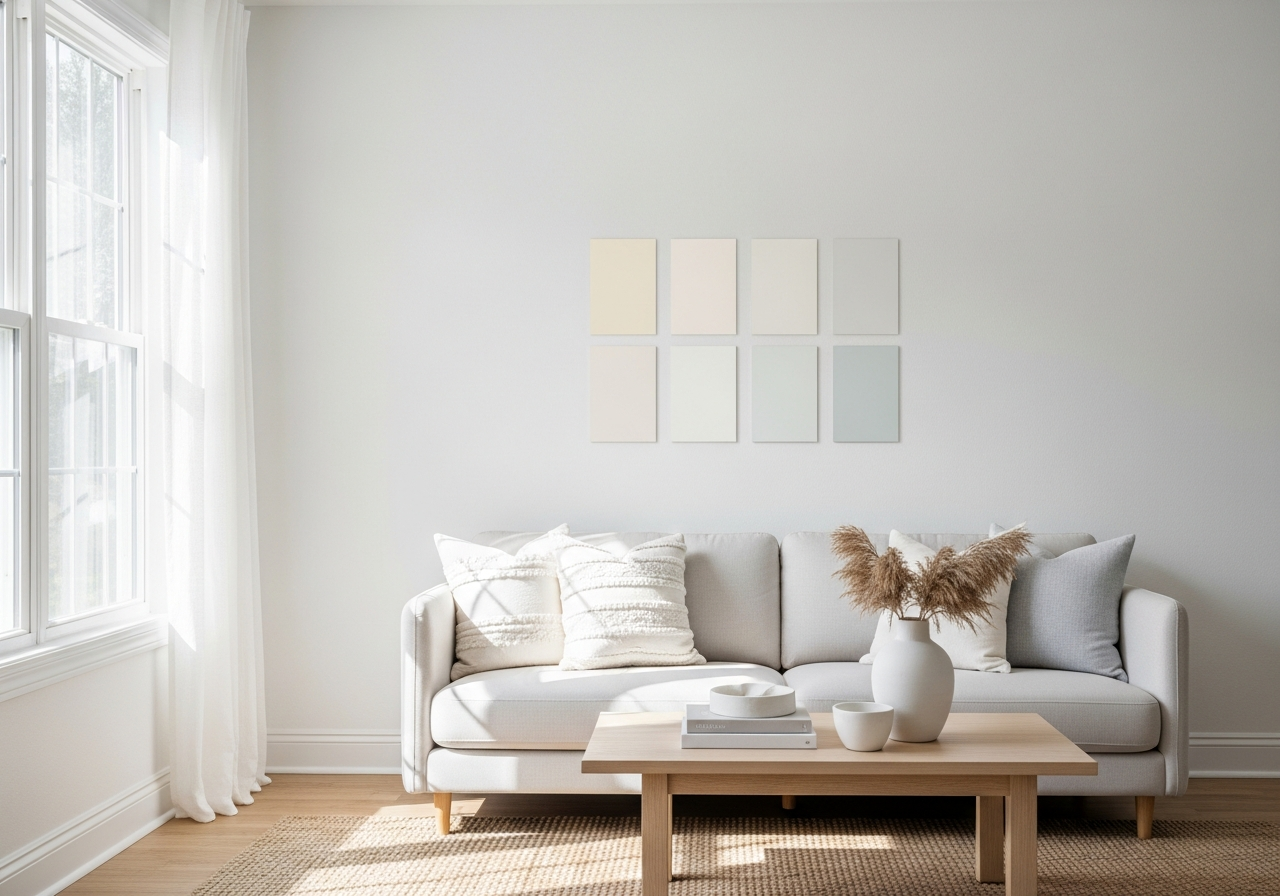
White paint can have undertones like blue, pink, yellow, or gray. These tiny hints change the way white looks in your room. For example, a white with blue undertones tends to feel cooler and more modern, while a yellow undertone warms the space and feels inviting. Some subtle undertones might even go unnoticed at first but can strongly affect the overall atmosphere once the paint dries.
How Room Orientation Changes Everything
Where your living room faces matters a lot. North-facing rooms get cooler, indirect light, which can make whites feel chilly or gray. These spaces often benefit from warm whites that add coziness. South-facing rooms get strong, warm sunlight, making cool whites appear fresh and crisp. East and west rooms change throughout the day, so the white paint you choose must work well in different lighting. That makes testing paint in your room essential before deciding.
Natural light also shifts the way paint looks. White can appear brighter or duller depending on the time of day and even season. This makes it tricky to trust paint chips you see at the store, since they rarely reflect your room’s real lighting. It’s best to get samples and observe them on your walls over several hours.
Finally, your furniture and décor play a huge role. A clean, bright white might work beautifully in a minimalist room but could clash with beiges, browns, or bold colors. Matching your white paint to your room’s style and colors helps everything look balanced and intentional.
2. Breaking Down White Paint Categories: Warm vs Cool vs True Neutrals
Not all whites are created equal—some make your room cozy, others make it feel like a hospital. Understanding the main types of white paints helps you pick one that fits your space perfectly. Warm whites bring softness and comfort, cool whites feel crisp and modern, and true neutrals provide a safe, balanced look. Below is a breakdown of these categories and how to spot the differences.
Warm Whites for North-Facing Rooms
Warm whites have undertones of yellow, peach, or red. They add a gentle glow and make spaces feel inviting. These are perfect for north-facing rooms that don’t get much sunlight because the warmth compensates for the cooler, blue daylight. Using warm whites helps avoid a dull or icy feel in areas that naturally lack warmth.
Cool Whites for South-Facing Spaces
Cool whites lean towards blue or gray undertones. They brighten spaces flooded with warm sunlight, creating a crisp and clean look. These whites are great for south-facing rooms where the intense light can already feel warm, balancing the lighting and giving a fresh, airy vibe. However, cool whites can feel harsh in rooms with limited natural light or furniture with warm tones.
Neutral Whites That Work Anywhere
Neutral whites have very subtle or balanced undertones, making them the most flexible choice. They neither tilt warm nor cool, which helps them blend well with almost any color scheme or lighting condition. Neutral whites are a reliable choice if you want a versatile backdrop that won’t clash with décor or shift drastically throughout the day.
Quick test to identify undertones:
- Look at the paint next to white paper—if it looks yellow, warm undertones are present.
- If it appears a bit blue or gray, it likely has cool undertones.
- Neutral whites will be hard to distinguish from the plain white paper, as their undertones are subtle.
- Check how the paint reacts in different lighting throughout the day.
3. Top 7 White Paint Colors Professional Designers Actually Use
Skip the guesswork—these are the exact whites that show up in million-dollar home renovations. These paints have earned praise for being versatile, flattering, and easy to coordinate. Each has its own character, so you can find a white that fits your style and space.
- Benjamin Moore White Dove: A warm, soft white with subtle undertones. It’s warm without leaning too yellow, making it a top designer favorite for living rooms needing a cozy feel.
- Sherwin Williams Pure White: A clean, bright white that leans slightly cool. It’s perfect when you want your walls to pop without feeling too stark or cold.
- Farrow & Ball All White: A true neutral white with almost no undertones. It offers a smooth, natural look that works well with a wide range of furniture styles.
- Benjamin Moore Cloud White: A soft, creamy white with warm undertones. It’s a gentle alternative to pure white, adding warmth while staying fresh and light.
- Behr Swiss Coffee: A budget-friendly warm white with creamy undertones. It adds richness to a room without overwhelming the space and pairs well with traditional and rustic décor.
- Sherwin Williams Alabaster: A warm, classic white with subtle yellow undertones. It creates a welcoming atmosphere and coordinates well with both modern and classic furniture.
Conclusion
The best white paint color for living room walls depends on your room’s light, orientation, and décor. It’s all about choosing the right undertones—whether warm, cool, or neutral—that work best with your unique space. Avoid relying on store swatches; instead, test samples in your room during different times of day.
Start by identifying your room’s direction and lighting quality. Next, consider your furniture and style preferences to narrow down warm, cool, or neutral whites. Finally, paint test patches on your walls and observe how they look throughout the day before making your final choice.