

Choosing the Right Paint for Living Room and Kitchen Areas
Your living room and kitchen take a lot of wear and tear every day. From cooking splatters to kids’ fingerprints, these rooms need paint that not only looks good but can stand up to regular activity. Picking the right paint helps keep your home feeling fresh, bright, and cared-for without having to redo everything too often.
Living rooms are generally about comfort and style, while kitchens need paint that can resist moisture, stains, and scrubbing. These different needs shape which paint formulas and finishes work best in each space. Understanding the limits and strengths of paint finishes will help you get both beauty and durability.
Paint Finishes That Work Best
For living rooms, paint finishes like eggshell and satin are great choices. Eggshell has a subtle shine that hides imperfections well, making walls look smooth without reflecting too much light. Satin, a bit shinier than eggshell, can stand up nicely to wiping down, which helps in homes with kids or pets.
Kitchens demand a little more toughness because of grease, steam, and spills. Semi-gloss finishes are popular here because they are easier to clean and resist moisture better than flat or matte paints. This finish also highlights architectural details, adding a nice touch of brightness to cabinets and trim.
Understanding Paint Quality Levels
When it comes to paint brands, you’ll find budget and premium options on the market. Cheaper paints may seem like a good deal, but they often sacrifice pigment quality and coverage. This means you might have to apply extra coats, which ends up costing more time and effort.
Premium paints usually contain higher-quality ingredients that stick better and last longer. They resist fading, stains, and mold, especially important in kitchens. It’s wise to save a little and invest in premium paint for these busy rooms because of the long-term protection and easier maintenance it provides.
Realistically, you can save money by using standard-quality paint in less active parts of your living room and reserving premium paint for walls near doors, windows, or kitchen surfaces. This approach balances cost with durability.
Color Selection Framework for Open Floor Plans
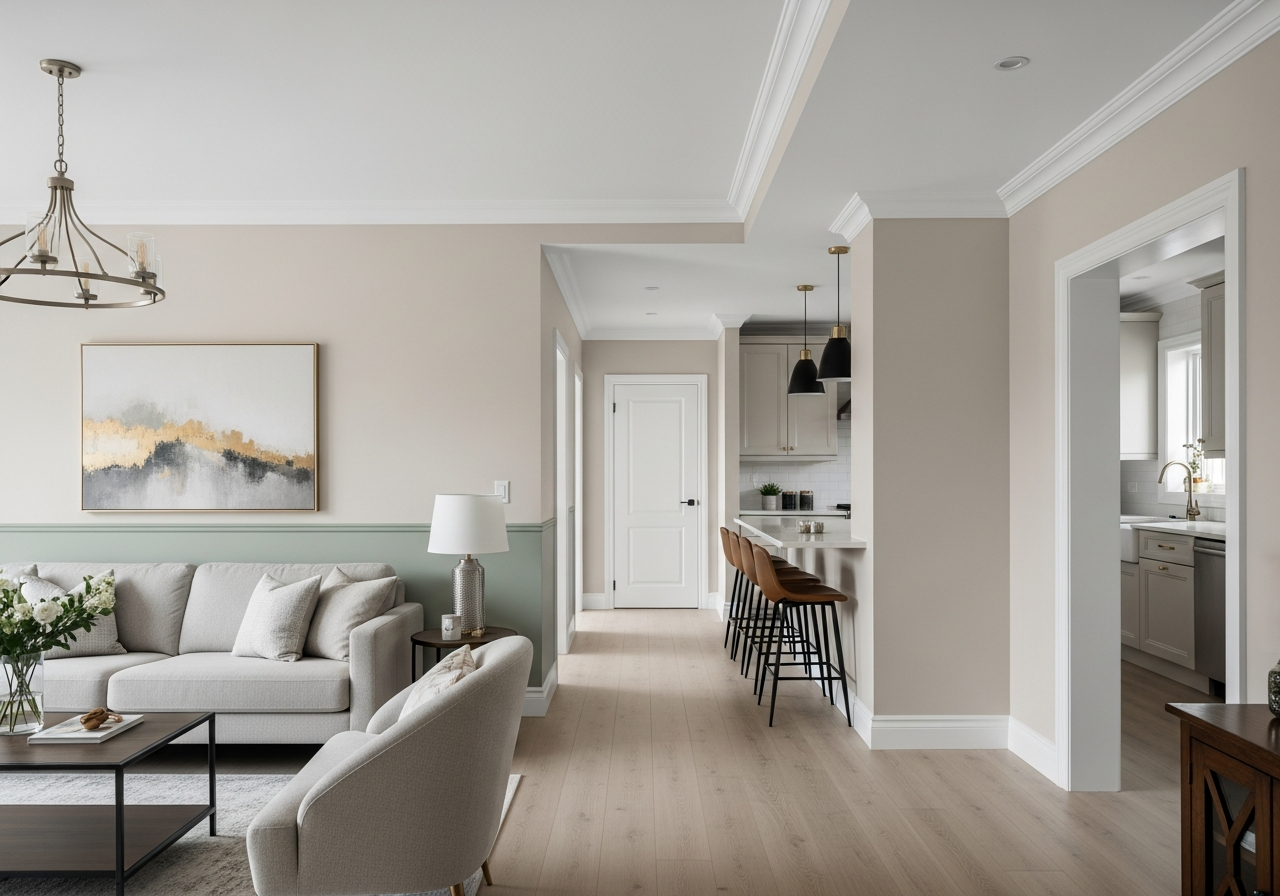
Open plans are great because they give your home a spacious, airy feel. But when the living room blends into the kitchen, choosing paint colors carefully helps the whole area feel connected instead of chopped up. Using a color plan keeps the flow smooth and makes the space appear larger.
The 60-30-10 rule is a simple guide to creating a balanced color scheme. Pick one main color for about 60% of the space—this usually goes on walls. Then use a secondary color on about 30%, like furniture or flooring. Finally, add a third color that makes up the remaining 10%, usually in smaller accents like pillows, art, or kitchen backsplashes.
Neutral tones work well as your base because they don’t overpower adjoining areas. Shades of warm beige, soft gray, or creamy white create calm backgrounds that blend nicely with cabinets, counters, and flooring.
To keep the rooms feeling connected, pick colors that naturally follow one another. For example, if your kitchen has dark wood cabinets, a nearby living room wall in a tone that complements that wood—like a warm taupe or muted green—ties the two spaces visually.
Popular Color Combinations That Always Work
Warm neutrals paired with whites are classic and inviting. Soft tan walls with crisp white trim and kitchen cabinets create a clean and cozy vibe. Gray-based palettes are another favorite. A cool gray can pair well with white or even pastel shades for a modern, understated look.
If you want a pop, choose one wall for a bold accent color. Deep blues or rich greens work well near the kitchen to add drama without overwhelming the space. Just keep other colors neutral to maintain balance across the open floor plan.
Paint Preparation Process for Living Rooms and Kitchens
Skipping prep work is a quick way to mess up a paint job. Walls might end up blotchy or prone to peeling if they aren’t cleaned and fixed up properly first. Taking time to prep means your paint sticks better and stays looking fresh for years.
Start by cleaning the walls to remove dust, grease, and any grime. This is especially important in kitchens where cooking splatters build up. Use warm water with mild detergent to wipe down surfaces, then rinse with clean water to avoid leaving residue that can interfere with paint adhesion.
Next, repair any holes, cracks, or dents. Use spackle or wall filler and smooth it out well. Once dry, sand those areas gently to blend with the wall’s surface for a smooth finish.
In kitchens, it’s wise to prime the walls before painting, especially over patched areas or spots previously exposed to grease. Primers help seal the surface and create a better base for paint to stick to, which also improves the paint’s coverage and vibrancy.
Don’t forget to protect floors, furniture, and trim by covering them with drop cloths or painter’s tape. Preparing the space well cuts down on cleanup and keeps your kitchen and living room looking neat throughout the project.
Conclusion
Choosing the right paint for living rooms and kitchens means picking colors and finishes that last and look good under heavy use. It involves balancing durability, cleanability, and style to match how these rooms are lived in every day.
Start by selecting a finish that suits each room’s needs: satin or eggshell for living rooms, and semi-gloss for kitchens. Next, use a clear color plan to make sure both spaces flow and complement each other, especially in open floor plans. Finally, invest time in proper surface cleaning and repairs to get the best results from your paint.
With these steps, you get fresh, appealing rooms that wear well over time. Careful choices give you walls that stay beautiful and easy to maintain, no matter how busy your home is.