
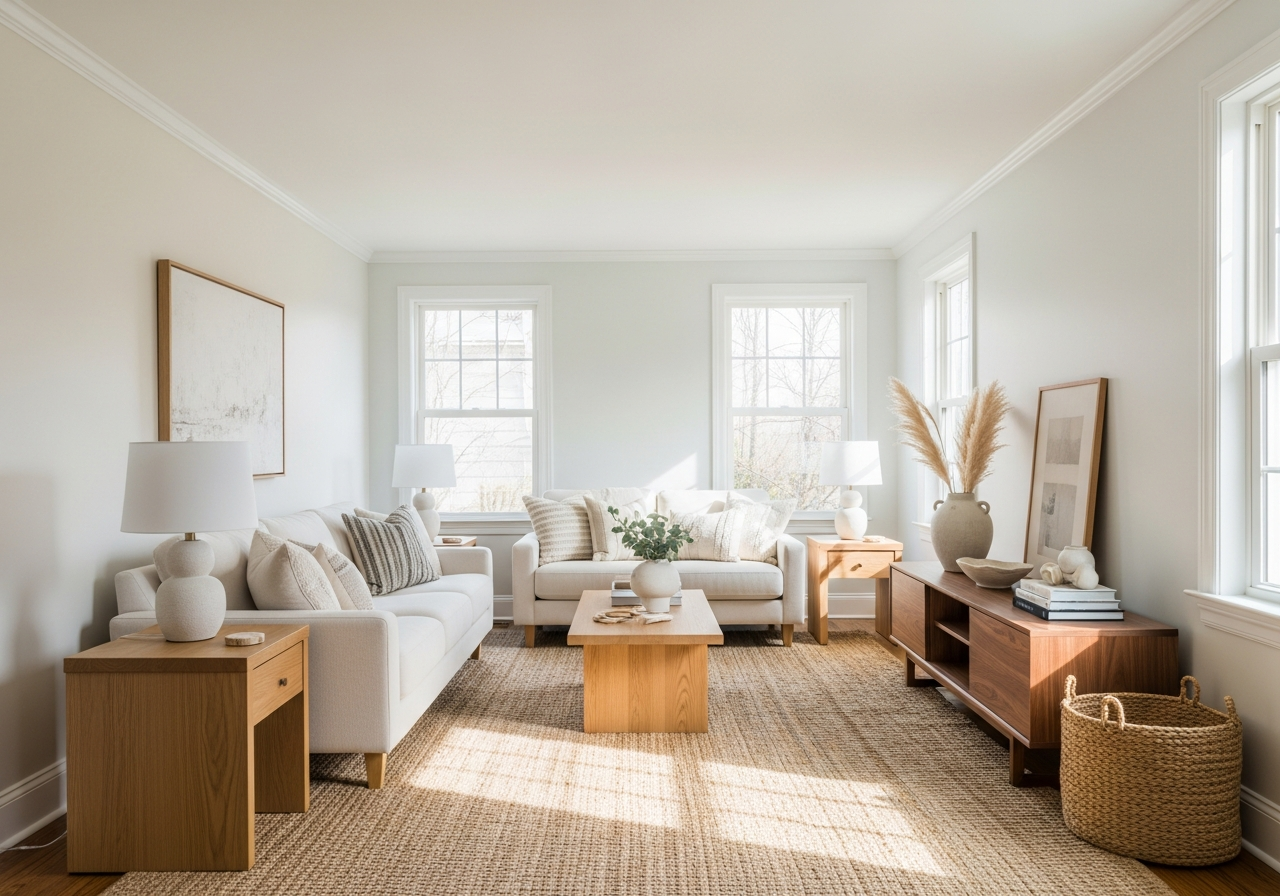

Best White Living Room Paint Colors That Transform Your Space
Choosing the right white paint for your living room isn’t as simple as picking the brightest or cleanest shade. White comes in many tones, each shaping how your space feels. The best white can make your living room feel cozy and inviting, while the wrong one can turn it cold and unwelcoming. This guide breaks down why white paint matters so much, highlights the top designer-approved whites, and explains how lighting shifts your choice throughout the day.
1. Why Choosing the Best White Living Room Paint Matters More Than You Think
White paint might seem simple, but pick the wrong shade and your living room can feel cold, sterile, or just plain off. Many people think all whites are the same, but the secret lies in the undertones. These subtle hints of color hidden in white paint can change the entire atmosphere of a room. Some whites lean warm with soft hints of yellow or pink, while others lean cool toward blue or gray. Then there are neutral whites, perfectly balanced without strong shifts.
Understanding these undertones helps you match your paint to your furniture and decor. A warm white pairs beautifully with natural wood tones and soft textures, creating a cozy space. Cool whites work well with modern designs and sleek metals. Neutral whites provide a blank canvas that suits most styles.
Living rooms especially need careful paint choices because they are often the heart of a home. It’s where people relax, gather, and entertain. The wrong white can make furniture look dull or the whole area feel like an office instead of a living space. Compared to bedrooms or kitchens, living rooms demand a white that balances brightness and warmth.
The Psychology of White in Living Spaces
White influences how we feel in a room. Bright whites can energize, making spaces feel clean and fresh. Softer whites soothe, encouraging relaxation. The right white also links closely to natural light, affecting how open or cramped a space seems. White can reflect the light and make small rooms appear larger. But if it’s too stark, it can feel harsh and uninviting.
Natural light plays a big role in this effect. A white that glows softly in rich sunlight can feel cold if light is sparse. Choosing your white paint means thinking beyond looks — it’s about mood, comfort, and how your space welcomes you and others.
2. Top 8 Designer-Approved White Paints for Living Rooms
After testing dozens of whites in real homes, these eight consistently deliver that perfect living room glow designers chase. Each has its own personality, from warm and cozy to crisp and modern.
- Benjamin Moore White Dove (OC-17) – The versatile winner, White Dove offers a creamy softness that suits almost any living room style. It’s warm enough to avoid sterility but clean enough to keep things fresh.
- Benjamin Moore Simply White (2143-70) – Known for being clean without feeling stark, Simply White brightens rooms with a subtle warmth, making it great for both traditional and modern spaces.
- Benjamin Moore Cloud White (OC-130) – A soft and welcoming choice, Cloud White leans slightly warm with just a touch of gray, adding depth and a cozy vibe to living rooms.
- Sherwin-Williams Alabaster (SW 7008) – This warm white wraps living spaces in a gentle embrace. It’s perfect for creating inviting rooms with a timeless feel.
- Sherwin-Williams Pure White (SW 7005) – Crisp and modern, Pure White offers a clean slate that pairs well with contemporary furnishings while still feeling welcoming.
- Benjamin Moore Chantilly Lace (OC-65) – A true white perfection, Chantilly Lace stands out as a classic bright white, ideal for those who prefer a refined, minimalist tone.
- Sherwin-Williams Greek Villa (SW 7551) – With its creamy comfort, Greek Villa behaves like a warmer neutral, blending effortlessly with warm earth tones and making it great for cozy living rooms.
- Sherwin-Williams Extra White (SW 7006) – Bright and airy, Extra White is one of the brightest whites, perfect for spaces that need an open, lively feel to counterbalance dark furniture or floors.
3. How Natural Light Changes Your White Paint Choice
That gorgeous white you loved at the paint store? It might look completely different in your north-facing living room. Natural light impacts white paint in ways that can alter its undertones and overall warmth.
North-facing rooms tend to get cooler, indirect light all day long. Cool whites can feel icy here, so warmer whites like Alabaster or White Dove help balance the chill and add warmth to the space.
South-facing rooms enjoy the sun’s bright rays for much of the day. A bright white like Extra White or Chantilly Lace holds up well under strong sunlight without appearing dull. These whites reflect light and keep the room feeling open.
Rooms with east or west exposures struggle with shifting light. Morning or afternoon light can change the way whites look dramatically throughout the day. Softer whites like Cloud White or Greek Villa offer more flexibility, adapting nicely to natural light changes without feeling harsh.
To avoid surprises, always test paint samples on your actual living room walls. Watch how the color changes in the morning, midday, and evening. This practice helps you find a white that feels just right any time of day.
Conclusion
The best white living room paint is a shade that fits both your space’s lighting and your personal style. It balances undertones to make the room feel inviting, not cold or flat. By understanding the psychology of white and how light affects it, you can pick a shade that transforms your living room.
Start by assessing your room’s natural light. Choose samples from the designer favorites and see how they behave throughout the day. Finally, consider your furniture and decor to find a white that complements rather than clashes. This way, your living room will feel fresh, warm, and welcoming every day.