
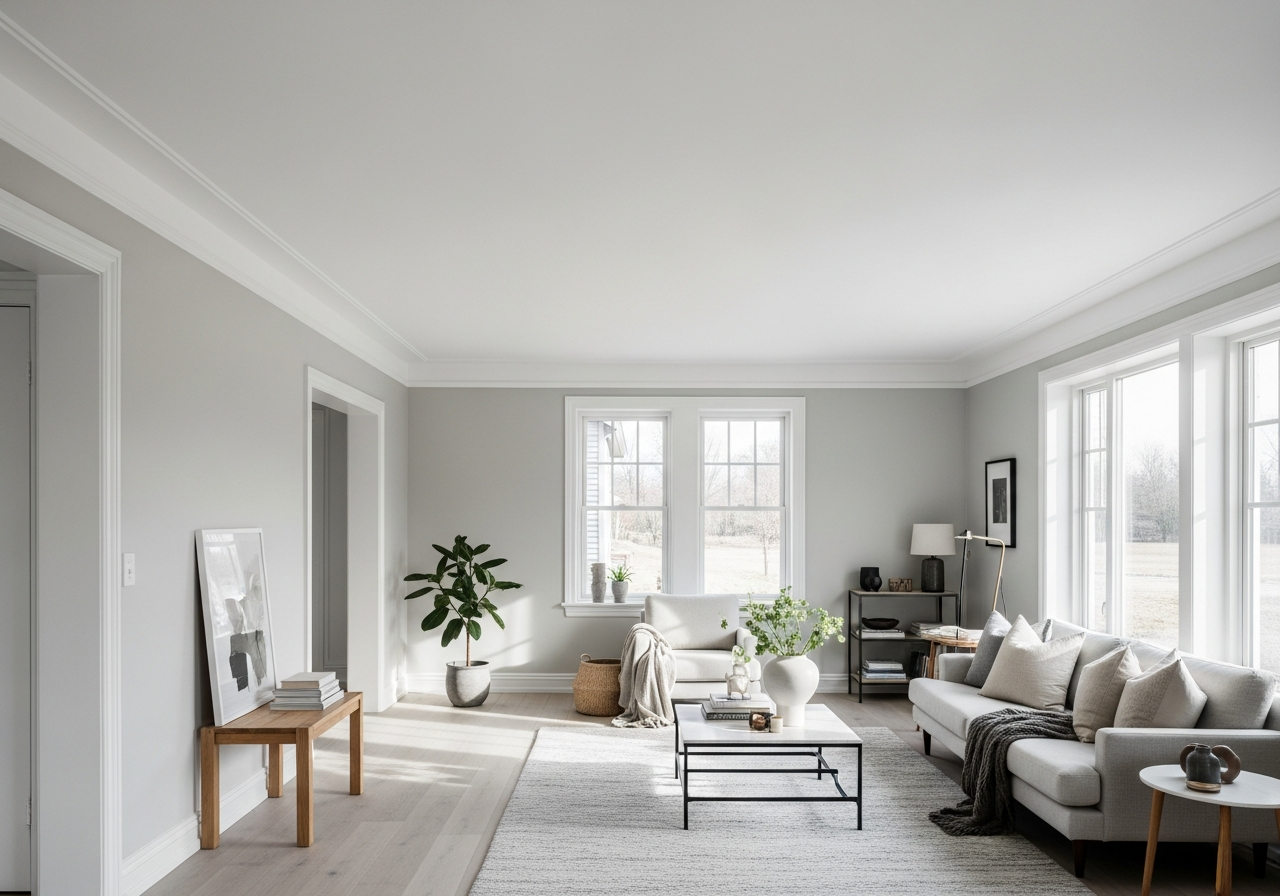

How to Choose the Best Ceiling Paint for Living Room Spaces
Your living room is the heart of your home, and the ceiling often gets overlooked. But picking the right paint for this “fifth wall” can change how the whole room feels. The best ceiling paint brightens the space, hides flaws, and sets the mood. This guide will help you understand why ceiling paint matters and how to choose one that fits your living room’s needs perfectly.
1. Why Your Living Room Ceiling Paint Matters More Than You Think
Think of your living room ceiling as the silent partner in your room’s design. When matched right, it lifts the whole space. Ignore it, and the room can feel cramped or dull.
The Psychology of Ceiling Colors
Colors on your ceiling influence your mood more than you realize. Light colors, especially whites and soft pastels, open up a room and bring calmness. Darker colors add coziness but can also make the ceiling feel lower and the room smaller. For living rooms, which often hold family time and guests, a bright ceiling encourages wakefulness and positive energy.
How Ceilings Change Room Perception
The color and finish of your ceiling change how big or bright your room feels. A light, matte ceiling can make even a small living room feel taller and more open. Shiny or glossy ceilings reflect light but show flaws more easily, while flat finishes hide cracks and patches better. The ceiling can reflect or absorb light, so its color and finish mix to set the room’s overall tone.
Living rooms usually need a bit more attention for ceiling paint than bedrooms or kitchens. These spaces get more guests, and the ceiling acts as part of the room’s backdrop for all the furniture and decor. It should help balance lighting without drawing too much attention or making the room feel tight.
2. Best Ceiling Paint for Living Room: Top Product Categories
Ceiling paints are made differently from wall paints. Some formulas suit living rooms better, giving great coverage, hiding imperfections, and lasting longer. Knowing your options will help you find the perfect match for your needs and budget.
Premium Ceiling Paints Worth the Investment
High-end paints often come with self-priming properties, which means you only need one coat. They have thicker formulas that resist drips and splatters during application, making the job cleaner. Premium paints also tend to offer better hiding power, so imperfections disappear under smooth, even layers. Brands in this category usually guarantee a matte or flat finish that reduces glare and creates a soft look ideal for living rooms.
Budget-Friendly Options That Still Perform
There are cost-effective ceiling paints that give solid results without breaking the bank. These might need an extra coat or a primer first but can hold their own in less demanding spaces. Look for user reviews focused on ease of application and durability. While not as thick or advanced as premium lines, many can last several years and cover well.
Specialty Formulas for Problem Ceilings
Sometimes, ceilings have stains, smoke damage, or water marks that standard paint won’t cover. Specialty ceiling paints include stain-blocking features designed to lock down discolorations. Some also resist mildew, which is useful in humid climates. These formulas are usually thicker to cover blemishes in fewer coats and maintain a fresh look longer.
3. How to Match Ceiling Paint with Your Living Room’s Natural Light
The way light enters your living room changes how paint looks throughout the day. Choosing ceiling paint without thinking about your room’s exposure can lead to disappointment.
Reading Your Room’s Natural Light Patterns
Rooms facing north get cooler, indirect light. This light can make white ceilings look gray or dull. In these cases, picking a ceiling paint with a slight warm tint can balance the light and keep the room feeling bright. South-facing rooms have warmer, direct light that can make white ceilings appear too bright or harsh. A cooler white or soft finish can soften the glow and avoid glare.
Window size also matters. Larger windows bring more light and can wash out pale ceiling colors, so a slightly off-white tone can add warmth without darkening the room. Smaller windows limit light, making brighter or more reflective ceiling paints better to brighten shadows.
Artificial lighting changes how ceiling paint looks at night. Warm bulbs soften colors, while cool bulbs highlight bluish or gray undertones. It helps to test paint samples during daylight and after dark in your living room to find tones that work all day.
Conclusion
The best ceiling paint for living rooms is one that brightens the space, hides imperfections, and suits your lighting conditions. It creates a balanced atmosphere without overpowering the room’s style.
Start by deciding the finish you want—matte or flat usually performs best for ceilings. Consider your living room’s natural light and pick a paint with undertones that complement it. Finally, choose a formula that hides flaws and fits your budget. Testing samples on your ceiling is the key to picking the right one.