

Best Blue Paint for Living Room: Designer-Approved Colors That Transform Your Space
Choosing the best blue paint for a living room can totally change how the space feels. Blue offers a unique blend of calmness and style that suits almost every home. It can chill out a busy day and add a splash of elegance at the same time. With so many shades available, from soft skies to deep oceans, there’s a perfect blue waiting to match your vision and light up your living room.
1. Why Blue Paint Works So Well in Living Rooms
Blue paint strikes a special balance that makes living rooms relaxing yet refined. It’s a color that invites both calm and conversation, setting the right tone for spaces where people gather. Many designers turn to blue because it fits easily with different styles and reacts beautifully to changes in light throughout the day. Plus, blue can make rooms feel bigger or cozier, depending on the shade.
The Psychology Behind Blue Living Rooms
Blue is known to have a calming effect on our brains. When you see blue, it can lower stress levels and create a soothing environment. This makes it perfect for living rooms where family and friends come together to relax. The color also encourages peaceful conversations and a comfortable social vibe without making the room too dull or cold.
Many people feel at ease around blue, which helps the living room become a natural gathering spot. It’s less energetic than red but still inviting enough to keep everyone engaged.
Blue’s Design Flexibility
Blue is surprisingly easy to style. It complements modern spaces with clean lines as well as cozy traditional rooms filled with warm wood tones. Transitional styles benefit from blue’s ability to balance classic and contemporary elements. You can pair blue with crisp whites for freshness or warm yellows and oranges for contrast.
Because blue exists in so many shades, it works well in rooms with various lighting setups. Soft blues brighten dim rooms, while dark blues add depth to sunny spaces. This flexibility also lets you use blue in large or small rooms, tailoring the shade to the space’s needs.
2. Top Designer-Recommended Blue Paint Colors
Trusted designers often rely on proven blue shades that work well in living rooms. These colors are chosen for their balance of mood, style, and adaptability. Below are 12 standout blues with brand names and codes that have earned their spot as favorites. Prices vary, but all are widely available and offer long-lasting quality.
Light Blues for Airy Spaces
- Benjamin Moore Palladian Blue HC-144: A soft, greenish-blue perfect for creating an open, breezy feel. It brightens small rooms without overwhelming them.
- Sherwin-Williams Rainwashed SW 6211: This gentle, muted blue has subtle gray undertones, fitting well in living rooms that face north or have less sunlight.
- Benjamin Moore Beach Glass 1564: A serene and pale blue reminiscent of sea glass. Ideal for coastal-inspired designs or calm, spa-like spaces.
Medium Blues for Balance
- Benjamin Moore Wythe Blue HC-143: A medium blue with slight gray tints, striking a perfect balance between bold and neutral. Works well in medium to large rooms.
- Sherwin-Williams Aleutian: A cool, balanced blue that adds personality while maintaining peace. Great for transitional spaces that blend styles.
- Benjamin Moore Franklin Lakes: This mid-tone blue energizes a space without overpowering. It pairs nicely with wood accents and bright furniture.
Deep Blues for Drama
- Benjamin Moore Hale Navy HC-154: A rich, inky navy that packs a punch of sophistication. Best for larger living rooms or accent walls where drama is desired.
- Farrow & Ball Stiffkey Blue: A deep blue with subtle green undertones, creating a moody and elegant atmosphere, perfect for formal living rooms.
- Sherwin-Williams Sea Serpent SW 7615: A dark teal-infused navy that adds depth and warmth. It works especially well in rooms with a lot of natural light to balance its intensity.
3. How Natural and Artificial Light Changes Your Blue Paint
The way blue paint looks depends a lot on lighting. Natural sunlight and artificial bulbs can each make a blue shade feel different. Understanding this change helps you pick the right tone for your living room.
Effects of Natural Light on Blue Paint
Morning light has a cool, soft quality that brings out blue’s brighter, crisper side. If your living room faces east, expect your blue walls to look fresh and airy in the early hours. Afternoon sunlight, warmer and more intense, makes blues appear deeper and richer. South-facing rooms benefit from this natural warmth, adding coziness to your space.
Changes Under Artificial Lighting
Artificial lights vary widely—from warm-yellow to pure white LEDs—and each shifts blue paint differently. Warm lights add golden hints that soften the coolness of blue, making it feel more inviting. Cooler white lights bring out the crispness and clarity of blue tones, highlighting their modern edge. It’s good to test paint samples under your room’s typical lighting before choosing to avoid surprises.
Best Lighting Matches for Different Blues
- Light blues shine under natural and cool LED lights, preserving their breezy look.
- Medium blues are versatile but can look more subdued with warm incandescent bulbs.
- Deep blues gain drama from natural light and do well with warm-toned artificial lights to keep the space cozy.
4. Pairing Blue Walls with Complementary Furnishings and Accents
Blue walls create a perfect stage for décor and furniture. Choosing the right pieces can either calm the space or add lively contrast. The trick is to blend colors and textures that balance the blue without fighting it.
Furniture Choices That Work with Blue
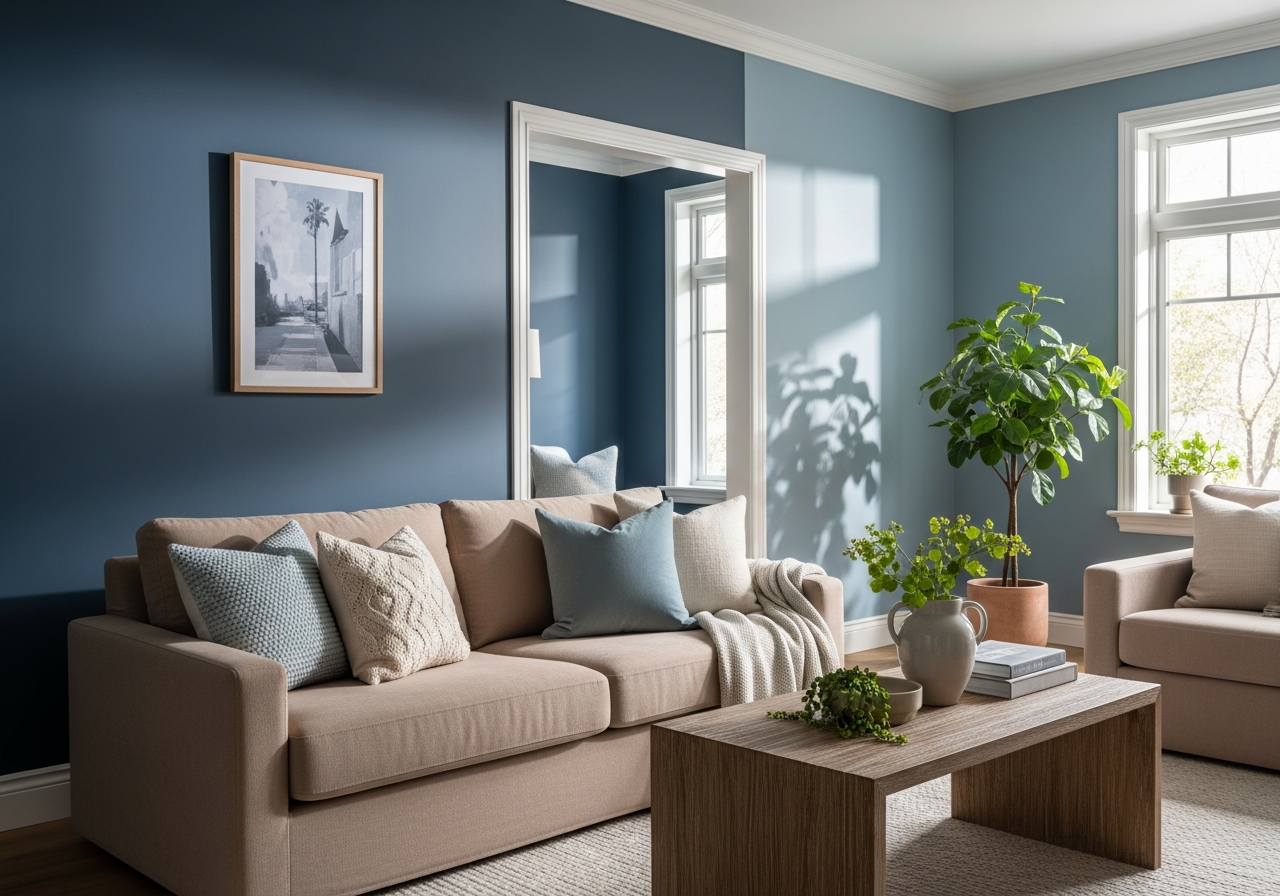
Neutral furniture like beige or gray sofas pairs smoothly with most blues, letting the walls be the main attraction. For a bolder look, leather furniture in rich browns or deep greens complements navy and medium blues beautifully. Wood tones—from light oak to dark walnut—add warmth and texture, especially against cool blue backgrounds.
Accent Colors to Lift Blue Walls
Yellow and gold accents brighten and energize a blue room without clashing. Soft pinks or coral hues provide a gentle contrast that warms the blue’s coolness. White trim or décor keeps the space feeling fresh, while metallics like copper or silver add shimmer and depth.
Textiles and Accessories
Throw pillows, rugs, and curtains in layered patterns or solids echoing the blue palette add coziness. Mixing different fabrics—linen, velvet, cotton—works well to create a welcoming space. Plants also bring life and a natural touch that stands out beautifully against blue walls.
5. Tips for Maintaining Your Blue Painted Living Room
Keeping blue paint looking fresh is simple with the right care. Blue walls can hold up well over time if you take a few key steps to prevent damage and maintain color brilliance.
Regular Cleaning
Dust walls regularly with a soft cloth or vacuum using a brush attachment to prevent dirt buildup. For stains or marks, a mild soap solution and gentle sponge work well. Avoid harsh chemicals that could dull the paint finish.
Touch-Ups and Repainting
Keep extra paint on hand for small touch-ups. Blue shades can show scratches or scuffs easily, so fixing them quickly keeps walls looking polished. When it’s time to repaint, clean walls beforehand and consider a fresh primer if the previous coat is worn.
Protecting Against Sun Damage
UV rays can fade blue paint over time, especially in sunny rooms. Use curtains or blinds to limit direct sunlight during peak hours. Periodically rotating furniture and artwork helps prevent uneven fading too.
Conclusion
The best blue paint for a living room brings calm, style, and personality all at once. It can change how the whole space feels, making it more inviting or dramatic depending on your choice.
Start by picking a blue shade that fits your room size and lighting. Test the color in different lights before painting. Match your furniture and accents to enhance the color’s impact. Keep your walls clean and protected to enjoy your blue living room for years to come.