
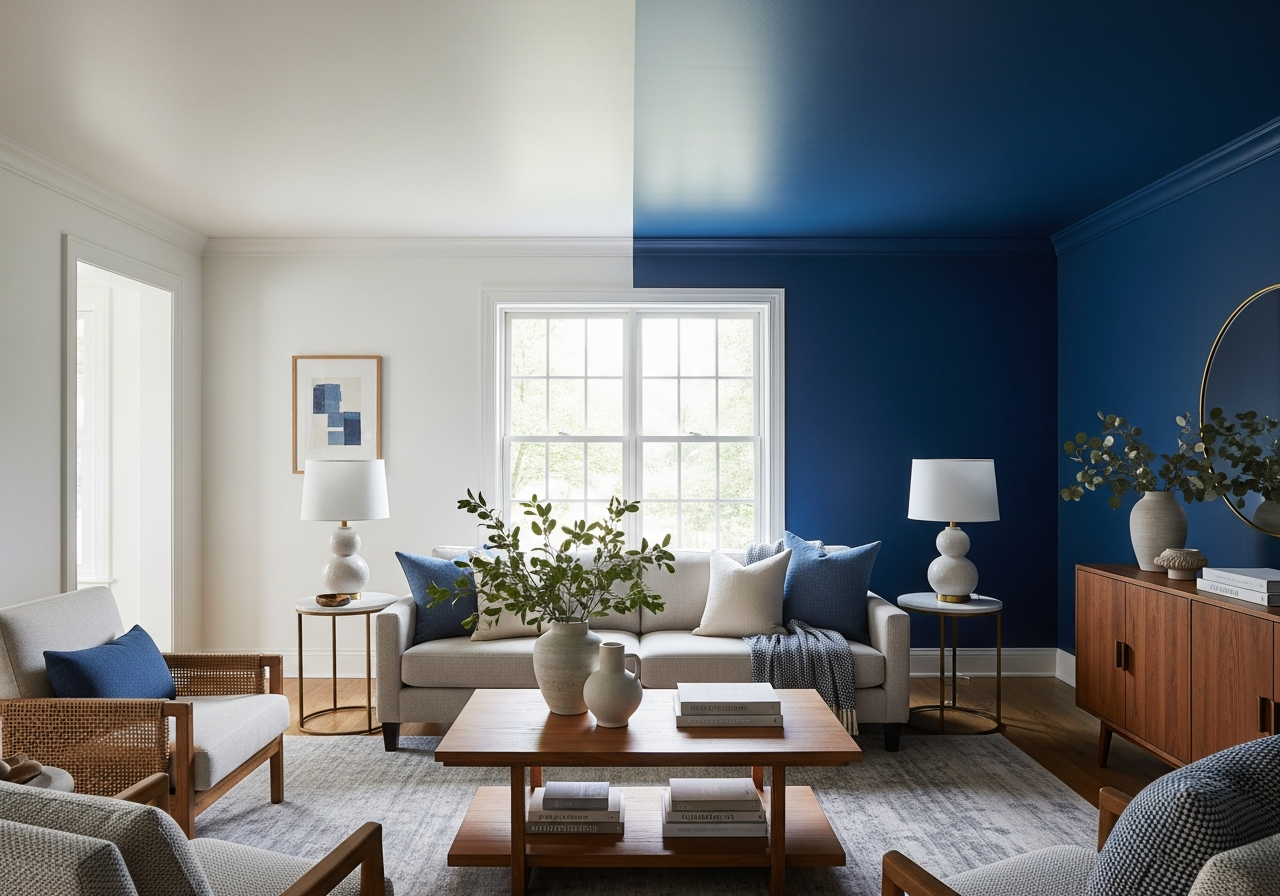

1. Why Your Living Room Ceiling Paint Matters More Than You Think
Your ceiling is the fifth wall everyone forgets about—until they see a room where it’s done right. The color you choose for your living room ceiling can change how the whole space feels. It’s not just about covering up; it’s about adding depth, light, and personality to a room.
One major way ceiling paint changes your room is by affecting how tall the space feels. A light-colored ceiling can make the room appear taller and brighter, while a darker shade may create a cozy, intimate atmosphere. This shift in perception helps craft a vibe that fits your lifestyle and the mood you want to set.
Light plays a huge role too. Natural sunlight and lamps bounce differently depending on the ceiling color and finish. A glossy, reflective ceiling can spread light across the room, making it feel open and airy. Matte or flat finishes absorb light, giving a softer, more muted look.
The ceiling color also connects closely to your wall colors. Matching the ceiling with walls or choosing a complementary shade can either expand the space visually or give it a layered, artistic touch. It helps tie the room together so everything looks intentional, not random.
The Psychology of Ceiling Colors
Colors have power, and the ceiling is no exception. Light colors often evoke calm and cleanliness, while darker tones may bring warmth and a sense of shelter. Blue ceilings can feel peaceful, mimicking the sky, while warm tones like cream or soft pink add subtle energy.
How high or low the ceiling feels can impact your mood too. A bright ceiling can inspire openness and creativity. A cozy, darker ceiling might encourage relaxation and comfort. Understanding these effects lets you pick something that speaks to what you want your living room to say.
How Light Bounces Off Different Paint Finishes
Paint finish changes the way light behaves on your ceiling. Glossy and semi-gloss paints reflect the most light, making ceilings appear brighter and more spacious. This can be great for living rooms needing a lift or with limited natural light.
Matte and flat finishes absorb light, which can hide imperfections and create a smooth, calm vibe. Satin finishes strike a balance, offering mild reflectivity and easy cleaning without too much shine.
Choosing a finish depends on your goals. If you want drama or openness, a shinier finish might suit you. If you want softness or to add texture, go for matte or satin. Each finish changes the atmosphere and the amount of light that fills your living room.
2. Classic Ceiling Paint Ideas for Living Room Spaces
Sometimes the tried-and-true options work best, especially when you want a look that won’t feel dated in five years. Classic ceiling colors create an elegant foundation that works with various styles, from traditional to modern.
White and off-white ceilings are the most common for a reason. They reflect light well, making any living room feel brighter and more spacious. Variations like eggshell, ivory, or soft cream add warmth without overwhelming the space. These shades keep your ceiling neutral and flexible for future décor changes.
Soft neutrals like beige, gray, or greige add subtle color without being bold. These hues can add personality gently by harmonizing with your wall colors, whether they’re lighter or darker. Neutrals offer a calm backdrop that coordinates well with both warm and cool tones.
Deciding whether to match your ceiling with your walls or use a contrasting tone changes the room’s feel. Matching creates a seamless, height-enhancing look. On the other hand, a contrasting ceiling adds dimension and can highlight architectural details such as crown molding or beams.
Classic ceiling paints often use matte or eggshell finishes. Matte hides flaws well and keeps things soft, while eggshell adds a slight sheen that still feels gentle and timeless. These finishes also make maintaining a clean ceiling easier without sacrificing style.
Beyond Basic White: Warm vs Cool Undertones
Not all whites are the same. Some lean warm, with hints of yellow, cream, or beige. These create cozy, inviting rooms and pair well with earth tones and wood floors. Cool whites have blue or gray undertones, which help modern or minimalist rooms feel fresh and crisp.
When picking a white or off-white, test samples on your ceiling at different times of day. This helps you see how your light interacts with the undertones. Warm undertones work well in rooms with warm lighting or lots of natural light, while cool whites suit cooler light sources and minimalist designs.
When to Match Your Ceiling to Your Walls
Matching your ceiling to your walls can make a room feel taller and more open. This method works best with lighter, neutral colors. When there isn’t much contrast, the eye sees the space as one continuous plane, reducing visual breaks.
This look is especially effective in rooms with low ceilings or smaller dimensions. It stretches the space upwards and gives a clean, modern effect. However, if your walls have busy patterns or strong colors, matching the ceiling can calm the look and keep the focus on wall art or furniture.
3. Bold and Dramatic Ceiling Colors That Make a Statement
Ready to break the rules? Dark ceilings can make your living room feel bigger, not smaller—if you know the tricks. Using deep, rich colors adds character and depth that standard shades just can’t match.
Navy, charcoal, and black ceilings are bold but sophisticated choices. They create a striking contrast and draw the eye upward, making the ceiling a focal point rather than a forgotten surface. Dark ceilings also absorb light, giving an intimate and cozy feel that’s perfect for relaxed evening gatherings.
Deep jewel tones like emerald or sapphire bring a jewel-box quality to the room. These colors add luxury without feeling too flashy when paired with natural wood, brass, or soft neutrals.
Dark colors shrink the visual height of your ceiling, but with the right balance, they create a welcoming cocoon. To prevent the room from feeling too closed-in, balance these bold hues with light walls, reflective furniture surfaces, or plenty of lighting.
Dark Ceilings in Small vs Large Living Rooms
In small living rooms, dark ceilings can actually make the space feel more layered and rich rather than claustrophobic. They add depth by tricking the eye into seeing the room as a cozy retreat. However, ensure you have enough light; natural light or good artificial sources are key to avoiding gloominess.
Large living rooms handle dark ceilings with grace, creating striking drama without feeling oppressive. They can visually pull down high ceilings, making expansive spaces feel more comfortable and human-scaled.
Pairing Bold Ceilings with Your Existing Furniture
When your ceiling makes a statement, your furniture needs to complement, not compete. Neutral or muted furniture colors balance bold ceiling paint. Natural fabrics and textures enhance the richness without adding too much visual clutter.
Metallic accents such as gold or brass create highlights that play well against dark hues. Avoid overly bright or clashing colors on furniture to keep the focus on the ceiling’s drama while maintaining harmony.
Conclusion
Ceiling paint plays a powerful role in shaping how your living room feels and looks. It affects space perception, light, and mood in ways many people overlook.
Classic and neutral shades offer timeless elegance and easy coordination. Bold, dark colors add depth and personality while creating intimate, unique spaces.
Start by considering your room’s lighting and size. Test paint samples on your ceiling to see how they work with your walls and furnishings. Choose a finish that matches your room’s vibe and keeps your space welcoming and comfortable.
By paying attention to your ceiling, you can transform your living room from ordinary to stunning without major renovations or expense.