
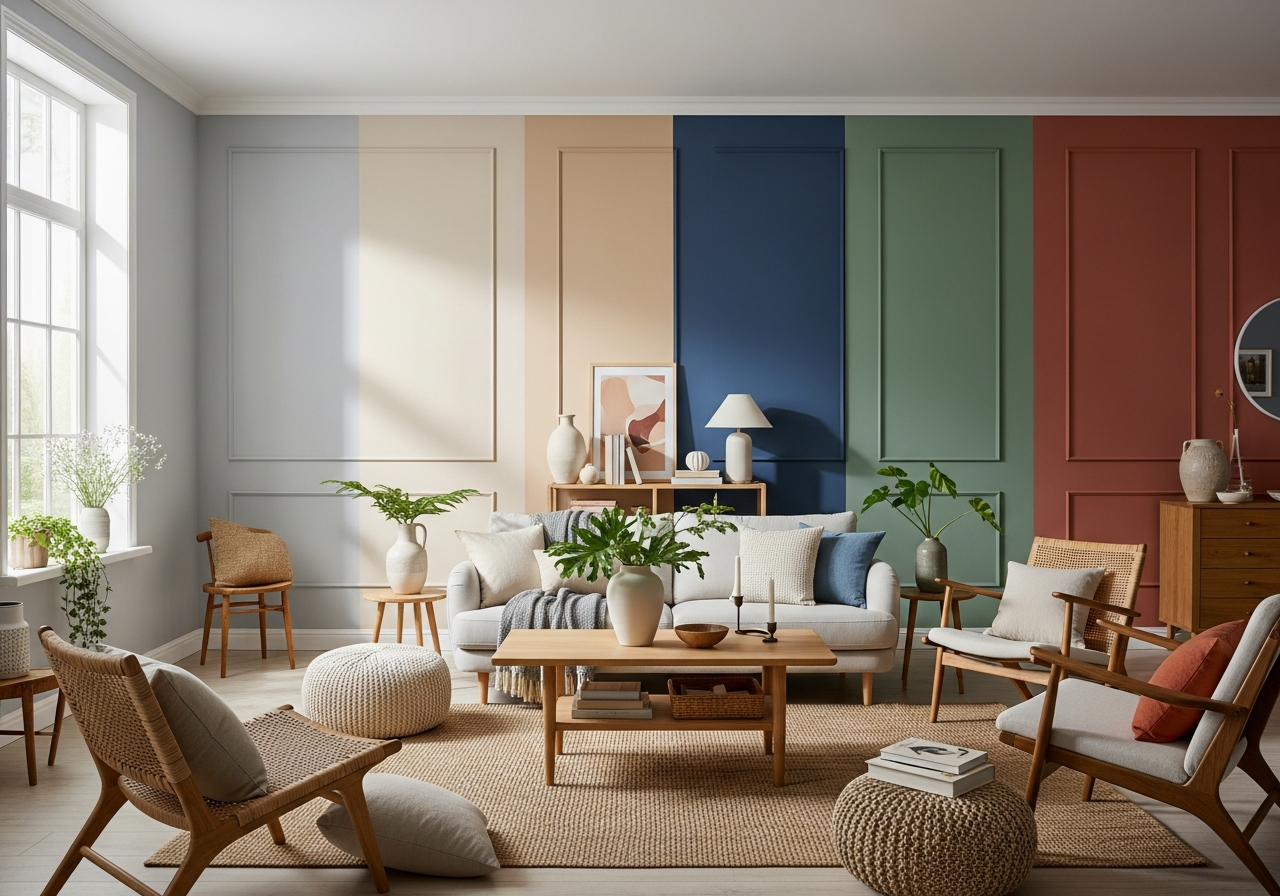

Best Wall Paint Colors for Living Room: Transform Your Space with Perfect Shades
Your living room walls do more than just hold up pictures and shelves—they set the entire mood for relaxing, socializing, and living every day. The right paint color can make your space feel larger, cozier, or more vibrant, depending on the mood you want to create. Choosing the best wall paint colors for your living room also ties the furniture and décor together, giving the room a polished, finished look. Plus, a well-chosen color can even add value to your home by making the space more appealing. Understanding how to pick the perfect shade is key for transforming your living room into the heart of your home.
1. Why Living Room Paint Colors Matter More Than You Think
The colors you choose for your living room walls affect much more than just the look of the space. Colors influence how you feel, how you use the room, and even how big or small the room appears. A good color choice can help you relax after a long day, encourage lively conversations, or create a peaceful retreat. On the other hand, the wrong colors can feel harsh or make the room seem cramped.
Choosing the right living room paint color impacts the perceived size of the room. Light colors tend to open up a space, making it feel brighter and larger. Darker shades bring warmth and intimacy but can sometimes make rooms feel smaller if not balanced with enough light.
Besides mood and space perception, the paint color can affect your home’s value. A fresh, well-chosen color appeals to buyers by making the living room look clean, modern, and inviting. This matters especially if you plan to sell or rent your home in the future.
Paint also plays a vital role in connecting all the elements of the room. The right shade brings out the textures and colors of your furniture, rugs, and curtains, making the entire space feel harmonious and styled.
The Psychology Behind Color Choices
Colors tap into emotions and perceptions. For example, blues tend to calm, greens refresh, and reds energize. Choosing a color that fits how you want to feel in your living room makes the space more enjoyable. Warm tones invite conversation and hospitality, while cool hues help with relaxation and focus. Knowing the psychological effects can steer you toward a color that matches your daily mood and lifestyle.
How Paint Changes Room Perception
Paint colors can visually change the shape and size of a room. Light and neutral shades reflect more light, making rooms feel bigger and airier. Dark colors absorb light, which can cozy up large spaces but might shrink small rooms visually. Bold colors attract attention and create focal points but can overwhelm if overused. While color alone won’t change the room’s dimensions, it can trick the eye to make the space feel more comfortable and appealing.
2. Best Wall Paint Colors for Living Room Styles
Choosing paint for your living room depends a lot on the style you want. The right colors highlight your furniture, bring out textures, and make your living space feel just right, whether it’s cozy, elegant, or lively. Different styles are supported by various colors, each adding its own character and feel to the room.
Modern living rooms often look best with cool tones like grays, whites, and blacks. These colors create a clean and sleek backdrop that pairs well with minimalist furniture and metal accents. They also make the space feel fresh and uncluttered.
Traditional spaces benefit from warm neutrals and deep blues. Rich shades like beige, taupe, navy, and plum add depth and comfort. These colors complement classic furniture and patterned fabrics well, creating a timeless atmosphere.
Farmhouse style leans toward soft whites and sage greens. These colors bring in natural light and a relaxed farm charm. They create a soothing environment that works beautifully with rustic wood and vintage accessories.
Bohemian vibes come alive with terracotta and dusty pink hues. These warm, earthy tones add personality and creativity. They work well with mixed patterns, plants, and eclectic décor.
Colors for Small Living Rooms
In smaller living rooms, lighter colors work wonders to open up space. Pale grays, soft whites, and creamy beiges reflect light and make walls feel farther away. Avoid dark, overpowering colors unless you want to create a cozy nook effect. Soft pastels like light blues or greens also help keep the room airy and fresh.
Colors for Large, Open Spaces
Large living rooms have the freedom to handle darker, bolder colors. These shades add warmth and intimacy to wide spaces. Deep blues, rich greens, and warm neutrals help make big rooms feel more inviting. Using accent walls with stronger colors can also break up the open area visually, creating focus zones.
Colors for North vs South-Facing Rooms
North-facing rooms get cooler and less direct sunlight, so warm tones like soft yellows, warm whites, or peach can add cozy brightness. In contrast, south-facing rooms receive a lot of natural light and can handle cooler shades such as blues, greens, or grays to balance the brightness and keep the space calm.
3. How Natural and Artificial Light Changes Your Paint Choice
Colors look very different depending on lighting. A paint that looks perfect in the store’s bright light might appear dull or tinted at home. How natural and artificial light hits your walls throughout the day changes how you experience your paint choice.
Morning light is cooler and bluer, making colors appear more crisp. Evening light can warm up colors, making some shades look richer or more golden. It’s important to see paint samples during different times to get a true sense of how they behave.
Artificial lights vary a lot too. LED bulbs often cast a cooler light, which can make colors feel sharper or harsher. Warm bulbs give off a yellow glow that can soften colors but also shift their appearance. Considering your lighting setup can help you pick a paint that looks good no matter the source.
Window direction affects light quality as well. East-facing windows bring bright morning sun, while west-facing rooms see the warmer afternoon light. Seasonal changes also affect how much natural light your living room gets, which can alter paint color perception throughout the year.
Testing Paint in Your Actual Lighting
To avoid surprises, test paint colors on large patches of your living room walls. Observe them at various times: morning, midday, and evening. Check how colors look under different artificial lighting by turning on lamps or overhead lights. Writing down your impressions or taking photos can help you decide on the best shade for your daily lighting conditions.
Adjusting Colors Based on Window Placement
If your living room has many windows, choose colors that complement the natural light rather than fight it. For bright, sunny rooms, deeper or muted color tones prevent glare and help colors stay balanced. For dimmer windows, consider brighter or lighter shades to capture and reflect the available light, keeping the room lively and welcoming.
Conclusion
The best wall paint colors for living rooms are the ones that fit your style, space, and lighting. These colors change how you feel in the room and how the room looks, making your living space comfortable and stylish. Start by considering your room’s size and direction. Test paint samples in different light settings to find shades that match the mood you want. Then, choose a color that blends well with your furniture and décor to create a space that feels just right for you.