

Best Room Paint Colors for Every Space in Your Home
Picking the right paint color can change how you feel in a room. It can make your space look bigger, cozier, or more lively. But with so many color choices, it’s easy to feel stuck. This guide will help you find the best room paint colors that fit your style and needs. You’ll learn simple ways to choose colors that suit your home’s unique spaces and your personal taste.
1. How to Pick the Best Room Paint Colors for Your Style
Choosing paint colors feels overwhelming when you’re staring at hundreds of swatches, but a simple framework makes the decision clear and stress-free. The first step is to think about what the room is for and how you want it to make you feel. Next, take a look at the furniture and floors you already have. These fixed elements will affect how your paint color looks. Finally, try out samples at different times of day to see how light changes the color. Using a color rule like 60-30-10 can also help balance your room’s shades so they feel right together.
The Room Purpose Test
Every room has a job, whether it’s for relaxing, working, or gathering with family. Think about what you want from the space. For example, you might want a calm and restful bedroom or a lively and warm living room. The colors you pick should support these moods. Soft blues and greens can soothe, while warm reds and yellows bring energy.
Working with Fixed Elements
Your furniture, flooring, and window treatments affect how paint looks. Dark wood floors can make a light paint color pop. Brightly colored furniture might clash with certain shades. Choose a paint color that complements these features. If your furniture is neutral, you have more freedom to pick bold colors. Matching the paint to your existing style keeps the space feeling balanced.
Sample Testing Strategy
Bring home small paint samples to test on your walls. Watch how the colors shift through the day—from morning sun to artificial light in the evening. Paint patches in different corners since lighting varies. Don’t rush the choice; living with the samples for a few days helps you see how the color really feels. This way, you’ll avoid surprises after painting the whole room.
2. Popular Paint Colors That Work in Any Room
Some paint colors just work everywhere—these versatile shades give you confidence when you’re not sure where to start. Warm whites create a clean, soft backdrop without feeling cold. Soft grays bring a modern feel but keep warmth to avoid a sterile look. Greige, a blend of gray and beige, is a perfect middle ground connecting warm and cool tones. For something a bit different, navy acts as a rich but neutral alternative giving depth without overpowering.
Benjamin Moore White Dove vs. Simply White
White Dove feels creamy with just a touch of warmth. It’s perfect for rooms where you want light without the stark feel of bright white. Simply White is cleaner and brighter, making spaces appear fresh and airy. Both suit most rooms but choose White Dove if you want a softer, welcoming glow, and Simply White when brightness is key.
Sherwin Williams Agreeable Gray Performance
Agreeable Gray is soft and inviting. It has a balanced gray tone with slight warmth, which helps it blend easily with different furniture, fabrics, and floors. This color fits into living spaces, bedrooms, and kitchens because it keeps rooms feeling calm but not dull.
3. Best Room Paint Colors by Space
Each room in your home serves a different purpose, and the right paint color can make that space work better for you. Colors help shape feelings and set the tone for daily life. Below are paint colors made for the vibes common to each room type.
Living Room Color Psychology
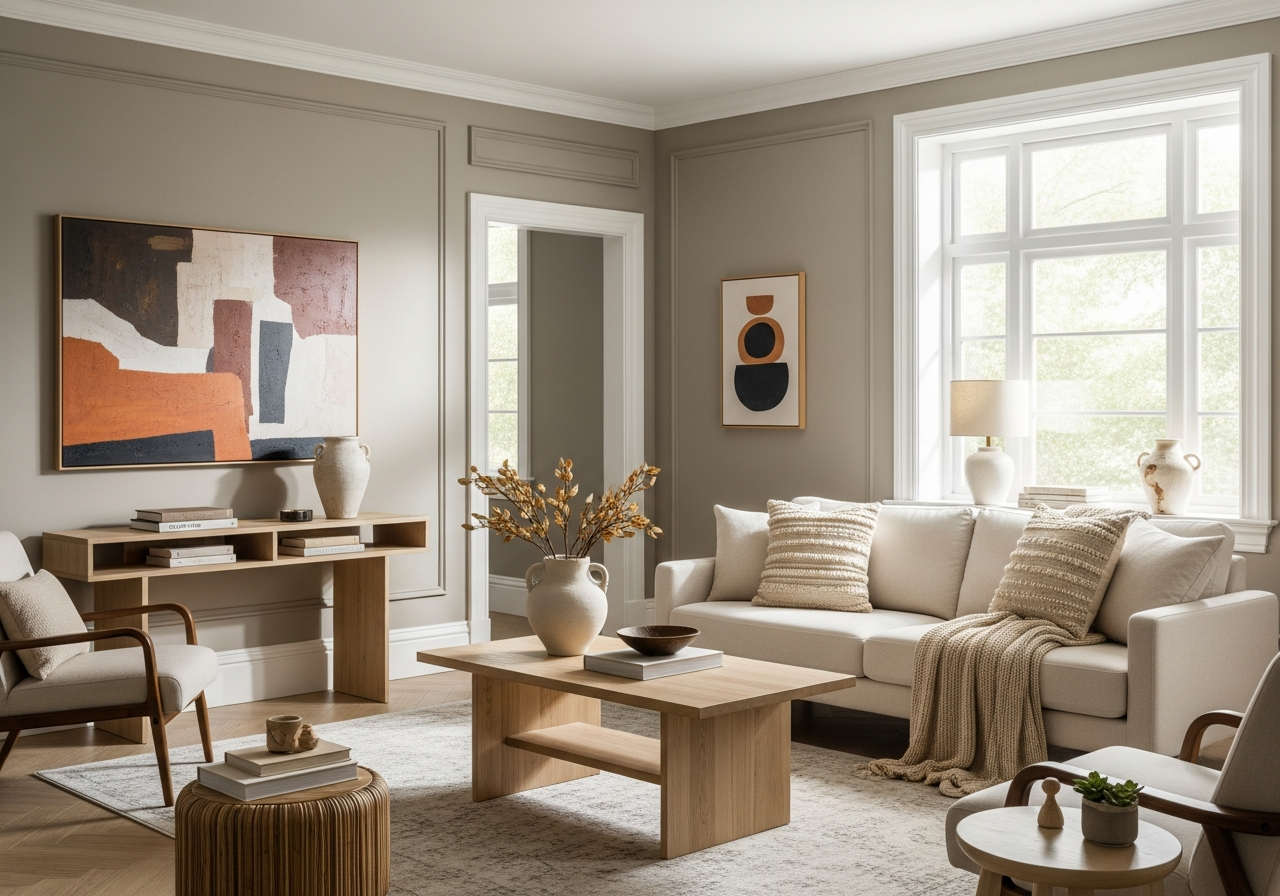
The living room is where people gather, so warm and inviting colors work best. Soft beiges, muted taupes, or gentle terracotta shades create a cozy feel. These colors invite conversation while staying neutral enough to pair well with your furniture and accessories.
Master Bedroom Retreat Colors
Bedrooms call for calm, restful colors. Cool blues, soft greens, and gentle lavenders promote relaxation and sleep. If you want a cozy feel, warm neutrals like oatmeal or warm gray work well too. Avoid loud colors that might keep you awake.
Kitchen Colors That Hide Wear
Kitchens need colors that feel clean and fresh but also stand up to messes. Bright whites with warm undertones or soft sage green work well. These shades hide fingerprints and stains better than pure white or deep colors, making your kitchen look neat without extra cleaning.
Bathroom Colors for a Spa-Like Feel
Bathrooms benefit from cool, fresh colors that suggest cleanliness and calm. Pale blue, soft seafoam green, and light gray create spa-like spaces. Paint with good moisture resistance is best here to protect walls from humidity and keep colors crisp over time.
Home Office Colors That Help You Focus
Offices need colors that boost concentration without feeling dull. Muted blues and soft greens reduce eye strain and keep energy steady. Avoid overly bright or dark colors, which can be distracting or drain motivation. Neutral grays with warm undertones also create a calm work environment.
Conclusion
The best room paint colors match the room’s use, the atmosphere you want, and your existing décor. Picking the right color means testing samples and considering lighting to see how the shade plays in your home.
Start by noting the room’s purpose and mood goals. Work with your furniture and flooring colors to find harmony. Test samples through different lights and times of day before deciding. With these steps, finding the best room paint colors becomes a clear, manageable process.