
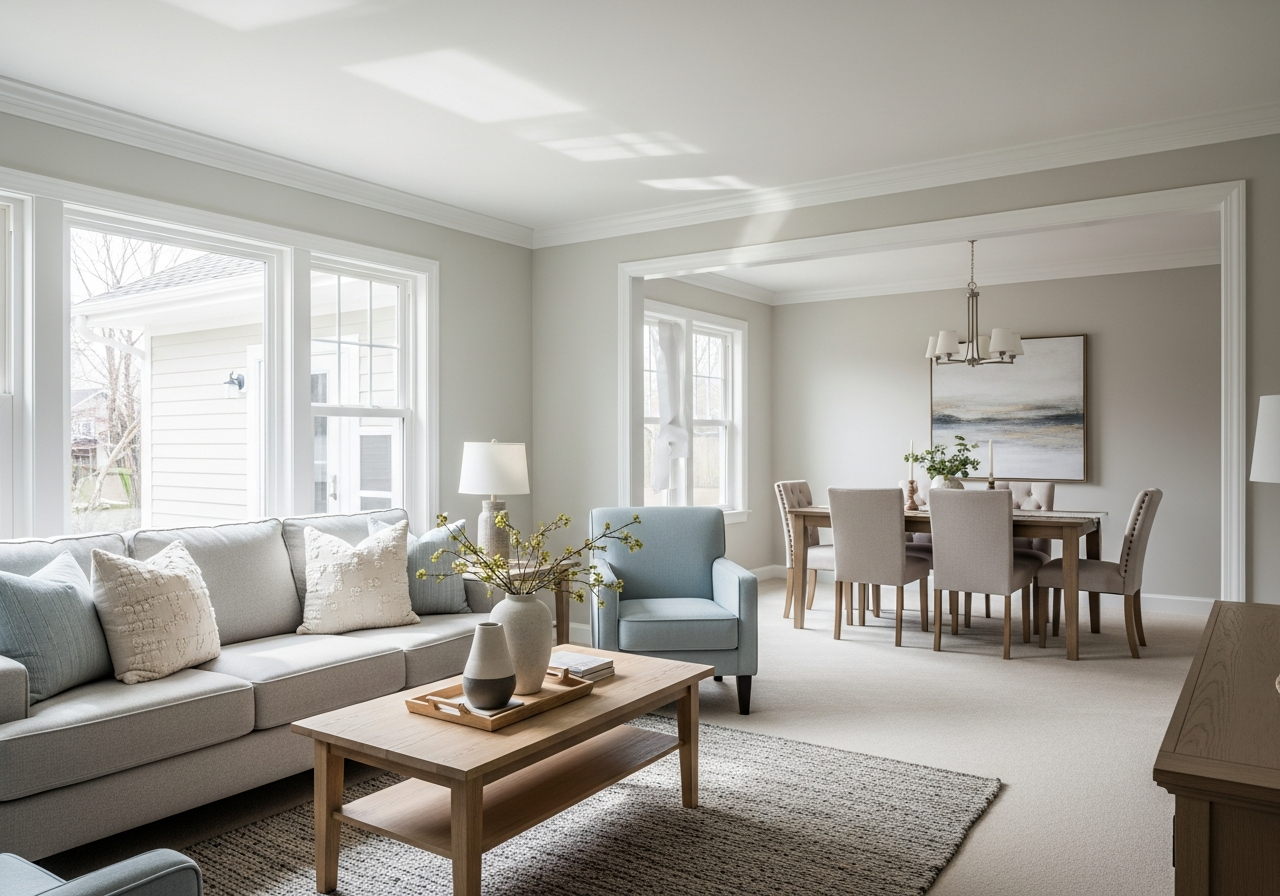

Best Paint for Living Room and Dining Room: Colors and Finishes That Transform Your Space
Your living and dining rooms are where life happens every day. From quiet mornings sipping coffee to lively dinner parties, these rooms need paint that looks stunning and can stand up to daily wear. Picking the right paint is not just about the color—it’s about how well it handles traffic, lighting changes, and how it helps these connected spaces feel like one harmonious area. This guide covers what makes these rooms unique and how to choose the perfect paint color and finish.
1. Best Paint for Living Room and Dining Room: What Makes These Spaces Different
Living and dining rooms are the heart of your home. They see more people, activity, and spills than many other rooms. That’s why it’s essential to pick paint that suits both style and durability. These rooms often share a flow, so your choice needs to consider how they look together as well as how the paint stands up to daily life.
Why Paint Quality Matters in Social Spaces
Paint quality plays a big role in how your walls hold up over time. In social spaces like living and dining rooms, walls face fingerprints, scuffs, and sometimes even food splashes. High-quality paint resists stains and cleans easily, saving you from constant repainting. Plus, better paint blends and covers imperfections, keeping walls looking fresh and inviting.
Traffic Patterns and Wall Wear
These rooms get a lot of foot traffic and movement of furniture, which means walls tend to get bumped and marked. For example, dining room walls near the table might get more wear from chairs. Living room paints face the challenge of being viewed in different light throughout the day. A paint color that looks good in morning sunlight might appear dull in evening lamp light. Choosing paints that maintain their color and finish despite this helps keep the space looking cohesive.
2. Paint Finishes That Work Best in Living and Dining Areas
Your paint finish affects not only how the paint looks but how it performs. A great finish makes your walls easier to clean and can highlight or soften colors. Picking the wrong one can lead to frequent touch-ups or damage that’s hard to clean.
Eggshell: The Sweet Spot for Most Homes
Eggshell is a favorite for many living and dining rooms. It has a soft sheen that is not shiny but offers enough durability to handle moderate cleaning. Eggshell hides wall imperfections better than glossier options and is gentle on the eyes, making your rooms feel cozy and inviting.
When to Choose Satin Over Eggshell
Satin finish has a bit more shine and is easier to wipe clean, which makes it ideal for areas that see heavier use. If you have kids or pets, or you want a finish that handles splashes and stains better, satin on the main walls or trim can be a smart choice. It brightens spaces with its subtle glow without being too glossy.
Accent Walls and Statement Finishes
Semi-gloss or even gloss finishes work well for trim, doors, and accent walls. They draw the eye and add contrast. These finishes offer excellent durability, so they handle bumps and fingerprints around doorways and moldings. Matte finishes, while trendy, are less washable and tend to show marks more easily, so they’re best reserved for low-traffic areas or ceilings.
3. Color Selection Framework for Connected Spaces
When your living and dining rooms flow together, color choices must blend smoothly. Sudden shifts can make the rooms feel disconnected. Following a simple system can help you create a balanced look that ties both spaces together.
Creating Visual Flow
Think of these rooms as chapters in the same story rather than separate tales. Using the 60-30-10 color rule is a straightforward way to bring balance: 60% of the space should be a dominant color, usually a neutral or soft tone that covers walls. Then, 30% can be a secondary color for furniture or large décor pieces, and 10% is for accents like cushions, artwork, or small accessories.
Undertones are key for seamless color flow. Even if you select different colors, they should share similar undertones—warm or cool—to prevent clashes. For example, a warm beige in the living room pairs well with a soft tan in the dining room. Using neutrals as a base lets you add bold or rich accent colors without overwhelming the space.
Before committing, always test paint samples in the rooms. Colors can change drastically depending on light and surroundings. Paint larger patches on different walls and observe them at various times of day. This trial ensures you pick colors that look good together and maintain their charm under all lighting conditions.
Conclusion
The best paint for living room and dining room balances style, durability, and flow between the spaces. Quality paint with the right finish keeps walls looking fresh through daily use and varying light.
Start by choosing durable finishes like eggshell or satin for main walls and semi-gloss for trim. Use the 60-30-10 rule and matching undertones to create a seamless color flow. Test your color choices on-site to see how they truly look before paint day. These steps help create welcoming spaces that stay beautiful longer.