

Best Paint Design for Living Room: Designer-Approved Colors and Techniques
Choosing the best paint design for your living room means more than just picking a color you like. It’s about how that color fits with your space, your furniture, and how you use the room. The right design can make your living area feel bigger, cozier, or more stylish. It also brings out the best in your furniture and lighting. This guide covers expert tips on colors, finishes, and current trends, helping you find a paint design that works perfectly for your home.
1. Understanding Paint Design Beyond Color Selection
Paint design is a combination of color, finish, and placement, each playing a role in how your living room looks and feels. While the color often gets the most attention, the way the paint interacts with light and surrounding elements matters a lot. Understanding these details can help you create a space that feels balanced and inviting.
Paint Finishes and Their Visual Impact
Paint finishes change how light reflects off your walls, altering the room’s atmosphere. Matte finishes have no shine, making walls look smooth and hiding imperfections well. They’re great for low-traffic areas but harder to clean. Eggshell finishes offer a soft, low-luster glow that works well in most living rooms. Satin finishes are shinier and more durable, perfect for walls that get touched often.
- Matte: Soft and smooth, ideal for hiding flaws, best in less active rooms.
- Eggshell: Low sheen, balances elegance and easy cleaning.
- Satin: Slight shine, durable, suitable for lively rooms.
Color Psychology in Living Spaces
Colors influence how we feel inside a room. Warm colors like reds or yellows can energize, while cool shades like blues and greens tend to calm the mind. For a living room, you want a paint that matches how you use the space. If you relax there, consider soothing tones. If it’s for socializing, brighter colors might work better. Neutral tones offer flexibility, fitting various moods and styles.
2. Top Living Room Paint Design Trends from Leading Brands
Season after season, designers return to a palette of trusted colors and paint techniques. These options offer balance between fresh looks and timeless appeal. Experts often recommend specific colors from well-known brands to get consistent, high-quality results. These colors pair well with modern furniture styles and lighting setups.
Bold Statement Colors
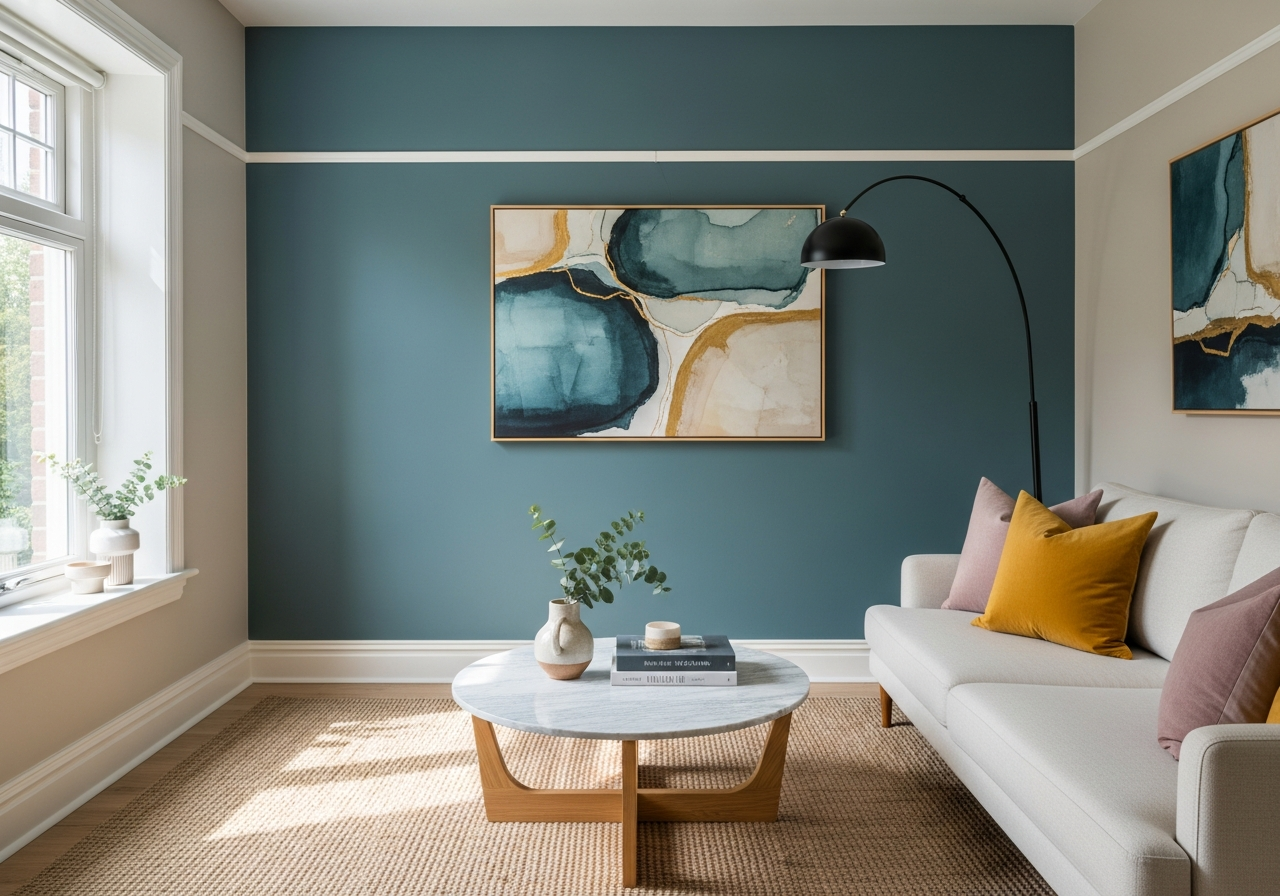
Deep, rich colors create a strong focal point for living rooms. Blues and greens are particularly popular. Benjamin Moore’s Admiral Blue is a dark, calming navy that pairs well with white trim. Sherwin-Williams’ Charcoal Blue works as a moody backdrop for modern or classic decor. For green lovers, Farrow & Ball’s Treron adds a soft, natural tone, while Benjamin Moore’s Fairmont Green offers a deeper, traditional shade.
Sophisticated Neutrals
Warm whites and off-whites create a clean, elegant look. These colors brighten the room and make spaces appear larger. Earth tones, like beige, taupe, and soft browns, ground the room and add warmth. They mix well with wood furniture, natural fibers, and metals, making the living room feel cozy yet refined. These choices remain stylish year after year.
Unexpected Accent Colors
Adding small touches of unusual colors can personalize your living room. Mauve and purple tones bring softness and subtle drama without overwhelming the space. Sunshine yellows and turquoise provide cheerful pops that brighten up neutrals or darker hues. These accents often appear on a single wall or in decorative details, adding personality while keeping the main color calm.
3. How to Choose the Best Paint Design for Your Living Room
The best choice depends on your living room’s size, lighting, furniture, and your personal taste. Start by looking at how much natural light the room gets. Brighter rooms can handle darker or more saturated colors, while darker rooms often need light shades to stay open and inviting.
Consider your furniture’s color and style next. Light-colored walls suit darker furniture, creating contrast. If your furniture is light, darker walls can help it stand out. Think about the mood you want: Do you use the room for relaxing, entertaining, or both? This will guide your color and finish choices.
Test samples before committing. Paint small patches on different walls to see how the colors look at various times of day. This step helps avoid surprises and ensures the final result is just right for your space.
Conclusion
The best paint design for a living room blends color, finish, and room features to create a balanced, welcoming space. It’s not just about picking a popular color, but one that matches your lighting, furniture, and lifestyle.
Start by assessing your room’s light and size, then consider how you want the space to feel. Test paint samples on your walls before deciding. This way, you’ll confidently choose a design that transforms your living room into a comfortable and stylish retreat.