
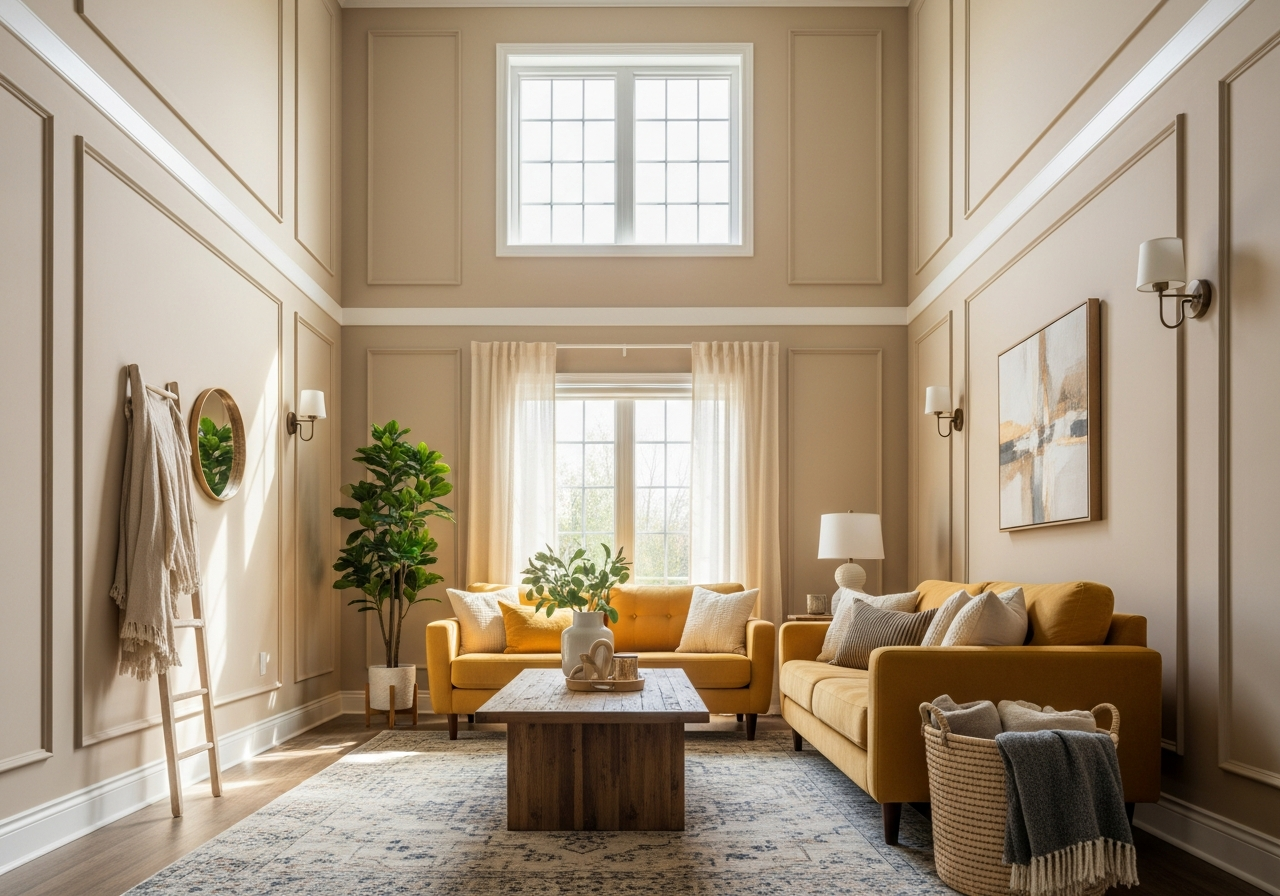

Best Paint Colors for Large Rooms with High Ceilings
Large rooms with high ceilings offer a stunning amount of space, but they can also feel cold or overwhelming without the right color choices. Picking the best paint colors can help these spaces feel more inviting and balanced. Whether you want a cozy vibe or a bold statement, the colors you choose will shape how the room looks and feels. This guide explains how to make smart paint choices that work with both size and light, so your large rooms feel just right.
1. Understanding Paint Colors for Large Rooms with High Ceilings
Large rooms with soaring ceilings can feel either grand or cold—the right paint color makes all the difference between a welcoming space and an empty cavern. These rooms need special color care because the size changes how paint looks and feels. For example, colors can seem lighter or darker depending on how big the room is and where the ceilings reach.
High ceilings add a unique challenge by changing how light spreads and how colors come to life. A color that works in a smaller space might look very different when walls stretch higher. It can even make rooms feel colder or less cozy if the color isn’t balanced correctly.
Color also affects mood. Large rooms painted in cool colors might feel open and calming but also a bit empty. Warm colors invite comfort and energy, making the room feel more connected rather than distant. Understanding color theory—how colors change based on their surroundings and scale—is key to making a large room feel just right.
How Room Size Changes Color Appearance
Color appears different in big rooms because there is more wall space and usually more light. Lighter colors in large spaces often feel even lighter, which can sometimes lead to an empty or washed-out feeling. Dark colors can either make a room feel cozy or overwhelm it if not used carefully. The scale of the room makes the paint carry more visual weight, so it’s important to think about how colors reflect or absorb light across wide walls.
The High Ceiling Challenge
High ceilings draw the eye upward, making the space feel taller but sometimes creating a cold or cavernous effect. Paint colors play a big role in breaking up that height visually. Darker or warmer colors on upper walls or ceilings can reduce the sense of distance and add intimacy. But too dark can shrink the space, while too light can make it feel enormous and bare. Balancing these factors helps turn a tall, open room into a cozy area that still feels grand.
2. Light Reflectance Value (LRV) and Why It Matters
Before picking any paint color, understanding LRV numbers can save you from a dark, cave-like room or walls that glare like a hospital. Light Reflectance Value (LRV) measures how much light a color reflects, and it is a number from 0 to 100. Low numbers mean the color absorbs most light and looks darker; high numbers mean it reflects more light and looks brighter.
In large rooms with high ceilings, LRV helps you balance brightness and warmth. If your room has little natural light, choose colors with a high LRV (lighter paints) to prevent the space from feeling gloomy. If the room gets plenty of sunlight, mid-range LRV colors maintain warmth without making the space feel overly bright or harsh.
Paint chips often display their LRV alongside color samples. Checking these numbers gives you a better sense of how the color will perform beyond just what it looks like in a small sample.
LRV Guidelines for Dark Rooms (65+ LRV)
Rooms with poor natural light benefit from high LRV colors. These paints reflect more light, helping make the space feel open instead of shadowy. Aim for paints with LRV values above 65 to brighten rooms that otherwise might feel like caves. Whites, creams, and soft pastels tend to fall into this range.
In large rooms, these light colors also prevent the walls from seeming too heavy or oppressive, while high ceilings can trap light and help bounce it around more, which reduces stark shadows.
LRV Guidelines for Bright Rooms (55-60 LRV)
If your large room with high ceilings has a lot of daylight, colors with an LRV between 55 and 60 work well. These paints reflect moderate light and help reduce glare. They keep the room feeling lively but stop the walls from looking too washed out.
Mid-range LRV colors often include deeper neutrals, soft warm tones, and muted blues or greens. They balance light and shade, making the room feel welcoming yet grounded.
3. Best Warm Paint Colors to Make Large Rooms Feel Cozy
Warm colors pull walls inward visually, turning that airplane hangar feeling into something more like a hug. They make large spaces with high ceilings feel inviting and comfortable. When used in the right places, warm colors can add both drama and subtle charm.
Deep purples and navy blues add a touch of richness and make a bold statement. They work well as accent walls or in rooms where you want a sense of luxury without darkening the whole space.
Mustard yellow and teal bring personality and energy. These tones brighten rooms and can give personality while still feeling grounded. They pair well with warm wood furniture or calm neutral accents.
For a subtle effect, cafe au lait and warm gray tones offer gentle warmth without being overwhelming. These colors can cover all walls and still keep the room feeling snug but open.
Warm colors are best used carefully—either on one or two walls or as trim or ceiling shades—especially in very large rooms. This approach prevents the space from feeling smaller or too intense.
Conclusion
The best paint colors for large rooms with high ceilings depend on your room’s light and size but generally include warm tones or mid-range colors that balance scale and brightness. Using LRV as a guide helps you pick colors that brighten or cozy the space as needed.
Start by measuring your room’s natural light and checking paint chip LRV values. Consider warm colors for coziness or lighter tones to enhance openness. Test samples on walls and ceilings, then adjust based on how the room feels throughout the day.