
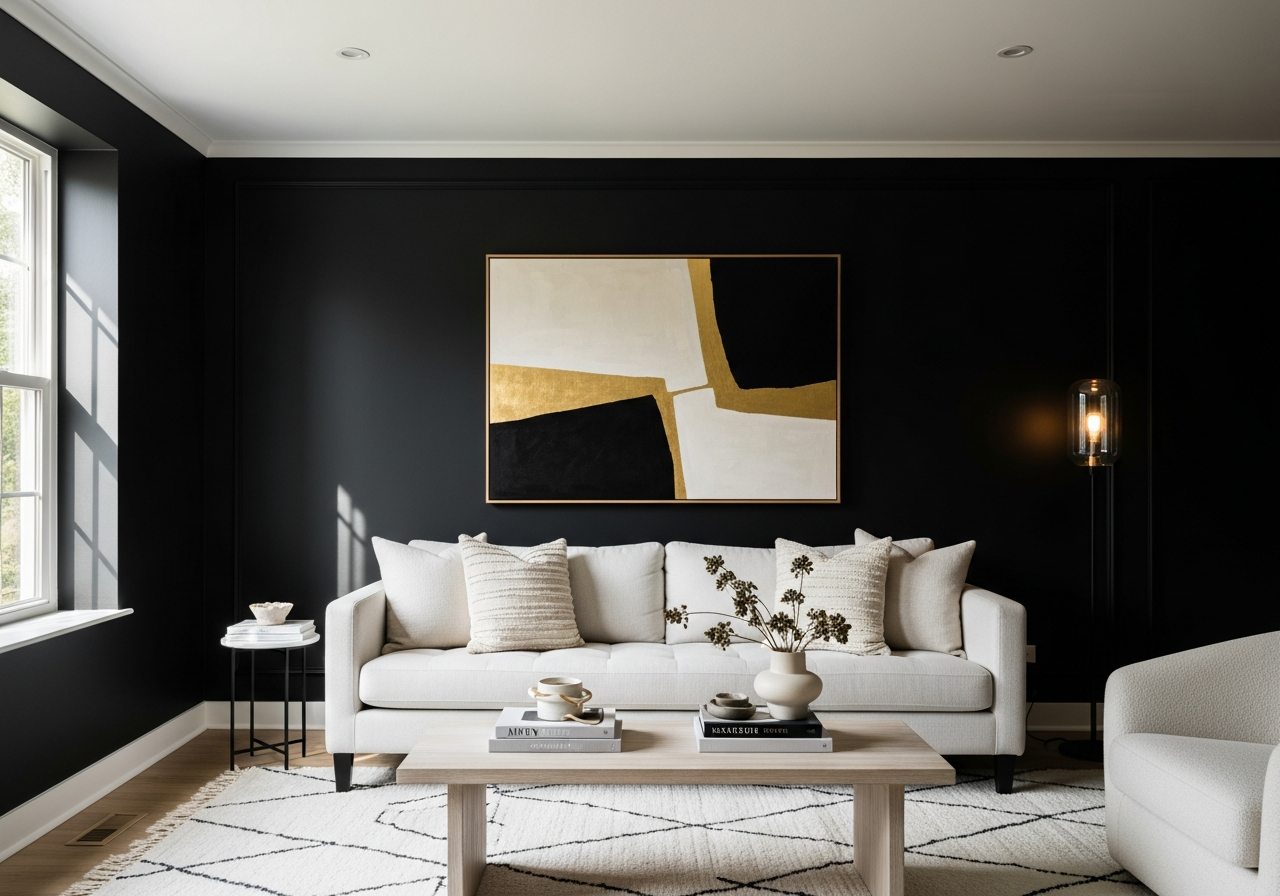

1. Why Black Paint Works in Living Rooms
Black paint might seem like a daring choice, but it’s one of the most flexible colors when it comes to shaping a living room that feels both elegant and inviting. This shade brings a unique mix of drama and warmth to your space, creating a cozy retreat where you can relax without the room feeling cold or stark.
One of the main reasons black paint works so well is its ability to create an intimate, cocoon-like atmosphere. It wraps the room in a soft, shadowy embrace that can make large living areas feel more connected and personal. At the same time, black acts as a perfect backdrop to highlight colors and art. Paintings, sculptures, and furniture pieces stand out strikingly against the deep hue, drawing attention to your carefully chosen decor.
Another practical benefit is how black paint hides imperfections. Unlike lighter shades that can show scuffs, dents, or uneven textures, black camouflages these flaws, making walls look smoother and well-maintained over time. This quality makes cleaning and upkeep less demanding as minor marks simply fade from view.
Black also blends seamlessly with a wide variety of design styles. Whether your living room follows a sleek modern look, a cozy traditional vibe, or a rugged industrial aesthetic, black can pull the room together. It’s a color that balances boldness with subtlety, allowing you to mix textures, metals, and fabrics without clashing.
The Psychology of Black Spaces
Black often symbolizes power, elegance, and mystery, which affects how people feel in a room painted in this color. It tends to ground emotions and can create a sense of calm and control. For many, black rooms feel like a safe haven, shielding them from distractions and allowing them to focus or unwind more deeply. This soothing quality makes black ideal for a living space where comfort and calmness are priorities.
That said, black can also evoke feelings of sophistication and depth, making the environment appear more refined and artistic. This psychological impact carries through in both large and small spaces, enhancing your living room’s mood without overwhelming it. The key lies in using black thoughtfully to maintain balance and avoid feelings of heaviness.
Black Paint vs. Other Dark Colors
Compared to other dark shades like navy, charcoal, or deep green, black stands out for its unmatched richness and versatility. Dark colors can bring warmth or coolness, but black is the most neutral, allowing it to complement nearly every hue rather than compete with it. While navy blue or forest green adds a hint of color, black provides a true blank slate that accentuates artwork or furnishings.
Dark colors vary in intensity and mood, but black’s boldness has a grounding effect that other colors sometimes lack. For example, dark grays can appear dull or industrial, while black adds depth and a touch of luxury. This makes black paint especially suited for living rooms where a striking yet balanced atmosphere is desired.
2. Choosing the Right Black Paint for Your Living Room
Not all black paints are the same. The subtle undertones within your black shade can change the entire look and feel of your living room. Picking the right tone is critical because it influences how much warmth or coolness the room has, and how well the black blends with your other colors and light sources.
Black paints often contain hidden hints of color that become apparent under different lighting conditions. Warm blacks have brown or red undertones that add softness and make a space feel cozier. These hues pair well with wood tones, warm metals like brass, and creamy whites. Cool blacks lean toward blue or green undertones, giving the room a sharper, more modern edge. These work beautifully with cool grays, chrome fixtures, and crisp linens.
Another important factor is the paint’s finish. Matte black paint absorbs light, which deepens the color but can also highlight wall imperfections more than other finishes. Eggshell offers a slight sheen and balances depth with durability, making it a popular choice for living rooms. Satin finishes reflect more light and are easier to clean, perfect if you expect more wear and tear or prefer a subtle glow on your walls.
Testing paint samples on your walls before committing is crucial. The way black looks in morning sunlight can differ significantly from how it appears under warm artificial light at night. Paint swatches should be observed at various times of day to understand how undertones shift with light changes. This process helps avoid surprises and ensures the black paint complement the room’s atmosphere you want to create.
Understanding Black Paint Undertones
Every black paint base has subtle undertones that influence its personality. Warm undertones such as chocolate brown, deep red, or even hints of purple make black feel inviting and soft. Using warm black tones helps prevent the space from feeling too stark or cold and can add richness when paired with warm furniture and lighting.
Cool undertones, including navy blue, emerald green, or slate gray, give black a modern, sleek look. These colors suit living rooms with minimalist decor or high-contrast color schemes. Cool blacks can feel more formal but also add energy, especially in rooms with abundant natural light. Choosing undertones that harmonize with your room’s other colors is key to achieving a cohesive appearance.
Best Paint Finishes for Living Room Walls
Matte black is favored for its luxurious, velvety texture that absorbs light and makes walls disappear in a soothing way. However, because it shows marks more easily, it’s best for rooms with low traffic or surfaces that can be touched minimally.
Eggshell offers a soft sheen and better resistance to stains and scratches. This finish is a good middle ground, making it easier to clean while keeping much of the richness of matte.
Satin has more gloss and durability, ideal for living rooms where walls might get bumped or need frequent wiping. Satin also reflects enough light to keep black from feeling too heavy, which suits rooms used often or with children and pets.
Ultimately, the choice of finish depends on lifestyle, the look you want, and how much maintenance you’re comfortable with.
3. Strategic Ways to Use Black Paint in Living Rooms
Applying black paint thoughtfully can elevate your living room without making it feel small or dark. Whether used just for an accent or across the entire room, black offers endless options to enhance architecture and define spaces.
One popular strategy is using black for an accent wall. This approach adds depth and style without overwhelming the room. By selecting one wall, typically the focal point like behind a sofa or fireplace, black creates a striking backdrop that highlights paintings, shelves, or feature furniture.
If you feel bold, painting all four walls in black can instill drama and elegance. To avoid an overly dark space, this method works best in rooms with plenty of natural light and lighter furnishing. Reflective surfaces like mirrors or metallic finishes can balance the dark paint, making the space feel open rather than closed in.
Black paint also works beautifully for highlighting architectural features. Painting window frames, molding, or built-in shelving in black draws attention to these details, adding character and dimension. This subtle use keeps the room grounded while defining structural accents.
In open floor plans, black can help create zones by separating areas with color. For instance, painting the living zone’s walls black while leaving dining areas lighter gives each section its own identity. This makes large spaces feel cozy and purposeful without physical barriers.
The Accent Wall Approach
Choosing the right wall for a black accent is key. The wall should have visual importance—often the one you face when entering the room or the space that hosts striking pieces like artwork or media units. An accent wall in black will pull focus to those features while giving the rest of the room a softer environment.
Pair black accent walls with lighter walls or warm textures like wood floors and soft rugs. This contrast prevents the room from feeling too heavy and allows the black to shine without dominance.
Going All-In with Four Black Walls
Painting every wall black takes confidence but can produce a striking, intimate atmosphere. Because black absorbs light, rooms painted dark all over need good natural sources or ample layered lighting—think floor lamps, sconces, or ceiling fixtures with warm bulbs. Glossy finishes on furniture and decor help reflect light around the room.
Also, mix in varying textures like velvet cushions, silk curtains, and plush throws to prevent the space from feeling flat. The richness of fabrics plays beautifully against black walls, creating depth and warmth alongside the dramatic color.
Painting Trim and Architectural Details
Rather than walls, black paint can emphasize trim, baseboards, doors, or architectural elements. This subtle use adds definition and can frame bright or neutral walls with a graphic edge. Highlighting moldings or paneling in black creates a layered effect that looks both classic and modern.
This technique works in almost any style. For traditional spaces, black trim offers sleek contrast, while in industrial or contemporary rooms, it can add dynamic lines. The key is balancing black details with the overall room palette so the room feels tied together.
Conclusion
Black paint is an effective option for transforming living rooms into spaces that are both dramatic and comfortable. Its ability to create intimacy, highlight decor, and work with any style makes it a versatile choice.
Choosing the right black paint involves understanding undertones and finishes to match your lighting and decor. Using black strategically—whether on accent walls, fully painted rooms, or architectural details—ensures the color enhances your living space without overpowering it.
Start by testing paint samples to see how different blacks interact with your light. Consider the mood you want and select finishes that suit your lifestyle. Then use black where it can add depth or highlight key features. This thoughtful approach will help you enjoy a bold yet balanced living room for years to come.