
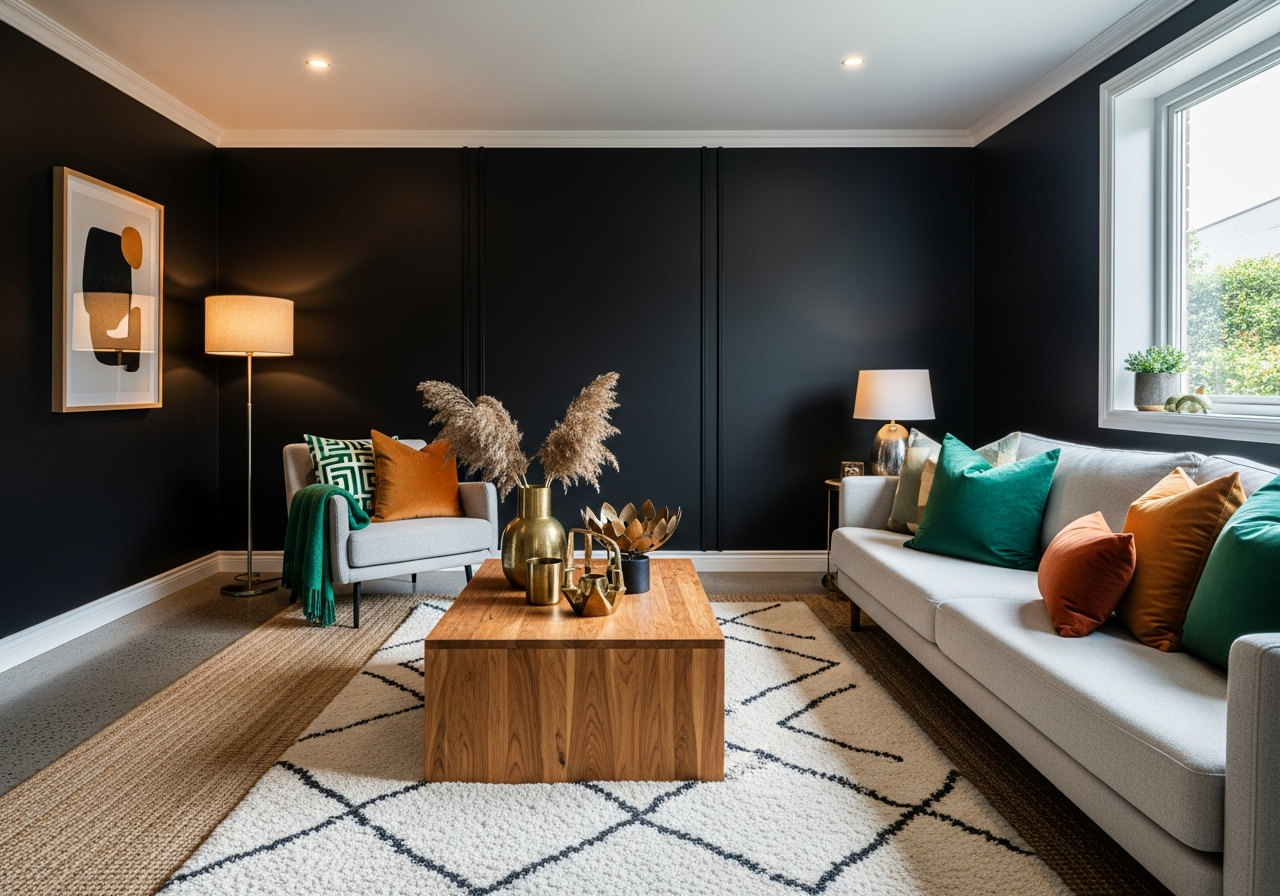

1. Why Black Paint Living Room Ideas Work Better Than You Think
Black paint often has a bad reputation for making rooms feel small and gloomy. But the truth is, black walls can transform your living room into a stylish, dramatic space that feels larger and more inviting. When you use black paint right, it creates a deep background that makes other elements in the room stand out. Your furniture, artwork, and décor suddenly come alive because black acts like a stage that lets everything shine.
One surprising benefit is that black walls can actually make a room feel bigger. This happens because dark paint absorbs light and softens hard edges. It tricks the eye into seeing more depth than a bright white or pastel might offer. Instead of bouncing light around a room, black creates a cozy backdrop that invites your eyes to explore details more closely.
Black paint is great at hiding common wall imperfections. Scratches, dents, or uneven patches are less visible against a dark surface. This means you can avoid the stress and cost of perfect wall prep that lighter colors demand. The black paint essentially conceals flaws, making your living room look cleaner and carefully designed.
Another factor is how natural light interacts with black walls. As daylight changes during the day, your black wall shifts in tone and mood. Morning light might bring out blue undertones, while warm evening light softens the black to a charcoal gray. This dynamic quality means your space never feels stagnant or dull.
Finally, black paint is easier to decorate around than many expect. Unlike beige or gray, black is a true neutral that goes with nearly every color. You can add bright cushions, shiny metals, natural woods, or colorful rugs without worrying about clashing. Black walls provide a flexible foundation that lets your personality come through in your décor.
The Psychology of Black Spaces
Black is often seen as heavy or formal, but in interior spaces, it actually promotes a sense of calm and intimacy. Black walls make rooms feel like private retreats, reducing external distractions. This is why many luxury hotels use dark colors in lounge areas and bedrooms—to create an atmosphere of comfort and relaxation. The color black signals strength and sophistication, helping occupants feel grounded and focused.
Because black absorbs light and sound better than lighter colors, it can make living rooms feel quieter and more serene. This subtle effect supports mental clarity and stress relief, turning your living room into a peaceful haven.
Black Paint vs. Dark Gray: The Real Difference
Many homeowners confuse black paint with dark gray, but there are key differences. Black paint contains minimal light-reflecting pigments and offers the deepest, most intense color possible. Dark gray, while close, sits lighter on the spectrum and reflects more light.
Undertones are important too. Black paints can skew towards blue, green, brown, or even purple, affecting the mood of the room. Dark gray tends to be cooler and softer. If you want bold drama, black will deliver more impact. But if you prefer a gentler, shadowy look, dark gray might be a better choice.
The amount of light reflected also varies. Black absorbs nearly all light, creating striking contrast with furnishings and art. Dark gray reflects more light, making rooms feel less intense but also less rich. Understanding this difference helps you choose the right dark shade for the atmosphere you want to create.
2. Choosing the Right Black Paint for Your Living Room
Not all black paints are the same, and picking the wrong one can turn your living room into a cave instead of a chic space. Some blacks have cool blue or green undertones, while others lean warm with brown or red hints. Knowing how these undertones influence your room’s vibe is key to finding the perfect black.
Popular black paint colors like Benjamin Moore’s Onyx and Sherwin Williams’ Tricorn Black have become favorites for a reason. Onyx is a deep black with subtle warm undertones that work well in rooms with a lot of natural light. Tricorn Black is cooler and perfect for creating modern, sleek looks. Choosing the right brand and shade helps your space feel balanced and intentional.
Understanding warm blacks versus cool blacks is crucial. Warm blacks have brown or red tones that add coziness, ideal for rooms facing north or with limited sunlight. Cool blacks have blue or green undertones that look crisp and fresh, blending nicely with minimalist or industrial décor. Match your black paint to the natural light and style of the room to avoid feeling closed in or cold.
Sheen levels play an important role too. Matte finishes absorb light and hide wall texture, while satin and eggshell reflect a bit more light and are easier to clean. With black paint, matte is popular for its drama and softness, but it’s also harder to touch up. Satin offers a gentle glow without too much shine, making it a practical middle ground for busy living spaces.
Testing paint samples properly is critical. Instead of looking at a tiny swatch, paint a large section on your wall and observe how it looks at different times of day. Because black changes with light, seeing it in your actual space prevents surprises. Try samples near windows, corners, and under artificial lights for the full effect.
Top 5 Black Paint Colors That Don’t Look Flat
- Benjamin Moore Onyx: Warm black with slight red undertones that add depth and richness.
- Sherwin Williams Tricorn Black: A cooler black with clean, true black appearance and minimal undertones.
- Farrow & Ball Pitch Black: Very deep black with a hint of warmth, great for colorful decor.
- Behr Carbon: Slightly softer black with faint green undertones that work well in natural light.
- Valspar Raccoon Fur: A rich black with brown undertones that add warmth and balance.
Matte vs. Eggshell vs. Satin for Black Walls
Matte finishes soak in light and give black walls a velvety, soft look. This finish hides imperfections well but shows scuffs easily, making touch-ups tricky. It’s great for low-traffic rooms where you want maximum moodiness.
Eggshell has a slight sheen, bouncing some light back to create a subtle glow. It’s more durable than matte but less shiny than satin, striking a balance between drama and practicality.
Satin reflects more light and offers better scrubbability. It can keep black walls looking cleaner for longer in busy living rooms. However, satin highlights texture and flaws more, so good surface prep is needed before application.
3. Styling Your Living Room Around Black Walls
Black walls set a strong foundation that makes decorating easier and more exciting. They bring colors and textures to life, so you can play confidently with bold accents and patterns. Start by choosing furniture and décor that contrast well against the dark backdrop to prevent your room from feeling flat.
Light-colored furniture, such as white or cream sofas and chairs, really pop against black walls. They create a crisp, fresh look that balances the darkness. To add warmth, incorporate wooden pieces or leather in medium to dark tones. The natural grain in wood stands out beautifully and adds a cozy feel.
Textiles like rugs, curtains, and cushions are where you can show personality. Bright colors such as mustard yellow, emerald green, or deep red work wonderfully. These jewel tones look richer next to black and make your living room feel inviting and lively.
Mix in metallic elements like brass, copper, or chrome for a touch of glamour. Mirrors with ornate frames or shiny coffee tables reflect light and add sparkle. Art on black walls deserves special attention—large, bold canvases or framed prints with white mats create a gallery effect.
Layering different textures is essential to soften the black’s intensity. Think velvet pillows, woven blankets, shaggy rugs, and smooth ceramics. These contrasts keep the space feeling balanced and interesting.
4. Lighting Tips to Complement Black Paint
Lighting plays a major role in making black walls feel welcoming. Because black absorbs light, you need to plan your lighting carefully to avoid spaces that feel dark or closed in.
Use a combination of overhead lights, floor lamps, and table lamps to create layers. Warm-white bulbs help counteract any coldness from cooler black tones and give skin tones a natural look.
Consider placing light sources near walls to brighten the space and highlight the texture of the paint. Uplights or picture lights can bring attention to artwork or architectural details.
Natural light works beautifully with black walls, so keep windows clear or use sheer curtains to maximize daylight. If your room lacks windows, you might try adding mirrors to bounce the light around and prevent the room from feeling too enclosed.
Dimmer switches can also be a smart addition. They let you adjust lighting levels to fit different times of day or moods, enhancing the drama of black walls without overwhelming the room.
5. Common Mistakes to Avoid with Black Paint in Living Rooms
The biggest mistake is rushing into painting all the walls black without testing first. Black is powerful and can easily overwhelm if the room isn’t set up right or lacks natural light.
Overusing dark colors on furniture and décor can make the space feel heavy. Balance is crucial—mix black walls with lighter or colorful furnishings to maintain harmony.
Ignoring undertones can cause frustration. Picking a black with blue undertones in a warm, south-facing room might clash with sunlight and make the walls appear muddy instead of crisp.
Choosing the wrong finish also risks making your walls look flat or dirty quickly. Poor lighting planning can turn the room into a shadow box, so think carefully about bulb warmth, quantity, and placement.
Lastly, neglecting wall prep shows up more on dark paint. Make sure your walls are smooth and clean, and repair any holes or bumps before painting. Black paint will highlight imperfections rather than hide them if the surface is rough.
Conclusion
Black paint living room ideas create a bold, elegant space that highlights your décor in unique ways. Black walls add depth, hide flaws, and offer a neutral but striking background that works with many styles.
Choose the right black paint by understanding undertones, finishes, and how light will affect your room. Decorate with contrasting furniture, layered textures, and thoughtful lighting to keep the space welcoming. Test samples and plan carefully to avoid common pitfalls. With these steps, black-painted living rooms can become your favorite, most dramatic spot at home.