
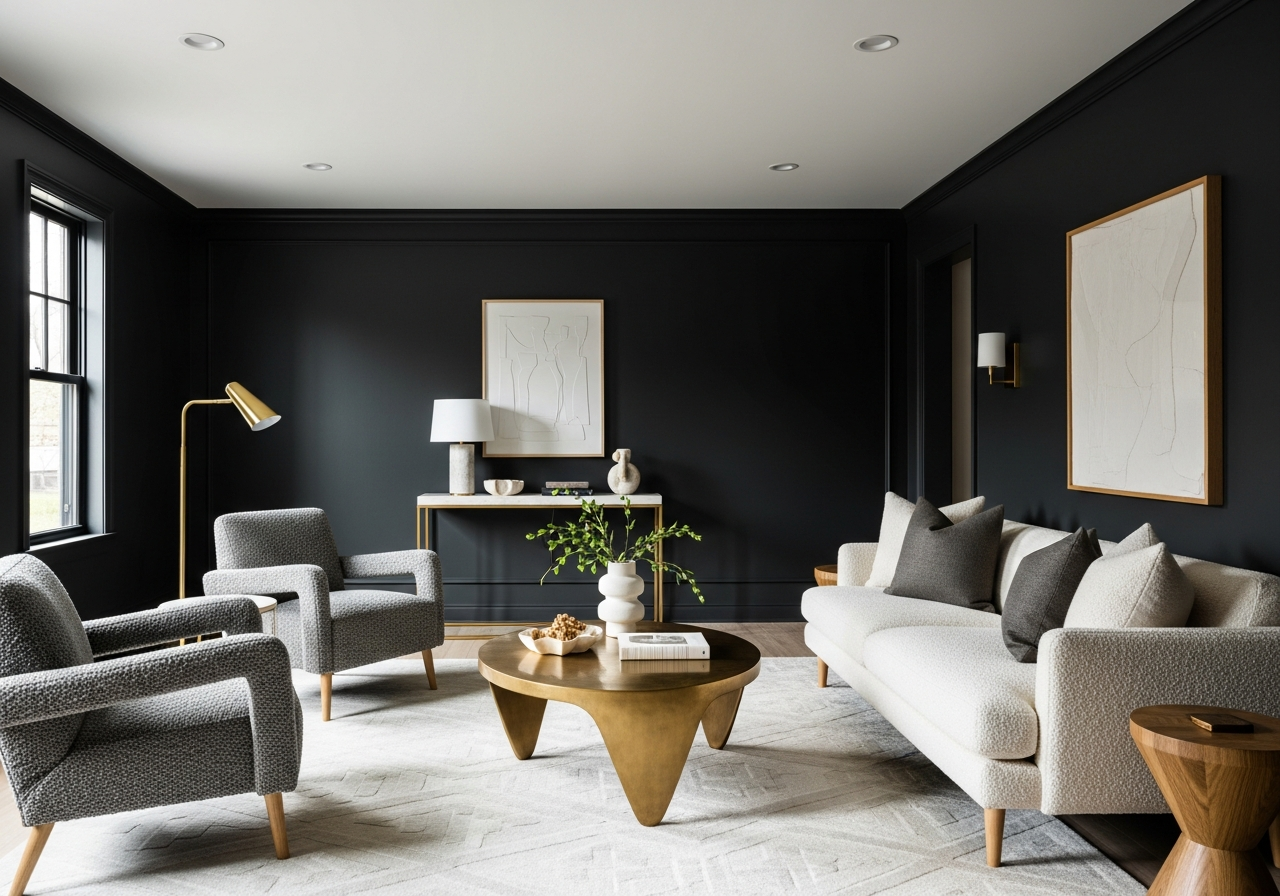

Why Black Paint for Living Room Walls Creates Sophisticated Spaces
Black paint in your living room isn’t just a bold choice—it’s a way to bring depth, drama, and warmth. Designers often use black to craft spaces that feel both modern and timeless, turning ordinary rooms into inviting retreats. Black can change how you see colors and shapes, making everything else stand out more clearly.
One of the key reasons black works so well is the way it creates visual depth. Dark walls can add layers to a room, making the space feel more complex and interesting. Contrary to popular belief, black doesn’t always make a room feel smaller. When done right, it actually creates a cozy, enveloping feeling that many find comforting.
Psychologically, black walls can make a room feel intimate or dramatic, depending on the lighting and decor. It’s like wrapping your living room in a soft, dark blanket that invites relaxation. Of course, the impact black paint has depends on room size and natural light. Small rooms with little sunlight may need extra consideration before using bold dark colors, but larger, well-lit rooms can handle black beautifully.
The Cocooning Effect: Why Black Feels Inviting
Black paint absorbs light rather than reflecting it, which can create a sense of enclosure similar to a small cave. This physical effect often translates into emotional comfort. People tend to feel protected and snug in black spaces, which is why it’s sometimes called the “cocooning effect.” This feeling is essential if you want your living room to be a restful space after a hectic day. The softness of shadow invites quiet moments and deep conversations.
Black as a Neutral: The Ultimate Backdrop
While black may seem bold, it actually acts as an excellent neutral because it pairs well with every color. It highlights artwork, furniture, or decorative pieces better than white or gray backgrounds because it doesn’t compete for attention. Black can ground a room, giving other elements a strong base to shine. For this reason, designers use black as a backdrop to create rooms with clear focus and a polished finish.
Choosing the Right Black Paint for Your Living Room
Choosing black paint is more complex than picking the darkest color on the shelf. The wrong black can make your space feel cold, dull, or even oppressive. Understanding what makes a black paint color “right” for your living room will ensure a harmonious and beautiful space.
One of the first things to consider is the undertone of the black paint you choose. Blacks come with different undertones—some lean warm with hints of brown, red, or yellow, while others lean cool with blue, green, or purple hints. Warm blacks create a cozy, relaxed feeling, while cool blacks feel crisp and modern. Your choice depends on the mood you want to create and what colors you plan to put next to the walls.
Popular Designer Black Paint Colors
Some black paints are known for their unique undertones and finishes, making them favorites among designers. For example, a black with blue undertones can appear cooler and fresher, while one with brown undertones tends to feel softer and more natural. These subtleties matter because they affect how the paint looks at different times of day and under varying light sources.
How LRV Affects Your Black Paint Choice
Light Reflective Value (LRV) measures how much light a paint color reflects. Black paints usually have very low LRV, but there can be variations. The lower the LRV, the darker the paint appears and the less light it reflects. If your living room has little natural light, picking a black paint with a slightly higher LRV might help prevent the room from feeling too dark or heavy.
Paint Finishes: Which Sheen Works Best
Finish is another important factor. Matte blacks have no shine, which hides wall imperfections well and creates a soft look, but they can be harder to clean. Eggshell and satin finishes reflect a bit more light, making walls easier to wipe down and giving a slight glow. Semi-gloss adds shine and reflects more light, which can make the black appear richer and more vibrant, but it also shows flaws more easily. The choice depends on the room’s use and your preference for texture and maintenance.
Testing paint samples in different spots during the day and night is crucial. Black paint can behave differently in natural sunlight, warm indoor light, or cool LED lighting. Taking time to observe the paint before committing can save frustration later.
Strategic Placement: Where to Use Black Paint in Your Living Room
Painting all the walls black might be overwhelming or create a cave-like feeling that isn’t for everyone. You don’t need to cover every surface to achieve the dramatic sophistication black paint offers. Thoughtful placement can make your living room stylish and balanced without feeling too dark.
One common approach is to use black on a single accent wall. This technique adds depth and a focal point without dominating the entire space. An accent wall behind your sofa, fireplace, or media center can immediately make your room feel elegant and grounded.
Painting trim, doors, and millwork black is another clever way to add contrast and sophistication. Black trim creates clean lines that pop against lighter walls, framing windows and doors like pieces of art. Black doors offer a modern look and pair especially well with brass or gold hardware for a touch of luxury.
Black ceilings are an adventurous choice but can work well in large rooms with high ceilings or strong natural light. This unexpected use of black draws the eye upward and can make the space feel grand.
Using black on built-in shelves or bookcases highlights objects on the shelves and adds a neat, cohesive effect. Surrounding colorful objects with black creates contrast that makes the items stand out more vividly.
Design Tips and Pairings to Complement Black Walls
Black walls set a stage where creativity thrives. To make black paint work best for your living room, it helps to think about colors, textures, and lighting. Certain pairings can enhance the room’s feel and prevent black from overwhelming.
Warm metals like brass, bronze, or gold shimmer beautifully against black paint, creating contrast that feels luxurious and inviting. These accents add warmth and glimmer that break up the darkness without clashing.
Natural materials like light wood, wool, and linen soften black walls with tactile texture. Mixing black walls with these materials brings balance and adds layers to the space, making it feel more lived-in and welcoming.
Bright colors like emerald green, mustard yellow, or bold reds can pop powerfully against black. These splashes of color add energy and sense of personality without taking away from the sophistication black provides.
Soft lighting is key for rooms with black paint. Avoid harsh overhead lights; instead, use table lamps, floor lamps, and dimmable options. Warm bulbs create a gentle glow that enhances the cocooning effect.
Artwork, mirrors, and textiles also help personalize black walls. Large framed prints or mirrors with shiny frames reflect light and add interest. Textiles in rich colors or interesting patterns and textures soften the mood and provide a tactile layer.
Maintenance and Practical Considerations for Black Paint
Black paint can be stunning but comes with some care and upkeep challenges. Dark walls tend to show dust, fingerprints, and scratches more than lighter walls. Choosing a finish that balances appearance with durability is important, especially in busy living rooms.
Matte finishes are elegant but may be harder to clean. Satin or semi-gloss finishes are more forgiving when it comes to wiping away smudges and marks. If you have kids or pets, consider these practical factors carefully.
Black walls can absorb warmth, which might affect room temperature slightly. However, this effect is usually subtle and more relevant in rooms with direct sunlight or heat sources.
Lighting is crucial to maintain the room’s atmosphere. Plan for multiple layers of lighting to control mood and visibility. Use dimmers where you can so the room can shift from bright and inviting to soft and intimate.
Touch-ups with black paint can be tricky because color and finish need to match exactly. Keep some leftover paint and test it occasionally to make sure it still matches your walls, especially if paint fades over time from sunlight exposure.
Conclusion
Black paint for living room walls transforms spaces into sophisticated, cozy areas that balance depth and drama. It works well as a neutral backdrop while adding visual interest through color contrast and texture.
To create the best black-painted living room, select the right undertone and finish, consider light levels, and apply black strategically on walls, trim, or accents. Complement black walls with warm metals, natural textures, and layered lighting. Finally, account for maintenance by choosing durable finishes and planning lighting carefully. This approach ensures your living room feels both stylish and comfortable.