
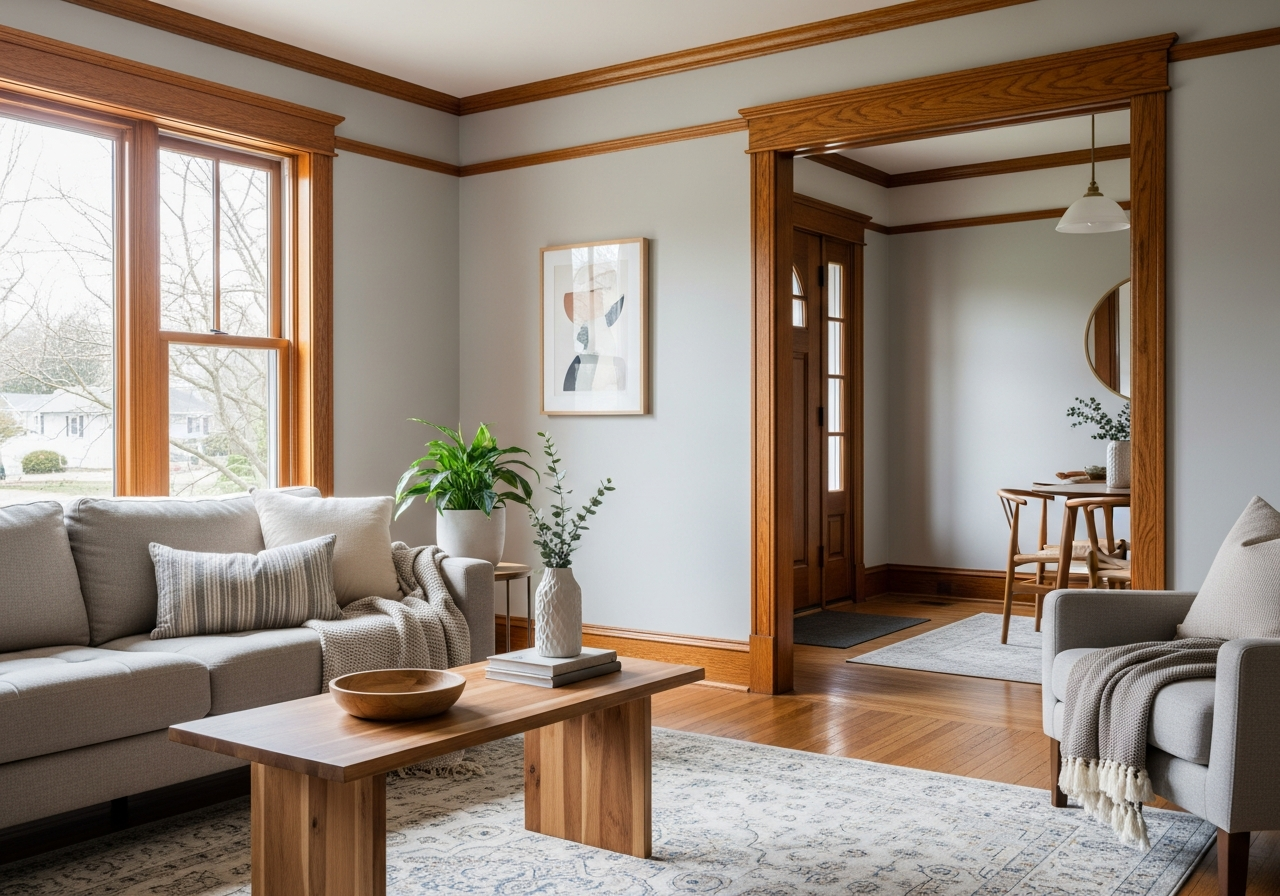

Understanding Your Wood Trim as a Design Element
Your wood trim isn’t just a frame for your walls—it adds its own color story to your living room. When picking paint, understanding your wood trim’s tone and finish helps you choose colors that blend well rather than clash. Wood trim varies widely, from warm golden hues to cooler, richer browns, and the finish can range from shiny to matte. These factors affect how your paint color looks next to the wood.
Identifying whether your wood trim carries warm or cool undertones is the first step. Warm woods often have colors like honey, amber, or reddish hues, while cool woods lean toward grayish or deep brown tones. The undertone will influence which paint colors complement or compete with your trim. It’s helpful to hold paint cards next to your wood trim under natural light to spot subtle clashes or harmonies before committing.
How to Identify Your Wood Tone
Start by examining your wood trim in different lighting. Warm wood tones tend to glow with colors like orange, red, or yellow. If your wood feels cozy and rich, it’s likely warm. Cool wood tones, however, look more muted with hints of gray, blue, or green. Oak and cherry often fall into warm categories, whereas walnut and some maples lean cool.
Touch the wood surface too—some warm woods have a softer feel compared to the crisp texture found in cool-toned woods. An easy test is to photograph a small piece of your trim and compare it to wood samples online, helping identify undertones you might miss with your eyes alone.
Using Paint Cards to Match Wood Colors
Paint cards can be your guide to a color that blends well with your wood trim. Place a paint card close to the trim and look at it from multiple angles and light conditions, preferably natural daylight. If a paint color stands out harshly or dulls the wood tone, it might not be the best choice.
Consider how sheen impacts appearance as well. Glossy wood reflects light differently than matte paintings, so pairing a matte wall with glossy trim can highlight texture contrasts beautifully. Conversely, pairing a matte wood finish with a high-sheen paint may cause visual imbalance in the room.
Matching paint cards thoughtfully helps avoid clashes and creates a unified look where trim and walls support one another. Even if the colors don’t match exactly, they should harmonize based on undertone and brightness.
White Paint Colors for Living Room with Wood Trim
White walls offer a fresh canvas that lets your wood trim shine. However, not all whites work equally well with every wood trim color. Choosing the right white means balancing warmth and coolness so your walls elevate the wood instead of overpowering or clashing with it.
Whites fall broadly into cool and warm categories. Cool whites have blue, green, or gray undertones that suit warm woods by providing contrast without harshness. Warm whites carry yellow or red undertones that pair naturally with darker or red-hued woods for a subtle blend. The goal is to avoid a stark white that creates too much contrast, which can make the space feel split or disconnected.
Cool Whites for Warm Wood
If you have wood that leans honey or golden, cool whites help keep your walls feeling crisp while making the wood glow. Look for whites with blue or gray undertones like soft ivory or smoke white. These cool whites stop your wood from becoming too orange or overly yellow under warm lighting.
For example, shades like “Chantilly Lace” or “Simply White” offer clear, cool whites that brighten without washing out trim. These soften the warmth of the wood, making both the wall and trim appear fresh and balanced.
Warm Whites for Darker Woods
Darker woods such as walnut or mahogany benefit from whites with gentle warm undertones. Creamy whites, eggshell, or soft beige whites create seamless transitions where the warm wood feels embraced by the wall color rather than isolated.
Choosing a warm white paint like “Alabaster” or “Ivory Lace” helps avoid cold, stark contrasts. The warmth in these whites complements the deeper richness of the wood, making the entire living room feel welcoming and cohesive.
Gray and Greige Options That Complement Wood
Gray and greige paint colors have a unique talent for balancing tradition and modern flair in a living room. Wood trim can feel more grounded when paired with these neutral shades, as they cool down warmer wood tones without losing harmony.
Gray hues lean toward the cooler side, so they highlight honey or golden wood tones by offering contrast that feels sophisticated rather than odd. Greige, a blend of gray and beige, acts as the perfect middle ground, softening the sharp edges of pure gray while working well with various wood finishes.
Light Grays for Bright Spaces
Light grays brighten the room without overpowering your trim. They’re excellent if you want airier spaces but still want to emphasize your wood’s natural color. Light grays like “Classic Gray” or “Repose Gray” will complement warm wood by offering just enough coolness to balance out the richness.
These shades reflect more light, helping smaller living rooms feel open while keeping the warmth of the wood grounded in the room’s palette. Paired with gloss or semi-gloss wood trim, light gray walls help the wood’s texture stand out.
Medium Grays for Cozy Rooms
Medium grays work well in larger, cozier living rooms where you want walls to feel substantial but not too dark. Shades like “Dorian Gray” or “Kendall Charcoal” support darker wood trims by creating a moody, dramatic effect that brings out the wood’s depth without competing for attention.
Greige options soften these medium grays with a touch of warmth, making the room feel inviting rather than cold. This is especially helpful when you have matte wood finishes or wide trim that needs subtle highlighting rather than a stark boundary.
Conclusion
Choosing paint colors for a living room with wood trim means understanding your wood’s tone and finish first. Whites, grays, and greige hues offer versatile options that enhance your wood trim without overpowering it.
To pick the best paint, examine your wood trim’s undertones and sheen. Test a few paint cards beside it in different lights. Think about the room’s mood and light levels, deciding between cool or warm whites, light or medium grays, or neutral greiges. With this approach, you’ll harmonize your walls and trim, making your living room feel complete and balanced.