
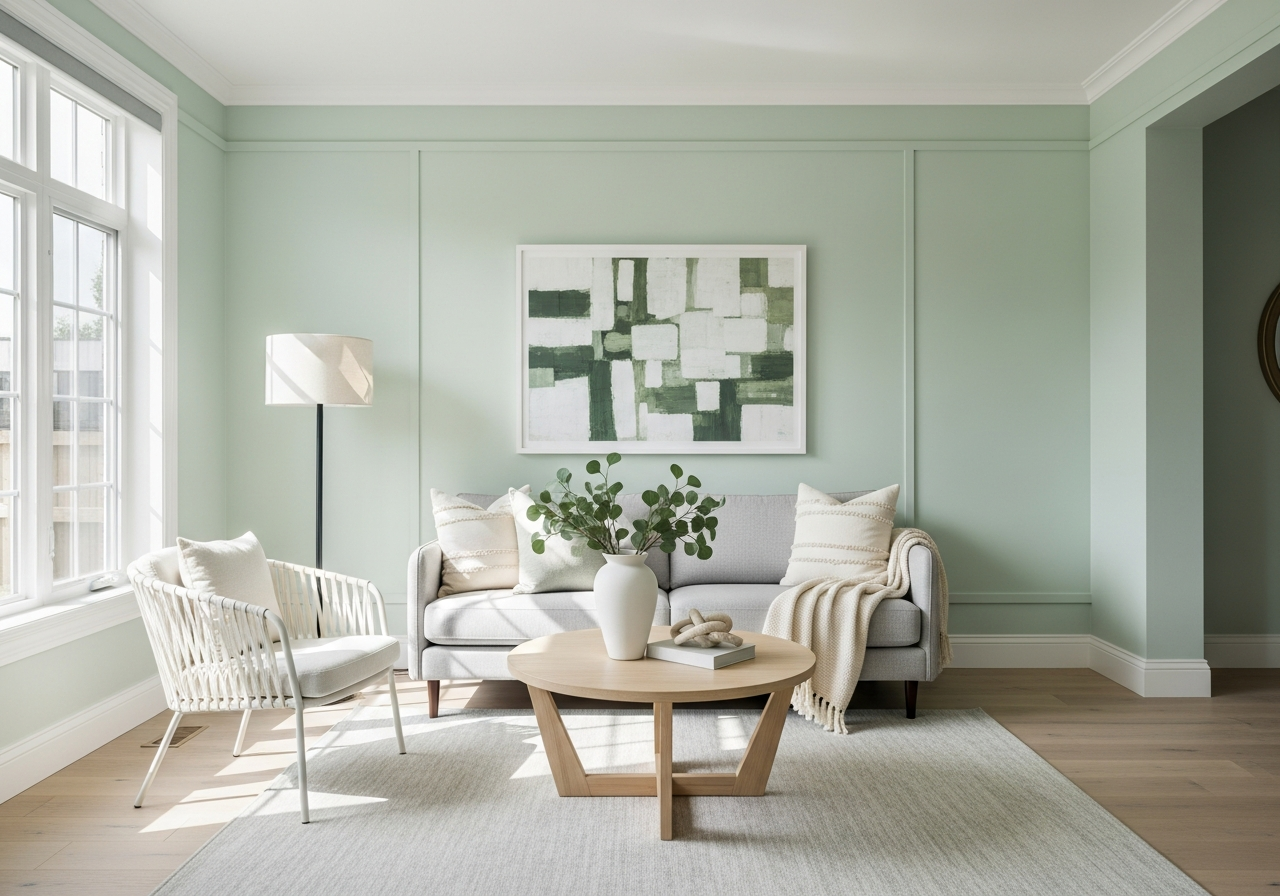

Why Light Green Paint Colors for Living Room Walls Work So Well
Light green brings the calming feel of nature right into your home. This color makes rooms feel bigger and brighter while keeping things cozy. Choosing a light green for your living room walls can set a gentle, peaceful tone that invites relaxation and comfort. It strikes a unique balance between freshness and calm, making it one of the best colors for living spaces.
Green carries deep meanings linked to balance and renewal. It is the color of life and growth, which makes it naturally soothing. When applied in a light shade, green helps to soften strong sunlight, creating a gentle glow that fills the room. This natural reflection brightens spaces without harshness, pairing well with daylight. The soft tones avoid overpowering the eye, helping to maintain a relaxed mood.
Light green works well with different decorating styles, from modern minimalist to traditional cozy. Its versatility comes from being a midpoint between warm and cool colors. In modern designs, it adds a cool, organic touch that keeps rooms feeling fresh and uncluttered. In traditional interiors, it enhances warmth by echoing nature-inspired palettes, connecting the indoors with outdoor views.
The color also helps create smooth visual flow between the inside of your home and the outdoors. This connection makes the living room feel more spacious and airy, as if the walls dissolve seamlessly into the garden, trees, or sky. Light green’s link to nature promotes a sense of well-being and grounding, which is perfect for a room meant to be lived in and enjoyed daily.
The Science Behind Green’s Calming Effect
Green is among the most restful colors for our eyes. Scientifically, it sits in the middle of the visible spectrum. This means the human eye doesn’t have to work hard to process it, making it less tiring. This easy viewing makes green inherently calming and refreshing. Studies have shown that environments with green tones can reduce stress and improve concentration.
Our brains associate green with nature — think of trees, grass, and plants. These natural landscapes have always provided a sense of safety and renewal throughout human history. So, when we see green indoors, our minds tap into those positive feelings. This calming effect makes light green walls perfect for relaxing spaces like living rooms where you gather with family or unwind after a long day.
How Light Green Makes Small Rooms Feel Larger
Another advantage of light green is how it plays with natural light. Because it’s a pale color, light green bounces sunlight around a room instead of absorbing it. This spreading of light creates brightness and reduces shadows, making even small rooms feel open and airy.
Unlike darker greens, which can close in space, light green expands it visually. The gentle tone lifts the walls and blurs edges, tricking the eye into perceiving more room. It also pairs beautifully with white trim or natural wood, which adds contrast without shrinking the space.
In compact living rooms, light green can create a fresh atmosphere without feeling stark or cold. The color still carries warmth and depth, giving a cozy, inviting glow rather than an overwhelming burst of brightness. It naturally balances openness and comfort, a rare quality in paint colors.
Top Light Green Paint Colors That Transform Living Rooms
Not all greens are created equal—some lean warm and earthy while others feel crisp and cool. Let’s explore the shades that work best in real homes. Picking the right tone will depend on the mood you want, your lighting, and your furniture style. These options cover a range of vibes, so you can find a green that truly transforms your living room.
Popular Sage Green Shades
Sage green is a soft, muted green with gray undertones that bring a touch of earthiness and calm. It feels natural but also sophisticated, making it a favorite for living rooms. Benjamin Moore’s October Mist is a light sage green that changes beautifully throughout the day, casting warm light at sunset and cool glows in the morning. It blends well with warm woods and lends itself to a relaxed, cottage-style setting.
Sherwin Williams’ Clary Sage has a slightly stronger gray presence and subtle blue undertones. It works well in rooms with lots of natural light and pairs wonderfully with light stone grays and creams. These sage tones offer softness without overwhelming, creating a grounded, peaceful background for both modern furniture and vintage finds.
Fresh Mint and Seafoam Options
Mint and seafoam are lighter, fresher shades that lean toward coolness. Behr’s Jade Mountain is a soft mint green that feels bright yet soothing. It adds a touch of whimsy and freshness to living rooms without feeling too cold or sterile. Pairing mint green walls with white furniture or light woods brightens the space and adds an airy touch.
Valspar’s Zen moves closer to seafoam with subtle blue-green undertones. This color works great for rooms that need a breath of fresh air and brings in a coastal vibe. It’s an excellent choice for creating a calm, serene living room that’s easy on your eyes.
Gray-Green Hybrids for Modern Spaces
For those who want modern sophistication, gray-green shades are perfect. Benjamin Moore’s Healing Aloe mixes gray and green for a subtle, almost smokey tone that adapts well to different light conditions. It feels refined and understated but still adds a hint of color and warmth.
Farrow & Ball’s Vert de Terre is a pale eucalyptus shade with a faint blue undertone. It’s soft and elegant, great for minimalist spaces. This color pairs well with monochromatic furnishings or natural textures, offering a modern yet inviting vibe.
Warm vs Cool Undertones Explained
When choosing your green, it’s crucial to know whether the color leans warm or cool. Warm greens have yellow or brown undertones and feel cozy and earthy. Sage green colors usually fall into this category. Cool greens lean towards blue or gray, creating a clean, fresh feeling. Mint and gray-green hues are examples.
Think about your room’s natural lighting and décor. South-facing rooms with lots of sunlight can handle cooler tones, while north-facing or dim rooms often look warmer and brighter with warmer greens. Knowing the undertone also helps match furniture and accessories seamlessly.
Choosing Your Perfect Shade: A Simple Decision Framework
Picking paint feels overwhelming when you’re staring at 50 green swatches. Here’s a simple system to narrow down your choices fast. This process helps you consider your room’s features and your personal taste to find the shade that fits just right.
1. Assess Your Lighting
Start by observing the light in your living room throughout the day. Note whether it gets warm, yellow light or cooler, blue daylight. These lighting types affect how green paint looks on your walls. Warmer light enhances yellows and greens with more warmth, while cooler light emphasizes blueish undertones.
2. Decide Your Mood
Think about what feeling you want to create. Soft sage greens offer calm earthiness and comfort. Cool mint and seafoam are more energizing and fresh. Gray-greens feel sophisticated and modern. Your choice should align with the room’s purpose and your personal style.
3. Consider Your Furnishings
Look at your sofa, rugs, curtains, and decor pieces. Will you keep your current setup or update it? Colors with strong warm undertones pair well with wooden furniture, tan leathers, and warm metals. Cool greens match whites, silvers, glass, and cool-toned woods.
4. Test Swatches in Different Spots
Buy several sample pots. Paint large patches on different walls to see how the sun hits each surface. Check the color at multiple times—morning, afternoon, and evening—to notice shifts. This step prevents surprises and gives confidence before committing.
5. Match With Trim and Accents
Choose trim colors that complement your green. Bright white or creamy off-white trim can make light green pop. Alternatively, natural wood trim works well with warmer greens for a unified look.
Following these simple steps will help you narrow hundreds of options to the perfect light green paint color that suits your living room’s light, style, and mood. This makes the painting process less daunting and more fun.
Conclusion
Light green paint colors for living rooms create a balance between calm and freshness, making spaces brighter and more inviting. These colors connect indoor rooms to the natural world, promoting comfort and a sense of openness.
To find the right shade, observe your room’s natural light, decide on the mood you want, consider your current furniture, and test samples in different spots. Small decisions like trim colors and undertones can make a big difference. With these steps, your living room will feel thoughtfully designed and welcoming.