

Smart Home Living Room Painting Ideas for Every Style
Your living room sets the tone for your entire home, and the right paint can completely transform how it feels. Whether you want a calm retreat or a lively gathering spot, painting can help you get there with ease. Here are ideas that work for different styles, balancing fresh trends with timeless charm.
Contemporary Color Schemes
Modern minimalist rooms thrive on a neutral palette that feels clean and calming. Think soft grays, creamy whites, and gentle taupes. These hues create a light, open space that pairs well with sleek furniture and simple decor. Adding hints of black or deep navy in trims or accents can give subtle depth without cluttering the look. The goal is to keep everything cohesive, making your room feel peaceful and spacious.
Traditional Paint Combinations
Classic color pairings never lose their charm. Shades like warm beige with crisp white moldings, or navy blue with golden yellow accents, create welcoming, timeless rooms. Rich greens or deep reds can give your living room an elegant vibe that ages well. The trick is to choose colors that complement each other and your furniture pieces, so the room feels balanced and inviting instead of outdated.
Bold Statement Walls
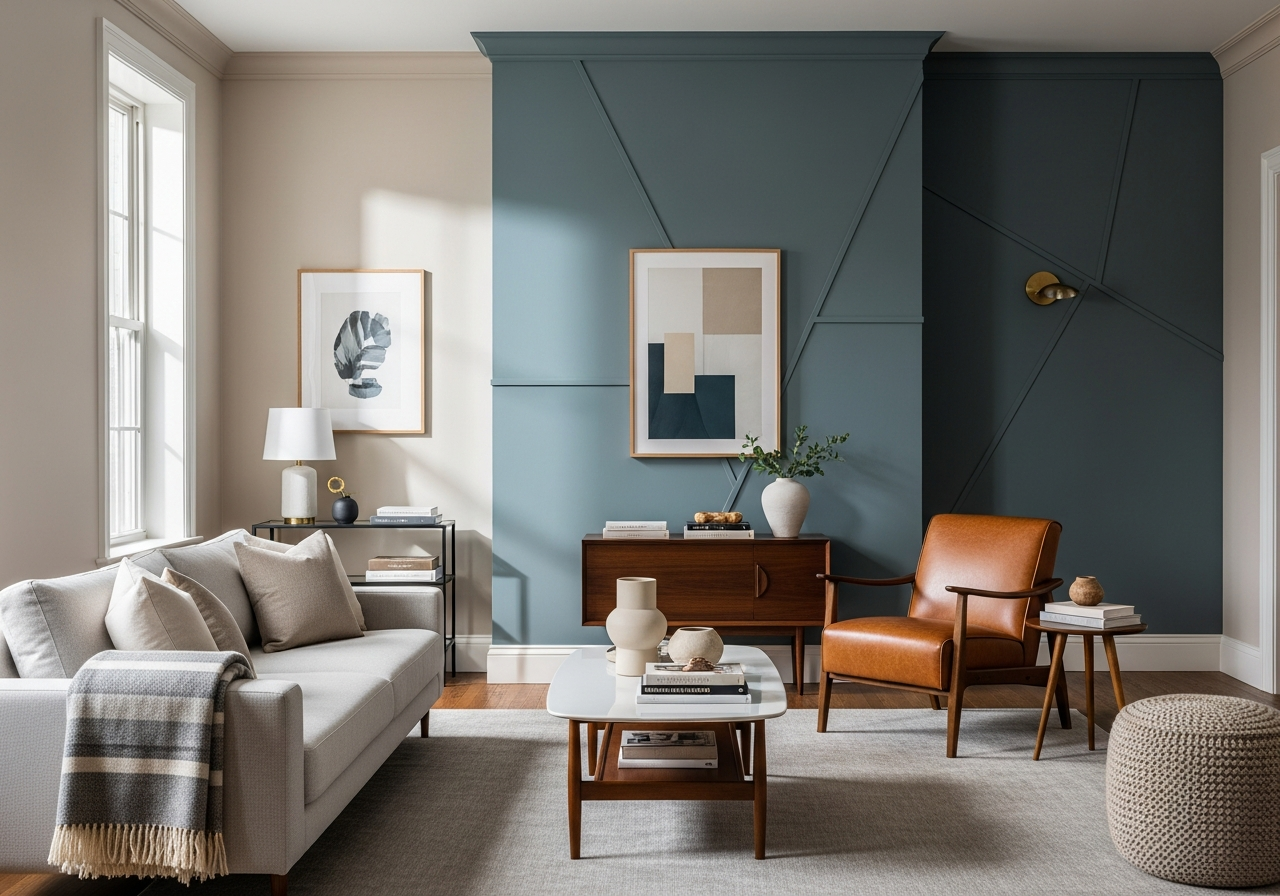
Sometimes a pop of color is just what your living room needs. A single bold accent wall can add personality without overwhelming the space. Consider deep greens, moody blues, or even vibrant oranges depending on your taste. Keep the other walls neutral to let the accent shine. This approach draws the eye and adds interest, especially when paired with simple furnishings. Statement walls work well in larger or well-lit rooms, where the color won’t feel too intense.
How to Choose Paint Colors Based on Your Living Room’s Natural Light
The same paint color can look completely different depending on your room’s lighting. Understanding how light works in your living room can help you choose shades that enhance the space instead of making it feel dark or cold. Here are ways to evaluate lighting and pick the best colors.
Morning Light vs Evening Light
East-facing rooms are bathed in warm sunlight during the morning hours, which can make yellows and warm neutrals feel bright and cheerful early in the day. However, these colors may appear softer or more muted by evening. West-facing rooms get afternoon sunlight that tends to be richer and more intense, making warm colors glow beautifully late in the day. Cooler colors like blues or grays may look harsher at those times but soften in the morning. Checking your room at both times offers valuable insight.
Working with Limited Natural Light
If your living room doesn’t get much natural light, lighter and warmer tones can help open it up. Creams, light peaches, or pale warm grays reflect light better and prevent the room from feeling gloomy. Avoid very dark or cold colors in low-light rooms since they absorb light and make the space feel smaller. Instead, pair these light walls with good artificial lighting and mirrors to bounce light around.
Balancing Natural and Artificial Lighting
Rooms with a mix of natural and artificial lighting call for colors that adapt well to both. Mid-tone neutrals like greige or soft blush provide a warm backdrop during daylight, then shift pleasantly under lamps or ceiling lights. When testing paint samples, view them with your usual bulbs on alongside natural light. This way you ensure the color looks great any time of day.
Paint Techniques That Add Depth and Interest
Plain walls have their place, but adding texture or patterns with paint can bring character to your living room. These techniques add interest and make your space feel more personal. The best part is many are easy enough to try yourself without special tools.
DIY-Friendly Techniques
Color blocking is a straightforward way to add modern flair. Pick two or three complementary colors and divide the wall into bold sections using painter’s tape. This creates sharp, clean lines and a graphic look that brightens the room. Ombre painting blends two tones from dark to light, building a soft gradient effect that adds subtle drama. Begin with a saturated color at the bottom and layer lighter shades upward for a soothing fade. It takes a bit of blending but looks impressive.
For texture, sponge painting is a forgiving method. Dab a sponge lightly dipped in paint to create a mottled finish that adds depth and interest without harsh patterns. Rag rolling and stippling offer similar gentle texture effects and hide small wall imperfections well. Two-tone walls separated by a chair rail or stencil add a classic touch and break up large spaces nicely. Finally, geometric patterns like triangles, diamonds, or hexagons can be taped off and painted for a lively, custom backdrop. Keep colors simple to avoid a busy look.
Conclusion
Home living room painting ideas help you shape the mood and style of your space in a very personal way. Whether you choose a timeless neutral, a bold accent, or a creative technique, paint plays a big role in how your living room feels and looks.
Start by considering your style and how light moves through your room. Test colors at different hours to see how they shift. Don’t hesitate to try painting methods that add texture or patterns to keep your walls interesting. Thoughtful selections will make your living room a place where you enjoy spending time every day.