
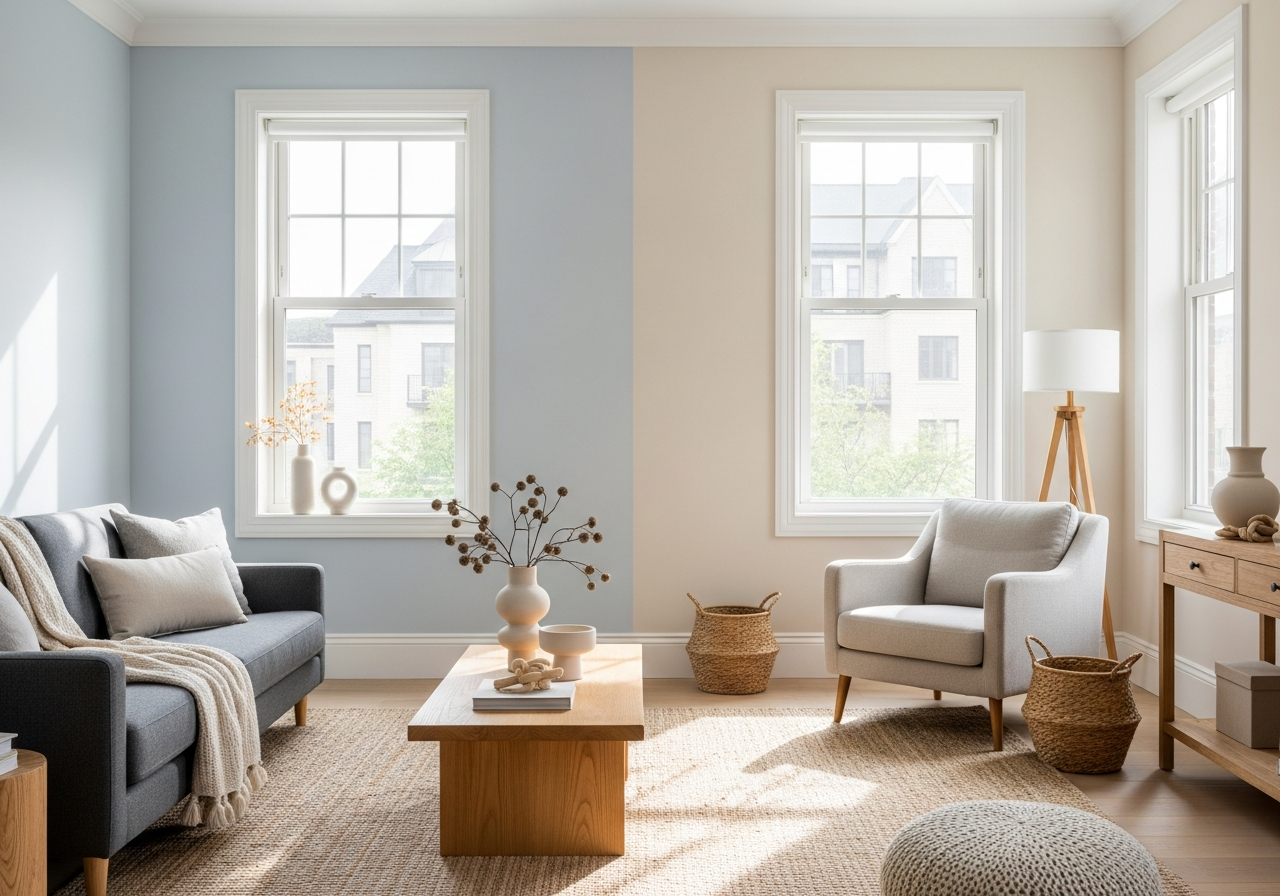

Understanding White Paint for Living Rooms: Cool vs Warm Undertones
Choosing the best white paint colors for living room walls starts with one critical decision: should the white have cool or warm undertones? This choice shapes the room’s entire mood and affects how your furnishings and decorations look. It’s not just white—subtle hints of blue, gray, yellow, or beige can make a big difference.
Cool whites often carry blue or gray undertones. They tend to give a sense of brightness and clarity. This makes a room feel fresh, clean, and slightly crisp. These tones generally bring a modern and calm atmosphere to your living space. In contrast, warm whites have undertones of yellow, beige, or even slight pink. These add softness and warmth, making the room feel inviting and cozy.
One quick way to tell which undertone a white paint has is to look at the swatch next to a plain white object, such as a sheet of copy paper or a simple white dish. If the paint looks bluish or grayer by comparison, it leans cool. If it appears creamier or more yellowish, it’s warm. This test can help you avoid picking a white paint that clashes with your style or lighting.
Understanding undertones is essential because they influence how your furniture and decor will appear. Cool whites highlight sleek, modern furniture and minimalist designs. Warm whites blend perfectly with wooden furniture, textured fabrics, and traditional styles. It’s about finding the balance that complements your living room’s personality.
Cool White Characteristics
Cool whites bring a crisp, bright sensation to a room. They work well in living rooms that aim for a clean, modern appearance. These shades can range from near-pure whites with slight blue tints to soft grays that feel almost icy. Cool whites often pair best with metal finishes, black or gray accents, and contemporary art. The room will feel spacious, organized, and visually airy.
Warm White Characteristics
Warm whites foster a cozy, inviting atmosphere. They make living rooms feel comfortable and lived-in. Classic beige or cream tones fall here, as well as whites tinted with a touch of yellow or peach. These colors look beautiful alongside wooden floors, brick fireplaces, or fabrics like velvet and wool. Warm whites suit traditional or rustic decor, adding to the sense of comfort and welcome.
How Natural Light Changes White Paint Colors
Picking the perfect white paint at the store is just the first step. That shade can look very different when it shines on your living room walls because of light. Natural light changes throughout the day and depends heavily on your room’s location and its windows. Understanding how light works with white paint helps avoid surprises.
Rooms that face north usually get cool, indirect light all day. This light is soft but can tend to make whites look bluish or shadowed. South-facing rooms receive lots of warm, direct sunlight, which makes whites appear bright and sometimes even yellow or golden. East-facing rooms welcome the soft morning sun while west-facing ones get warm afternoon and evening light.
The size and placement of windows also matter. Larger windows bring more light and can show the true color better. Smaller or shaded windows reduce light, making paint colors seem darker or dull. This can cause some whites to look gray or even off-white instead of fresh.
Artificial lighting is another factor. Cool LED bulbs push whites to look sharper and sometimes colder, while warm incandescent bulbs create a cozy glow but may make white walls look yellowish.
Bright Natural Light Rooms
For bright rooms flooded with sunlight, it’s best to choose whites that maintain their clarity without appearing too harsh. Whites with neutral or slight warm undertones work great to balance the intense light. Avoid whites that lean too cool, as they can appear stark or give off a blue tint that fights the warmth of the sun. Crisp but soft whites, such as those close to pure white with minimal tint, are usually a safe bet for sun-drenched living spaces.
Low Natural Light Rooms
In rooms that don’t get much natural light, selecting the right white is critical to keep the space from feeling dark or dingy. Whites with warm undertones help bring warmth and brightness into low-light areas. Cool whites in these spaces often look dull or even gray. Opting for creamy whites with subtle yellow or beige tones can make the walls reflect light better, enhancing the sense of warmth. Avoid overly cool or stark whites, which can emphasize shadows and shrink the space visually.
Top Cool White Paint Colors for Modern Living Rooms
Modern living rooms thrive with cool whites. These colors create a fresh, open backdrop that lets artwork and bold furniture stand out. Designers recommend several classic cool whites that consistently deliver clean, crisp looks.
Benjamin Moore Chantilly Lace (OC-65) is a favorite among interior designers. It’s a bright, pure white with subtle blue undertones that gives walls a sharp, clean feel without being cold. This paint works beautifully in spaces with natural light, making the walls look fresh as a gallery background. Chantilly Lace pairs well with black accents, chrome finishes, and colorful art pieces.
Sherwin-Williams Extra White (SW 7006) is another popular choice. This white has a cooler leaning but stays soft enough that it doesn’t feel sterile. Extra White is slightly less bright than Chantilly Lace, which can help soften rooms with very intense lighting. It blends well with contemporary decor and complements stainless steel appliances and gray furniture.
Farrow & Ball All White (No. 2005) is a soft white with cool undertones that avoids the harshness found in some bright whites. It holds a subtle gray tint that adds depth. All White creates a calm atmosphere that pairs well with minimalist furniture, providing a gentle but modern backdrop.
Top Warm White Paint Colors for Cozy Living Rooms
Warm whites create inviting living rooms that feel comfortable all year round. They make a perfect backdrop for traditional furniture, soft textiles, and natural materials like wood and stone.
Benjamin Moore White Dove (OC-17) is a favorite warm white. Its soft, creamy tone brings warmth without heavy yellow tones. White Dove creates a welcoming atmosphere and works in both bright and dim rooms. It pairs beautifully with wooden floors and neutral-colored fabrics.
Sherwin-Williams Alabaster (SW 7008) is popular for its gentle warmth and slight beige undertones. Alabaster brightens rooms without feeling cold, and its creamy color complements rustic and farmhouse styles elegantly. It looks especially good under warm lighting.
Farrow & Ball Cream (No. 2001) is a rich warm white with noticeable beige tones. This color evokes a sense of softness and calm, making living rooms feel cozy and restful. It works well with antique furnishings, vintage textiles, and natural wood finishes.
How to Choose the Best White Paint Color for Your Living Room
Picking the right white for your living room boils down to careful consideration of your space and tastes. Start by noting the style and mood you want: do you prefer crisp modern looks or cozy traditional feels? Look at your furniture and décor to decide if cool or warm undertones will complement them best.
Test paint samples on your walls in different lighting conditions. Observe them during the day, at night, and with artificial lights on. It’s best to paint large swatches so you can get a real sense of the color’s effect. Sometimes a white that looks perfect on a small card may shift dramatically on a large wall.
Consider your room’s natural light. For bright spaces, cooler whites with soft undertones often shine, whereas dim rooms benefit from warm whites that add glow and comfort. Match whites with your furniture colors, flooring, and fixtures to create harmony. For instance, white walls with strong blue undertones might clash with warm wooden flooring but look sharp with gray sofas and glass tables.
Lastly, think about the effect white paint can have on the room shape. Cool whites tend to make spaces feel larger and more open. Warm whites invite you in and can make large rooms feel cozier. Balancing these effects helps achieve your desired living room environment.
Maintaining Your White Living Room Walls
White walls look amazing, but they do require care to maintain their fresh appearance. Clean walls regularly using gentle methods like a soft sponge and mild soap to avoid discoloring the paint. Avoid abrasive cleaners that can damage finish or leave marks.
Touch up any stains or scuffs promptly, especially in busy living rooms where kids or pets live. Using the same brand and finish ensures the repaired section blends seamlessly.
Depending on the paint’s finish—matte, eggshell, or semi-gloss—cleaning becomes easier or harder. Semi-gloss finishes resist dirt and stains best, making them suitable for high-traffic living rooms. Matte finishes give a soft look but can be harder to clean.
Common Mistakes to Avoid When Choosing White Paint
- Ignoring undertones: Picking a white without checking undertones can clash with furniture and lighting.
- Skipping sample testing: Many choose paint without observing it on the actual wall, which leads to disappointment.
- Forgetting light shifts: Not considering how natural and artificial light affect paint color may result in unexpected hues.
- Choosing pure white only: Pure white can feel too stark or cold; softer whites with undertones often offer a warmer, more wearable look.
- Overlooking room use: White paint in a living room with lots of activity needs finishes that withstand wear.
Conclusion
The best white paint colors for living room walls depend on whether you want cool or warm undertones, and how light interacts with the space. Cool whites bring crisp, modern vibes, while warm whites create a cozy, welcoming feel.
To choose the right white, test samples in your room’s light, consider your furniture and style, and think about the mood you want. Keep your walls looking fresh with gentle cleaning and touch-ups. Avoid common pitfalls by understanding undertones and lighting before deciding. This thoughtful approach helps you find a white paint color that makes your living room feel just right.