
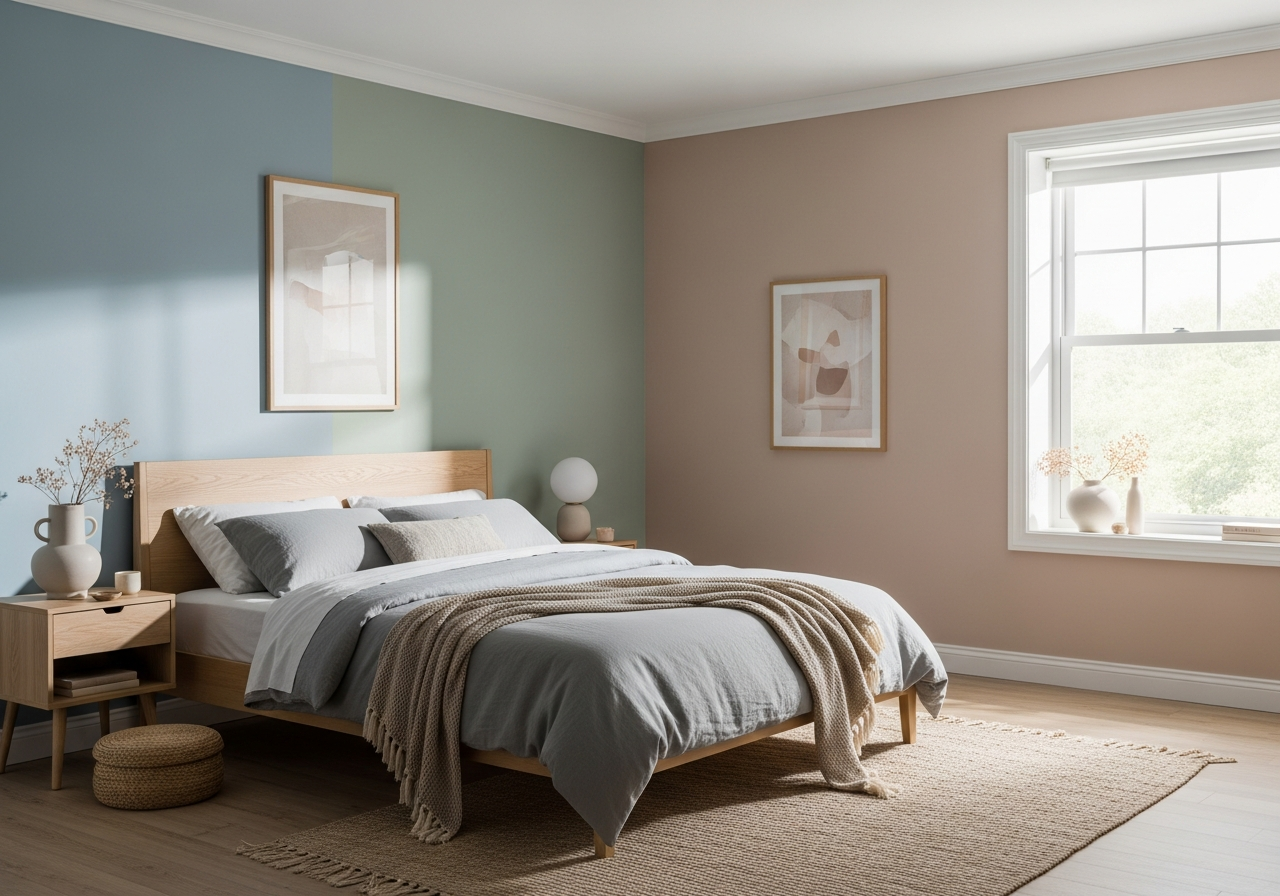

Why Your Master Bedroom Paint Color Matters More Than You Think
Your master bedroom paint color does more than just make the walls look nice. It creates the atmosphere where you start each day and unwind each night. Pick a color that doesn’t fit the mood, and you might find it harder to relax, fall asleep, or even wake up feeling refreshed.
Colors have a direct effect on how we feel. Some colors calm us down, while others can energize or even stress us out. This is why the color you choose for your bedroom should support relaxation and restful sleep. Since the master bedroom is often the largest and most personal room in your home, it deserves colors that strengthen that cozy, peaceful feeling.
The Sleep-Color Connection
Studies show that softer, cooler shades help lower heart rate and blood pressure, encouraging better sleep. Colors like light blues or gentle greens have a calming effect on the mind. On the other hand, bright reds or intense yellows can trigger alertness or anxiety, making it harder to drift off. The right paint color acts as a subtle cue, telling your brain this is a place of rest.
Choosing paint colors that promote calmness can improve your overall quality of sleep. This goes beyond just the color on the walls—it’s about setting the stage for a sanctuary where your body and mind can recharge.
Making Small Bedrooms Feel Bigger
Color also affects how you perceive the size of your bedroom. Light colors reflect more light, making a small room feel open and airy. Whites, soft creams, and pale blues can trick the eye into seeing more space. Dark colors, while cozy, can sometimes shrink a room visually, but used carefully, they create depth and a warm cocoon effect.
In a master bedroom, you want the color to balance comfort and spaciousness. Lighter shades can help rooms with limited natural light feel brighter, while deeper tones add character to larger spaces without overwhelming them.
Top Paint Colors for Master Bedroom Walls in 2024
Picking a paint color you love is easier when you know which hues work best. In 2024, some colors continue to shine because they blend beauty with comfort. Whether you prefer calm or bold, these options suit a variety of styles and moods.
Cool Colors That Soothe
Soft blue shades remain a top choice for bedrooms. Their calming nature helps bring down stress and signals the brain to relax. Think pale sky blue, powder blue, or hint-of-gray blues that work with most decor.
Sage green is another favorite that mimics the tranquility of nature. It brings earthy freshness into the room without feeling overpowering. Because of its neutral leaning, it pairs well with wood tones and soft textiles.
Warm Neutrals That Never Go Out of Style
Warm grays and greiges offer incredible versatility. These shades act as a gentle backdrop, giving you freedom to decorate with colorful accents or natural materials. Greige—part gray, part beige—creates a soothing mood without the cool edge of pure gray.
Blush and dusty rose tones provide warmth and softness without overwhelming the senses. They can make a room feel inviting and cozy, perfect for a space meant to nurture calm.
Bold Colors Done Right
If you want drama, deep navy or charcoal can make your bedroom feel elegant and restful. Dark colors absorb light, creating a cocoon-like effect that invites relaxation when used on one accent wall or all around.
Picking these colors means balancing them with lighter fabrics and good lighting to keep the room from feeling too heavy. The challenge is to create a space that feels both cozy and open.
How to Choose Your Perfect Bedroom Paint Color
Choosing the right paint color can feel overwhelming. You want to stop guessing and find something you’ll be happy with for years. Here’s how to approach it with confidence.
The 24-Hour Test Method
Start by painting small swatches of your favorite colors on different walls. Observe these patches at various times throughout the day—the cool morning light, the bright afternoon sun, and the soft glow of your lamps at night.
Colors shift depending on how much light they get and the direction your windows face. A shade that looks warm and inviting in the morning might feel dull or harsh by evening. Watching your samples over 24 hours helps you avoid surprises after painting the entire room.
Considering Your Bedroom’s Natural Light
The amount and type of natural light affect how colors appear. North-facing rooms get cooler, softer light and pair well with warm tones like blush or greige to avoid feeling cold. South-facing rooms have bright, warm light that makes cool colors like blue or sage feel fresh without being chilly.
Matching Paint to Your Existing Bedding and Furniture
Your paint should work well with what’s already in your room. If you have dark wood furniture, lighter walls can create contrast, while soft neutrals tie common styles together. For lighter furniture, richer wall colors can add depth and balance.
Consider the colors and textures of your bedding, rugs, and curtains. Harmonizing these with your wall color creates a cohesive space that feels thoughtfully put together.
Working with Your Partner’s Preferences
Since the master bedroom is shared, it’s important to find a color that both you and your partner like. Choosing the right color might mean compromising or blending preferences. You can also use accent walls or accessories to include favorite colors without overwhelming the room.
Factoring in Ceiling Height and Room Size
Ceiling height affects how colors feel in a space. Dark colors on walls can make low ceilings feel closer, which might feel cramped. In taller rooms, darker shades add intimacy by visually lowering the ceiling.
For small bedrooms, lighter, cooler colors open up the space, while large bedrooms can handle deeper, richer shades without feeling closed in.
Conclusion
The best paint colors for your master bedroom support a restful, peaceful atmosphere. These colors help you wake up refreshed and relax deeply at night.
Start by testing samples over different times of day and consider your room’s natural light and decor. Balance you and your partner’s tastes and pay attention to your room’s size and layout. This careful approach ensures your bedroom feels like a true retreat.