
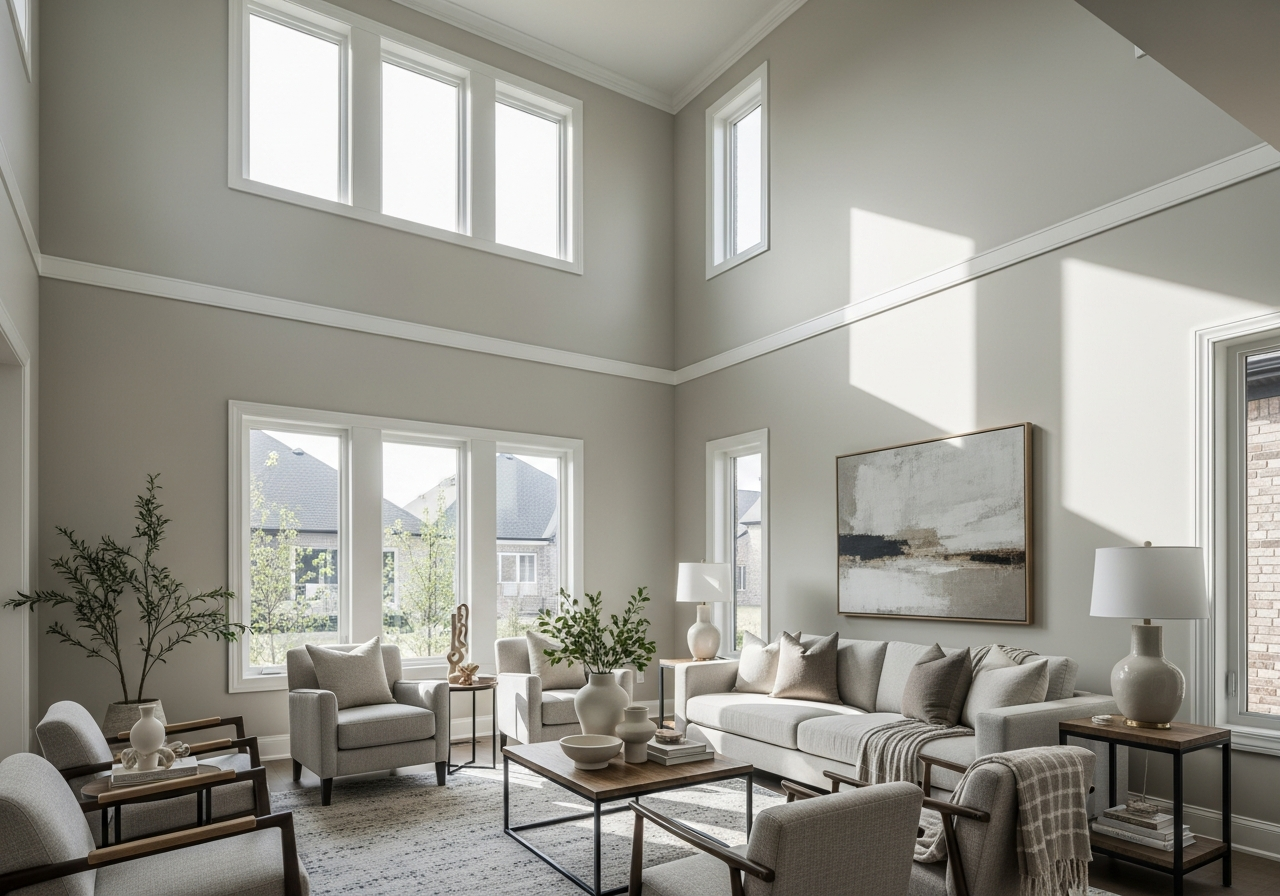

Best Paint Colors for Living Rooms with High Ceilings: A Complete Guide
High ceilings add a grand, open feel to your living room, but they also change how paint colors look on the walls. A color that looks perfect in a regular room may seem faded or overwhelming when stretched up high. Choosing the right paint color for a living room with tall ceilings means thinking differently about light, color depth, and how the eye perceives space. This guide covers everything you need to know, from how height affects color to the best paint shades for bright rooms. Understanding these points will help you create a balanced, inviting space that feels just right.
1. Understanding How High Ceilings Impact Paint Color Choice
High ceilings can cause paint colors to look quite different than expected. Light behaves differently when it has taller walls to travel across. This can change how strong or faint a color appears, making it tricky to pick the perfect shade. The way natural daylight mixes with your room’s artificial lighting also plays a big role. Learning about Light Reflectance Value (LRV) helps you understand which colors bounce back more light and which absorb it, a key factor when painting tall walls.
The Science of Color and Height
When a wall is taller, the distance between the color and your eyes grows. This means color intensity can fade as you move farther from the paint surface. Dark colors tend to absorb more light, so on tall walls, they can feel heavy or even gloomy. This can make a space seem colder or less welcoming. Meanwhile, lighter colors reflect more light but risk looking washed out if the wall’s height spoils their impact. Finding a color that keeps its strength without overwhelming the room is essential.
Common Paint Color Mistakes in High-Ceiling Rooms
- Choosing Colors That Are Too Light: Very pale shades often lose their charm on tall walls. They can seem faded or dull because natural light spreads out too much.
- Ignoring the Ceiling Color: The ceiling’s color may either bring cohesiveness or clash with the walls. Leaving it plain white doesn’t always work well with every wall shade.
- Not Testing at Different Heights: Color can look very different near the base versus near the ceiling. Without testing samples at multiple heights, the final effect might surprise you.
2. Best Paint Colors for Bright Living Rooms with High Ceilings
If your living room fills with sunlight, picking the right paint color means balancing brightness and depth. Colors with a Light Reflectance Value (LRV) between 55 and 60 work best here, as they hold plenty of color without becoming too dark. These shades complement natural light well and prevent the walls from looking faded or flat. Testing paint samples in different lighting throughout the day can help you feel confident in your choice.
Top Paint Picks for Sun-Filled Spaces
- Sherwin Williams Agreeable Gray (LRV 60): This color blends warmth and neutrality, creating a cozy but fresh look that holds up well in bright conditions.
- Benjamin Moore Collingwood (LRV 62): A soft gray with subtle beige undertones that balances sunlight without looking cold.
- Similar Alternatives: Look for paints in the 55-60 LRV range that mix warm and cool undertones to fit your style and lighting.
Coordinating with Natural Light Patterns
The direction your living room faces impacts how colors appear. South-facing rooms receive warmer, stronger sunlight, making cooler paint tones blend well without fading. North-facing rooms get softer, cooler light, so warm paint colors help add warmth and balance. Observing how light shifts during the day helps when choosing a paint’s warm or cool undertones for a room with high ceilings.
Conclusion
The best paint color for living rooms with high ceilings is one that balances light and depth, keeping the space inviting and well-defined. Understanding how height changes color perception and matching paint brightness to your room’s light helps achieve the right look.
Start by testing paint samples on tall walls, paying attention to how they change at different heights and in different light. Consider the room’s natural light direction when choosing warm or cool tones. Finally, don’t overlook the ceiling color, as it completes the feel of your room.