
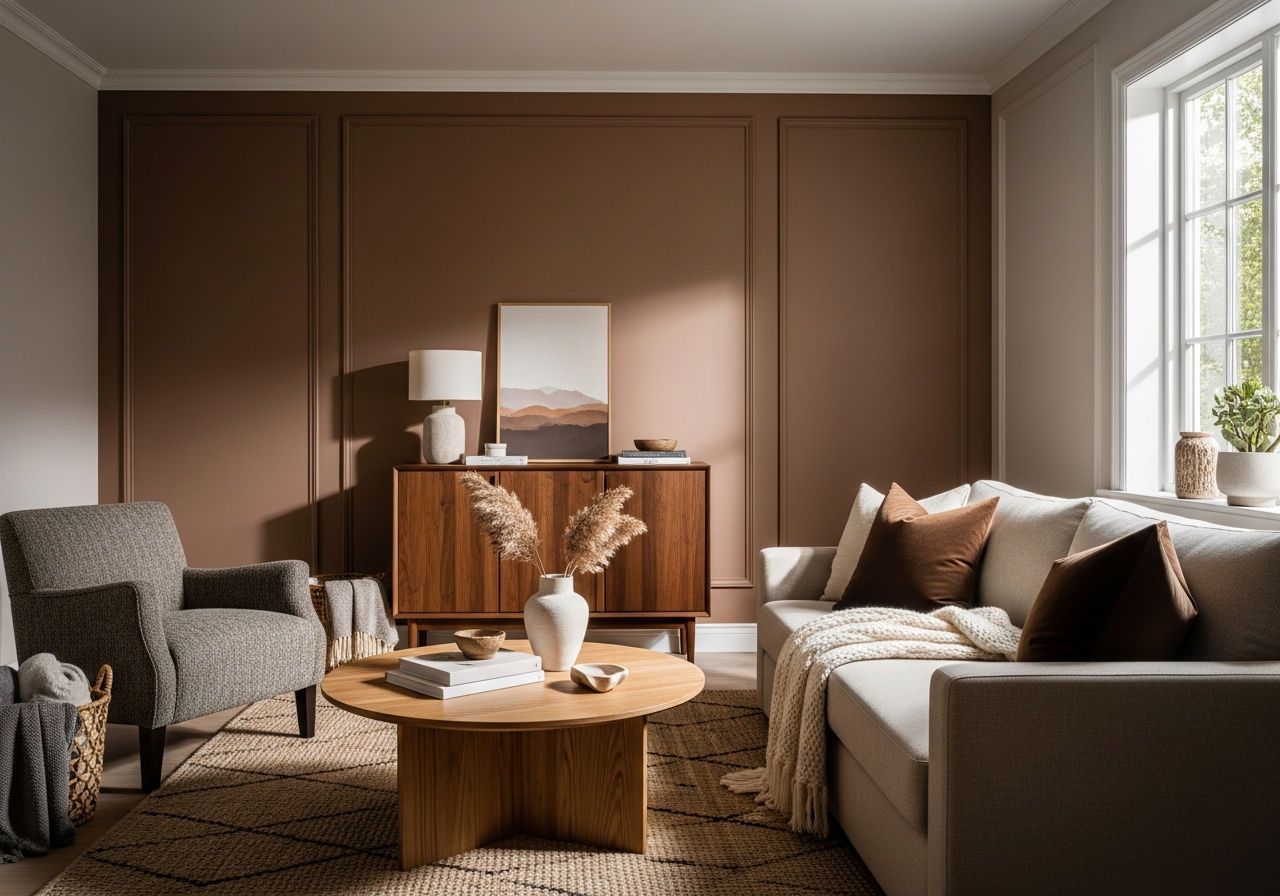

Why Brown Paint for Living Room Walls Creates Instant Warmth
Brown paint brings the same cozy feeling as wrapping up in your favorite blanket on a chilly evening—it grounds your space while making everyone feel right at home. This warm, earthy tone connects us to nature and gives rooms a sense of calm and stability.
Psychologically, brown offers a grounding energy. It evokes feelings of comfort, reliability, and safety, helping to create a balanced atmosphere in your living room. Rather than stimulating the senses like vibrant colors, brown soothes them, making your space a restful retreat. This calming effect is why people often associate brown with warmth and trust.
In recent years, brown has emerged as the new neutral. It’s replacing the more clinical gray in many living rooms because it adds depth without feeling cold or stark. Unlike cool neutrals that can sometimes make a room feel detached, brown invites you in. It works with light and dark furniture, different textures, and varied decorative accents, making it adaptable to many design styles.
From modern to rustic, brown fits effortlessly. In a modern setting, brown adds richness and sophistication without overwhelming minimalism. In traditional rooms, it enhances wood tones and classic furnishings, boosting that cozy, lived-in vibe. Rustic spaces thrive with brown’s earthiness, as it echoes natural materials like leather, stone, and wood.
Brown paint also provides visual weight and balance. Walls painted in brown anchor a room, giving it structure and focus. This is especially helpful in larger spaces that might feel too open or empty. Brown creates a backdrop that highlights furniture and artwork while still staying muted enough to blend with other colors.
The Psychology Behind Brown’s Appeal
Brown is a color connected to the earth, soil, and wood. It makes us think of stability and dependability. Because these are things we want in a home, brown naturally creates a sense of security. The shade encourages relaxation and rootedness, helping people feel comfortable and safe inside their living space.
Unlike bright colors that energize or cool colors that calm, brown strikes a middle ground. It lowers stress and fosters warmth without overwhelming the senses. That is why it works well in rooms where people gather to unwind and connect.
Brown vs. Other Neutrals: Making the Right Choice
Compared to gray or beige, brown offers a warmer and more inviting alternative. While gray has become popular for its sleek and modern feel, it can sometimes feel too cold or sterile. Beige, though warmer, often leans pale and can come across as bland.
Brown fills this gap by bringing a rich, tactile quality to walls. It pairs well with a wide range of colors, from bright oranges and blues to soft creams and whites. Its versatility is unmatched among neutrals. This makes brown an excellent base that adds character and depth to any living room concept.
Choosing brown means embracing both warmth and neutrality. It balances the need to feel grounded while leaving plenty of room for decorating creativity.
Choosing the Perfect Brown Paint for Your Living Room
Not all browns work the same magic—picking the right shade means thinking about your room’s natural light, size, and the mood you want to create. Brown hues can range from light caramel to deep chocolate, and their undertones affect how they look in different environments.
Light brown shades can make small spaces feel more open and inviting, while darker browns add drama and coziness in larger rooms. The key is to match the shade with your living room’s size and the feeling you want to set.
Undertones help define a brown’s character. Some browns have red undertones, lending warmth and richness. Others have yellow undertones, which can add a golden glow. Gray undertones create a cooler, muted effect, while green undertones add an earthy, organic vibe. Knowing how to read these undertones helps you select a brown that works with your furniture and lighting.
Reading Brown Undertones Like a Pro
Undertones are subtle but powerful. A brown with red undertones can make a room feel warmer and more vibrant. These work well with gold accents and warm wood furniture. On the other hand, yellow undertones can brighten up a dim space, adding a cheerful note without feeling intense.
If you want a sophisticated, calming environment, opt for browns with gray undertones. These look especially elegant in modern or minimalist designs. Green undertones give a room an earthy, natural feel, perfect for rustic or bohemian styles. Testing samples under your room’s lighting will reveal how these undertones shift throughout the day.
Top Brown Paint Colors by Brand
Many popular paint brands offer rich brown options that have become favorites among interior designers. Here are a few examples:
- Benjamin Moore: “Kilim Beige” is a light brown with warm undertones, while “Espresso Bean” offers a dark, chocolatey depth.
- Sherwin-Williams: “Beaver Brown” delivers a classic medium brown, and “French Roast” gives a near-black rich tone.
- Farrow & Ball: “French Gray” is a cool brown-gray blend, and “Brassica” is a creamy brown with subtle warmth.
Each brand emphasizes different undertones and finishes, from matte to satin, so you can find a brown that fits your style and room conditions perfectly.
Sample Testing Strategy
Before committing to a full paint job, testing samples is essential. Paint several patches of your chosen browns on different walls. Observe them at various times—morning, midday, and evening—to see how natural light affects the color.
Don’t forget to check the paint under your room’s artificial lights, as bulbs can shift tones noticeably. Look at the color with your furniture and décor nearby to ensure harmony.
Allow samples to dry completely since paint can look different wet than dry. Taking photos and notes can help you compare options objectively before making a final choice.
How Natural Light Changes Brown Paint Colors
That perfect chocolate brown you fell in love with at the paint store might look like muddy water in a north-facing room—here’s how to work with your room’s light. Natural lighting has a significant effect on how brown paint appears, changing its warmth, shade, and mood throughout the day.
North-facing rooms tend to get cooler, indirect light that can make browns look dimmer or bluer than expected. If your living room faces north, it’s often wise to choose browns with warm undertones like red or yellow. These counteract the cooler light and keep the room feeling cozy.
South-facing rooms receive bright, direct sunlight most of the day. Browns here usually look warmer and richer, but the light can also wash out lighter shades. Deeper browns or those with gray undertones work well to balance the strong sunlight.
Morning vs. Evening Light Effects
Morning sunlight generally has a cooler, bluer tone, which can soften brown paint colors. Evening light is warmer and can intensify reds and yellows in your brown walls.
Knowing your living room’s light cycle helps choose a brown that maintains its character throughout the day. For example, a brown with slight yellow undertones might brighten in the evening, creating a relaxing ambiance perfect for winding down.
Artificial Lighting Impacts
Artificial lights also impact how brown paint looks after sunset. Warm incandescent or LED bulbs boost the richness of brown tones, enhancing warmth and comfort. Cool white or fluorescent lights can make brown appear dull or flat, so pairing lighting type with brown paint choice matters.
Adjusting Shade Selection Based on Exposure
If your living room lacks much natural light, consider lighter brown shades to keep the space from feeling too dark. Conversely, in rooms with strong sunlight, richer, deeper browns help prevent the walls from feeling washed out.
In all cases, experiment on-site with paint samples, noting the lighting conditions during your most-used hours. This hands-on approach ensures your chosen brown paint creates the inviting atmosphere you want year-round.
Conclusion
Brown paint for living room walls offers cozy warmth and a grounding effect that makes any space feel welcoming. It’s a versatile color that works well in many styles and adapts to lighting conditions with the right shade choice.
Start by understanding the psychological benefits of brown and how it compares to other neutrals. Next, consider undertones, light levels, and test samples thoroughly before making your final pick. Adjust your choice based on natural and artificial light to maintain that perfect mood throughout the day.
With thoughtful selection and preparation, brown paint can transform your living room into a warm, comfortable haven that feels like home.