
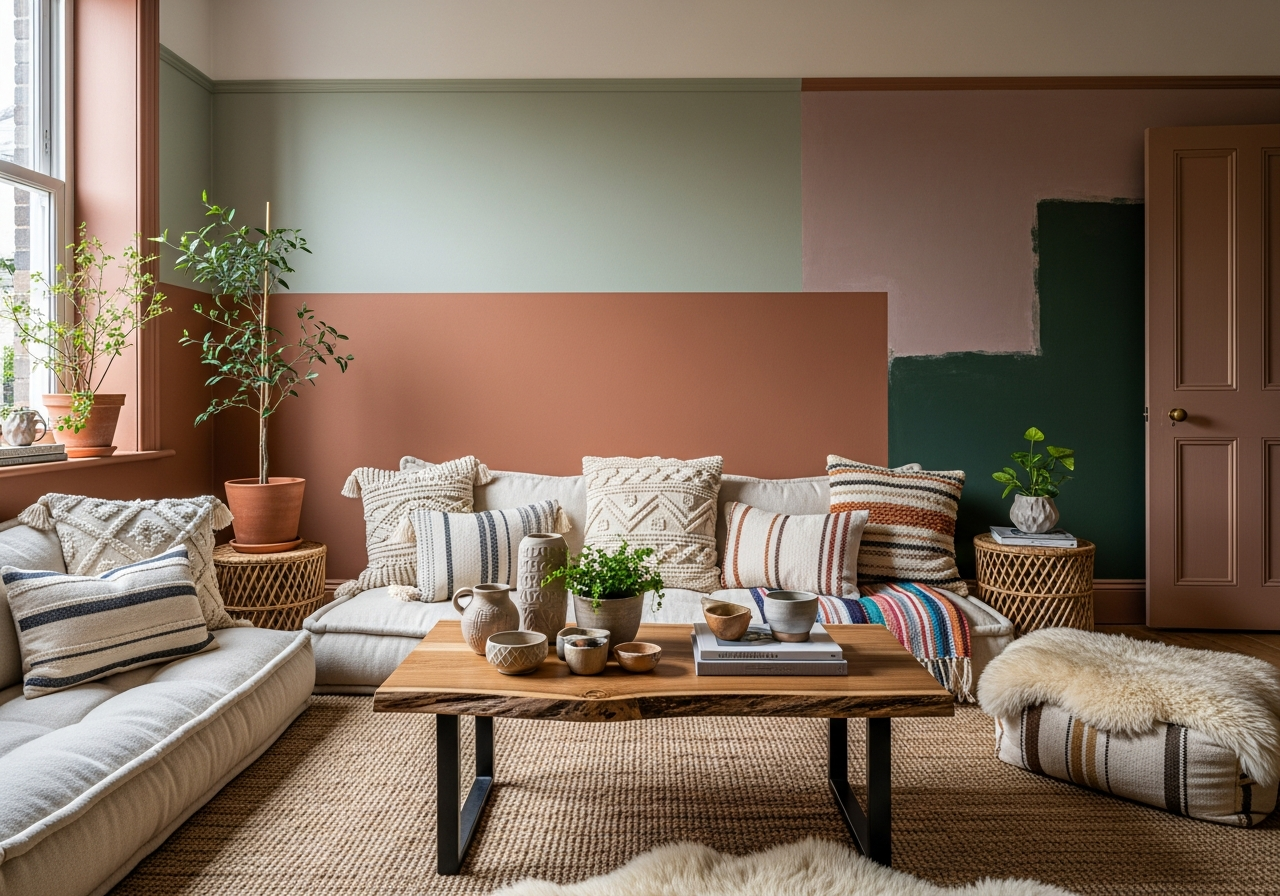

What Makes Boho Living Room Paint Colors Different
Boho living room paint colors stand apart because they reject strict design rules and celebrate freedom and individuality. Instead of sticking to a tight palette, boho paints combine warm earth tones with vibrant pops of color. This creates rooms with personality and depth, telling stories through their layers.
Unlike minimalist or modern spaces that often use cool, crisp colors or monochrome schemes, boho colors feel inviting and lived-in. They blend neutral bases with bold accents, providing both calm and interest in one room. Texture plays a big role here too, as the way paint interacts with furniture, textiles, and decor adds to the cozy, collected vibe.
The Psychology Behind Boho Color Choices
Boho color choices aim to bring comfort and warmth. Earthy shades like terracotta and olive green evoke nature, making a space feel grounded. Such colors bring calm and encourage relaxation, which is perfect for social or quiet moments in the living room.
The layered look of boho colors also creates a “collected over time” feel. It’s as if each shade has been chosen carefully through life’s travels or meaningful moments, giving the room a rich personal story. This feeling of history and comfort sets boho apart from styles that feel new or clinical.
Boho vs. Bohemian Chic: Color Differences
There’s a subtle difference between traditional boho and the more recent bohemian chic style, mainly in their color choices. Traditional boho uses richer, deeper tones like rust, ochre, and emerald. These colors feel warm, dense, and earthy, emphasizing cultural depth and nature’s raw beauty.
Modern bohemian chic leans toward lighter, airier palettes. Soft whites, blush pinks, and pale greens keep spaces feeling fresh and brighter, while still nodding to boho’s relaxed bohemian roots. This variation appeals to those who want boho style but also crave a softer, less intense atmosphere.
Top Boho Living Room Paint Colors to Transform Your Space
The right paint color is the foundation of any boho living room. From dusty terracotta to soft sage green, these colors hold their own in the eclectic mix that defines boho style. Each one brings energy and personality without overwhelming the space.
Choosing the right shade means understanding its mood and how it layers with other colors and textures. These colors blend well with natural materials like wood and woven fibers, strengthening the boho vibe.
Earth Tones That Ground Your Space
Desert sand, clay, and ochre are key earth tones that root a boho living room in warmth. Clay reds and deep ochres evoke the desert and natural landscapes, creating inviting spaces. Desert sand offers a neutral, sandy base that brightens while keeping the tonality warm.
Layering these tones is a simple way to add depth. For example, a warm tan wall could be paired with rust-orange accents or a deeper ochre trim. The result feels natural and easy, as if the colors have evolved together over time rather than being coordinated at once.
Unexpected Colors That Still Feel Boho
While earthy shades define boho, some colors might surprise you but still belong. Dusty pink, mauve, and muted rose offer subtle femininity and softness that balance bolder earthy tones. These hues add warmth without overpowering the room.
Deeper jewel tones such as emerald and sapphire create rich visual fixes in a boho space. Rather than cold or flashy, these jewel colors bring a grounded luxe feel found in global tapestries and vintage rugs. Used sparingly, they highlight key design elements like an accent wall or painted shelves.
Warm whites and creamy neutrals also play an important role. Shades like ivory, off-white, or warm beige provide clean backgrounds that allow textures—like woven cushions and wood—to stand out. These neutrals prevent the room from feeling too busy or cluttered.
| Color Family | Example Paint Shades | Mood | Recommended Usage |
|---|---|---|---|
| Earth Tones | Terracotta, Clay, Ochre | Warm, grounded | Accent walls, main walls |
| Neutrals | Ivory, Warm Beige, Cream | Soft, clean base | Background walls, ceilings |
| Jewel Tones | Emerald, Sapphire | Rich, bold | Accent features, shelving |
| Soft Feminine | Dusty Pink, Mauve | Warm, inviting | Trim, smaller wall spaces |
| Greens | Sage, Olive | Earthy, fresh | Statement walls, furniture pieces |
How to Choose the Right Boho Paint Colors for Your Living Room
Picking the perfect boho paint color starts with understanding your space’s lighting and size. Natural light helps warm colors come to life, while darker colors add coziness in larger, well-lit rooms. Consider how each hue will look in different light at various times of day.
Next, think about the mood you want. If relaxation is key, choose warm earth tones and neutrals. For something more lively, go for jewel tones or dusty pinks to energize the room. Your furniture and decor colors can guide your wall color choice, ensuring everything flows together rather than competing.
Testing Colors Before Committing
Always test paint colors in small areas or sample boards. Paint can look different on your walls than on a swatch or in a paint store under artificial lights. Seeing colors at different times of day helps avoid surprises. Try pairing samples with your existing fabrics, rugs, and furniture to see how they interact.
Mixing and Layering Colors
One of boho’s strengths is layering colors to create depth and vitality. Don’t be afraid to combine two or three shades in the same room. For instance, a sage green wall with terracotta accents and ivory trim can feel rich but balanced. Using different paint finishes—matte walls with satin or semi-gloss trims—adds dimension.
Painting Tips to Enhance Your Boho Living Room
How you paint matters just as much as what you paint. Boho style thrives on subtle imperfections and texture. Instead of smooth, flawless walls, consider finishes that add warmth and visual interest.
Texture and Finish Choices
Flat or matte paint finishes work well for boho walls since they create an understated look that contrasts with shiny furniture or metallic decor. When you want to highlight details, satin or eggshell finishes on trims or moldings can add just enough sheen for contrast.
Textured painting techniques like sponge painting or rag rolling suit boho spaces by mimicking natural, organic patterns. These methods give walls a subtle depth that changes with light and shadow, enhancing the layered feeling.
Using Accent Walls and Color Blocking
Accent walls are a favorite way to introduce boho colors without overwhelming the room. Pick a warm terracotta or a deep emerald for one wall, keeping others neutral. This approach adds visual interest and feels intentional rather than chaotic.
Color blocking is another boho-friendly technique. Painting sections of a wall in different shades—such as olive green beneath warm beige—or creating large blocks of color behind shelves or seating areas encourages a playful, artistic feel.
Conclusion
Boho living room paint colors are all about warmth, personality, and balance. They mix earthy neutrals with richer, unexpected tones to create inviting, layered spaces that feel collected and personal. Texture and finish play as important a role as color choice itself.
To make your boho living room work, consider your space’s light and function, test colors before committing, and don’t hesitate to layer tones. Using accent walls or creative painting techniques can enhance the boho feel. Focus on creating a warm, welcoming space that tells your story through color.