
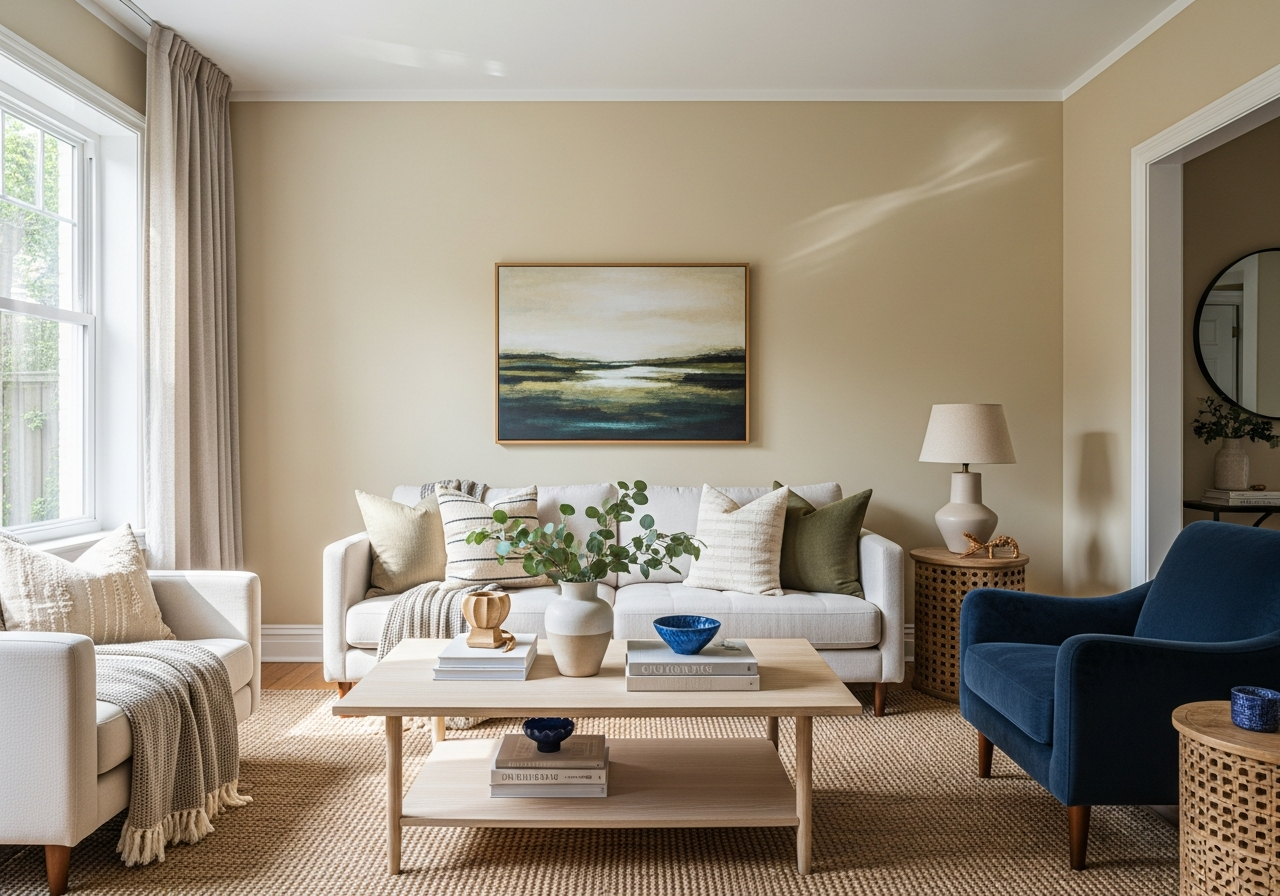

Beige Living Room Paint: Colors That Transform Your Space Without Breaking the Budget
Beige is often dismissed as plain or dull, but it’s actually one of the most adaptable colors you can use for your living room. A great beige paint can make your space feel bigger, warmer, and more inviting—all without costing a fortune. It works with nearly any style and complements a wide range of decor choices. If you want a comfortable, timeless background that brightens up your room and keeps things feeling fresh, beige paint is a smart pick. It’s quiet but powerful, shifting mood and light in ways that few colors can.
1. Why Beige Living Room Paint Creates Spaces Everyone Loves
Beige paint might sound boring, but it’s the secret weapon designers use to make living rooms feel bigger, brighter, and more expensive than they actually are. Neutral tones like beige have a calming effect on the mind, helping people relax and unwind after a long day. The gentle warmth of beige strikes the perfect balance between too stark and too gloomy. It doesn’t shout for attention but invites you in with its soft glow.
The Science Behind Why Beige Works
Beige reflects light in a way that opens up a room visually. When light bounces off beige walls, it spreads evenly, making corners and small spaces seem larger. It also warms the light just enough to create a cozy feeling without darkening the room. This makes beige an excellent choice for living rooms where people want to gather and feel comfortable. Psychologically, neutral colors are linked with lower stress and a sense of balance, meaning beige promotes calm and focus.
Beige vs. Gray: The Warmth Factor
While gray has been a trendy neutral for years, its coolness can sometimes make a space feel chilly or stark. Beige, on the other hand, generally carries subtle warmth from yellow, pink, or even peach undertones. This warmth invites a softer, more welcoming atmosphere that’s perfect for living rooms. Beige allows furniture and accents to stand out without competing with the walls, creating a harmonious background rather than a cold canvas.
Lastly, beige’s adaptability helps future-proof your space. Trends come and go, but beige remains a classic neutral many buyers love, which keeps your home’s resale value strong. It’s a safe yet sophisticated choice that buyers are drawn to, making it a smart investment if you ever plan to sell.
2. Top Beige Paint Colors That Actually Look Good
Not all beiges are created equal—some look like dirty dishwater while others make your living room look like a million bucks. The key is finding a beige that suits your room’s light and style. Beiges vary based on their undertones, which can either warm up or cool down your space, affecting mood and contrast.
Benjamin Moore’s Best Beiges
Benjamin Moore offers some standout beiges with perfect balance. “Revere Pewter” is a popular choice—a light beige with subtle gray undertones that gives a slightly cooler look without losing warmth. If you want something warmer, “Manchester Tan” leans more golden and cozy. For darker beige, “Grant Beige” offers a rich depth while still feeling neutral and inviting.
Sherwin-Williams Winners
Sherwin-Williams also shines in beige options. “Accessible Beige” is a warm, soft beige that adapts well to different lighting conditions. “Balanced Beige” is another bestseller known for its creamy feel that works beautifully in both modern and traditional rooms. If darker hues appeal, look at “Kiln Beige,” a deeper, earthy color that still keeps rooms feeling spacious.
Budget-Friendly Alternatives
If you need a great look without high-end price tags, many affordable brands have excellent beige tones too. Look for colors labeled “classic beige” or “soft tan” in your local store. Often, these colors carry the same warmth and versatility as designer brands but at a fraction of the cost. Testing samples on your walls is key to finding your perfect shade without overspending.
3. How Natural Light Changes Your Beige Living Room Paint
That perfect beige you picked at the store can look completely different once it hits your walls—here’s why lighting matters more than the color itself. Natural light changes color perception throughout the day, and beige is sensitive to these shifts because of its soft undertones.
North-facing rooms get cooler, bluish light all day. These spaces need warmer beiges with yellow or pink undertones to keep the room feeling inviting instead of cold. Otherwise, beige walls can look dull or even gray in north light.
South-facing rooms enjoy bright, warm sunlight most of the day. Cooler beiges with underlying gray or green tones do well here because the strong light balances out their cooler feel. This combination prevents the room from looking washed out.
East-facing rooms get gentle morning light that’s warm and soft. Beiges in such spaces appear brighter and fresher, so both warm and cool beiges can work depending on your decor.
West-facing rooms receive intense late afternoon light that can deepen color tones. Darker beige shades tend to thrive here, offering a cozy, grounded feeling as daylight fades.
Always test paint samples on different walls and observe them at various times—from morning through evening. This helps you see how your beige responds to changing natural light.
The type of artificial lighting in your living room also affects beige hues. Warm bulbs bring out yellow undertones, while cooler bulbs emphasize gray hints. Keep lighting in mind as you pick your paint and decorating style.
4. Decorating Tips to Complement Beige Walls Without Overwhelming
Beige walls are a blank canvas with plenty of personality. To keep your living room lively, choose furniture and accents that contrast or enhance your beige base thoughtfully.
- Use contrasting colors: Deep blues, greens, and charcoal look great against beige and add depth.
- Incorporate textures: Mix soft rugs, woven baskets, and velvet cushions to make your room inviting and complex.
- Add metallic accents: Gold, brass, and copper bring warmth and a touch of elegance.
- Include plants: Greenery pairs beautifully with beige and adds life to the space.
- Layer lighting: Use floor lamps, table lamps, and overhead fixtures to create cozy spots and highlight your walls.
Keep your color palette balanced. Avoid overloading the room with too many warm tones that can make beige feel muddy. Aim for harmony between warm and cool accents.
5. Common Mistakes to Avoid When Choosing Beige Paint
Choosing beige paint sounds safe, but there are pitfalls to watch out for.
- Ignoring undertones: Beige can have yellow, pink, gray, or green undertones that drastically change its look. Know what your room’s lighting needs before picking.
- Skipping tests: Paint swatches on small poster boards and place them in your room to see how they look at different times of day.
- Picking a beige that’s too dark for small spaces: Dark beige shades can shrink a room if it lacks natural light.
- Forgetting about other colors in the room: Your furniture, flooring, and décor colors affect how beige appears.
- Not considering shine level: Flat finishes hide imperfections but reflect less light; eggshell or satin finishes brighten beige walls.
With these in mind, beige becomes a reliable and beautiful foundation—not a dull backdrop.
Conclusion
Beige living room paint offers a warm, inviting backdrop that can make your space look bigger and more comfortable without costing much. It’s a neutral color that adapts well to different lighting and decor styles.
Start by testing beige shades in your actual room light. Consider warm or cool undertones based on your room’s sun exposure and existing colors. Use texture and contrasting accents to keep the space layered and interesting. With attention to these details, beige can transform your living room into a cozy, stylish retreat that feels just right.