
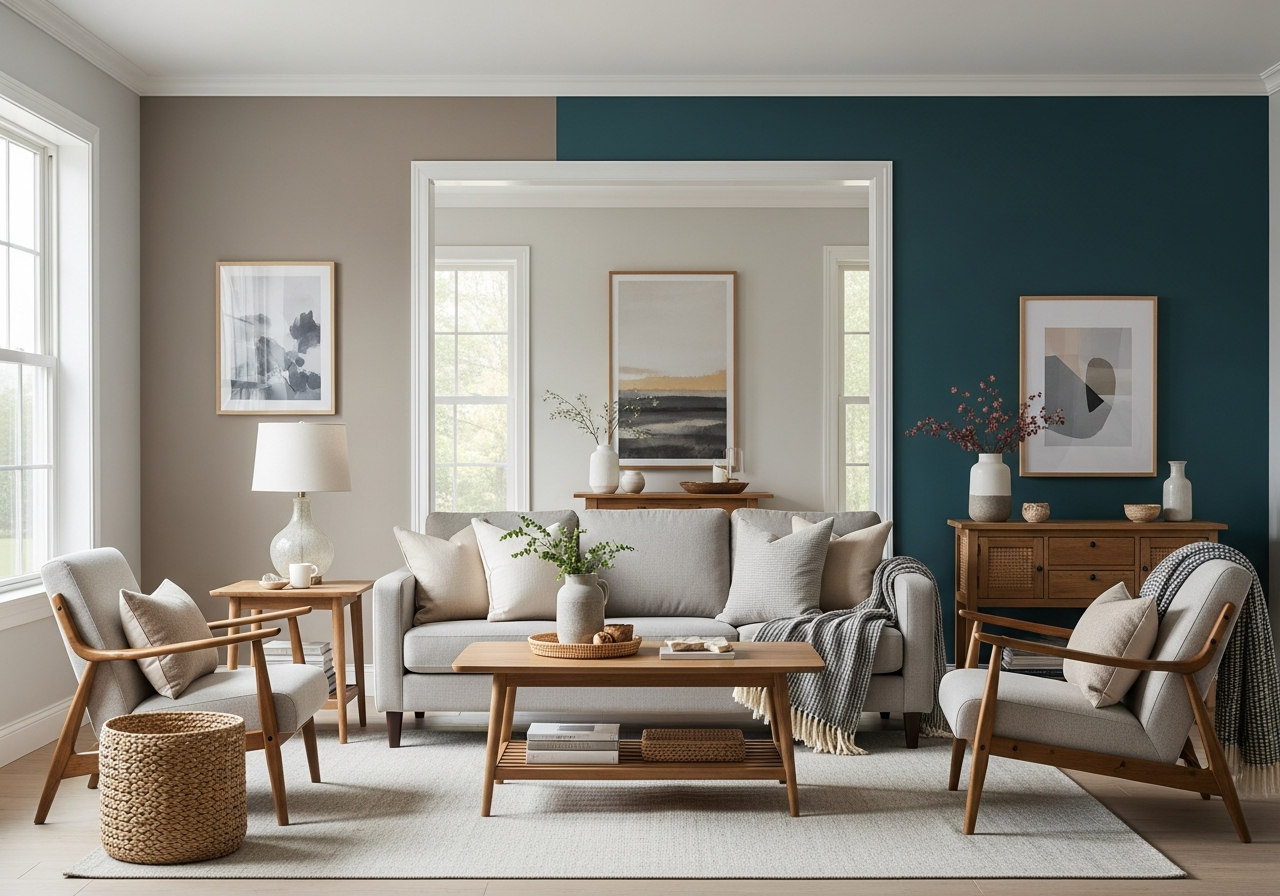

Choosing the Right Paints for Living Room Spaces
Your living room paint sets the mood for your entire home. The right choice can make a small room feel bigger or turn a cold space into a cozy retreat. Understanding which paint finishes and colors work best changes how your living room looks and feels.
Understanding Paint Finishes and Their Impact
Paint finishes affect both the look and durability of your living room walls. Matte finishes offer a smooth, non-reflective surface that hides wall imperfections but can be harder to clean. Eggshell finishes have a slight sheen and are more washable, making them a popular middle ground. Satin finishes provide a soft gloss and are durable against dirt and stains, great for busy households. Semi-gloss paints reflect more light, making walls brighter and are easy to wipe clean, but they may highlight surface flaws.
Choosing the right finish depends on your lifestyle. If you have kids or pets, satin or semi-gloss finishes might be better to handle wear. For a cozy, relaxed feel, matte or eggshell work nicely. Keep in mind that lighter finishes tend to make rooms appear larger, while glossier finishes add brightness and depth.
Room Size and Paint Selection
The size of your living room plays a big role in picking paint. Light colors like creamy whites or soft grays make small rooms feel more open and airy. Darker colors can make a large room feel warmer and cozier but might overwhelm a tight space. If your room is small, using a light eggshell or satin finish can reflect enough light to increase spaciousness without the glossy glare.
In large living rooms, deeper shades or bold accent walls can add character and create cozy corners. You can also mix finishes to highlight architectural details, such as a semi-gloss on trim with a matte wall color. The key is balance—don’t let dark colors swallow up a small space, and don’t leave a big room feeling too plain with only pale hues.
North vs South-Facing Room Considerations
Which way your living room faces changes how paint looks on the wall. North-facing rooms get cooler, less direct sunlight, making colors appear bluer or darker. Warmer tones and medium finishes help soften the cool effect while keeping the space inviting.
South-facing rooms often receive bright natural light all day. This can make colors look brighter or fade harshly against shiny finishes. Softer finishes like eggshell or matte can reduce glare and maintain warmth. Warm neutrals or gentle pastels complement strong sunlight well.
Testing Paint Samples Before Committing
Before settling on a final color, always test paint samples on your walls. Small paint pots or sample cards aren’t enough. Buy a small amount and paint a 2-foot square on different walls. Observe how the color changes from morning to evening and under varying light conditions in your room. This helps avoid surprises and lets you see how each finish works with your space.
Testing also helps you combine colors if planning accent walls or trims. Pair your main wall color with a few sample shades side by side to spot good matches or clashes. It’s a small step that saves time, money, and frustration later.
Popular Living Room Paint Colors That Work
While trends come and go, some paint colors have lasting appeal in living rooms across many styles and homes. These choices create a comfortable space where you can relax, entertain, and express yourself without feeling dated quickly.
Neutral Colors That Never Go Out of Style
Warm neutral shades such as beiges, soft grays, and greiges (a mix of gray and beige) offer timeless appeal. These colors serve as a perfect backdrop, balancing warmth and coolness depending on your room’s lighting. They never overwhelm and provide a canvas for furniture, art, and décor to shine.
Beige tones add warmth and coziness, working well with wood furniture and natural fabrics. Soft gray walls can give a sleek, modern feel while remaining inviting. Greige combines the best of both, shifting subtly with changing light throughout the day.
Bold Colors for Statement Walls
For those who want to add personality, bold colors can create a striking focal point. Deep blues, rich greens, or even muted jewel tones bring energy and depth without being overpowering. Use these shades on one wall to anchor your living room and make other light-colored walls stand out even more.
Accent walls in dark charcoal or navy blue add drama, while forest green or terracotta introduces a natural-earthy vibe. Coordinate your furniture and accessories to complement the bold color, ensuring harmony rather than clash.
Light vs Dark Color Psychology
Light colors generally open up a room mentally and physically, providing a fresh and clean feeling. They help lift the mood and make the space feel breathable. Dark colors, by contrast, create intimacy, warmth, and a calming effect but can sometimes make rooms feel smaller.
Choosing your color depends on how you want to use your living room. If it’s a social hub, light shades give energy and space. For relaxing or watching movies, darker colors help cocoon the room and cut down on glare.
Trending Colors for 2024
This year’s paint trends lean toward earthy, calming colors. Soft moss green, warm taupes, and muted terracotta are popular for a grounded feel. These hues bring nature inside and pair well with sustainable and natural materials.
Alongside warm neutrals, cool blues and grays remain favorites, reflecting a desire for calm and balance. Avoid overly bright or neon shades—subtle and soothing tones win with longevity and style.
How Natural and Artificial Light Changes Your Paint Choice
That perfect gray you picked at the store might look purple at home. Light plays tricks on paint colors, and knowing these tricks saves you from costly mistakes. Different light sources—natural or artificial—warps how a color appears and changes throughout the day.
Testing Paint Colors Throughout the Day
Paints change in color and intensity depending on when and how you see them. Morning sunlight tends to be cool and bluish, midday sun is bright and neutral, and evening light has a warm, orange glow. By observing your paint samples at these times, you get a full picture of your color’s dynamics.
Areas that appear perfect in harsh afternoon sunlight may seem dull or different under soft morning light. Test multiple spots if possible. It also helps to view colors in artificial lighting—what looks good in daylight might look wrong when your lamps or ceiling lights turn on.
Adjusting for Your Room’s Natural Light
North-facing rooms tend to have cooler, indirect light all day. Paints can look darker and bluer here, so warm hues or colors with a yellow or red undertone balance the chill. Avoid overly cool paint shades in these rooms unless you want a very modern or minimalist look.
South-facing rooms get more sunlight, which can wash out pale colors or make glossy finishes glare. Choose softer finishes like eggshell or matte here, and consider colors with subtle warmth to keep your room cozy despite the brightness.
LED vs Incandescent Bulb Effects
Artificial lighting varies widely in color and intensity. LED bulbs tend to be cooler or brighter, often shifting paint colors toward blue-green tones. Incandescent bulbs give off warm, yellow light that enhances reds, oranges, and yellows but can dull blues and greens.
Identify your main living room bulbs and how often they turn on during the day. If your living room uses mostly LEDs in the evening, test paint colors under similar bulbs to see how they behave. This way, your walls look as intended no matter the hour.
Using Primer to Achieve True Colors
Primer affects how final paint colors show up. Walls with stains, uneven textures, or previous paint colors can distort your new paint’s look. Priming with a neutral base evens out the background, letting your color shine through true to the swatch.
For bright or bold colors, primers help keep the hues vivid and prevent patchiness. In rooms with heavy sunlight, primer also improves paint adhesion and longevity, protecting your walls from fading and damage.
Conclusion
Choosing paints for living room walls means balancing color, finish, and light to create a space that feels right for you. The right paint makes your room look larger, cozier, or more vibrant, depending on your needs.
Start by testing paint finishes and colors in your actual living room space at different times of day. Factor in your room size and direction to pick shades that enhance natural light. Use primers to get clean, true color results and consider your lighting—both natural and artificial—when finalizing your selection.
Every step helps avoid surprises and brings you closer to a comfortable and attractive living room that fits your style and lifestyle perfectly.