
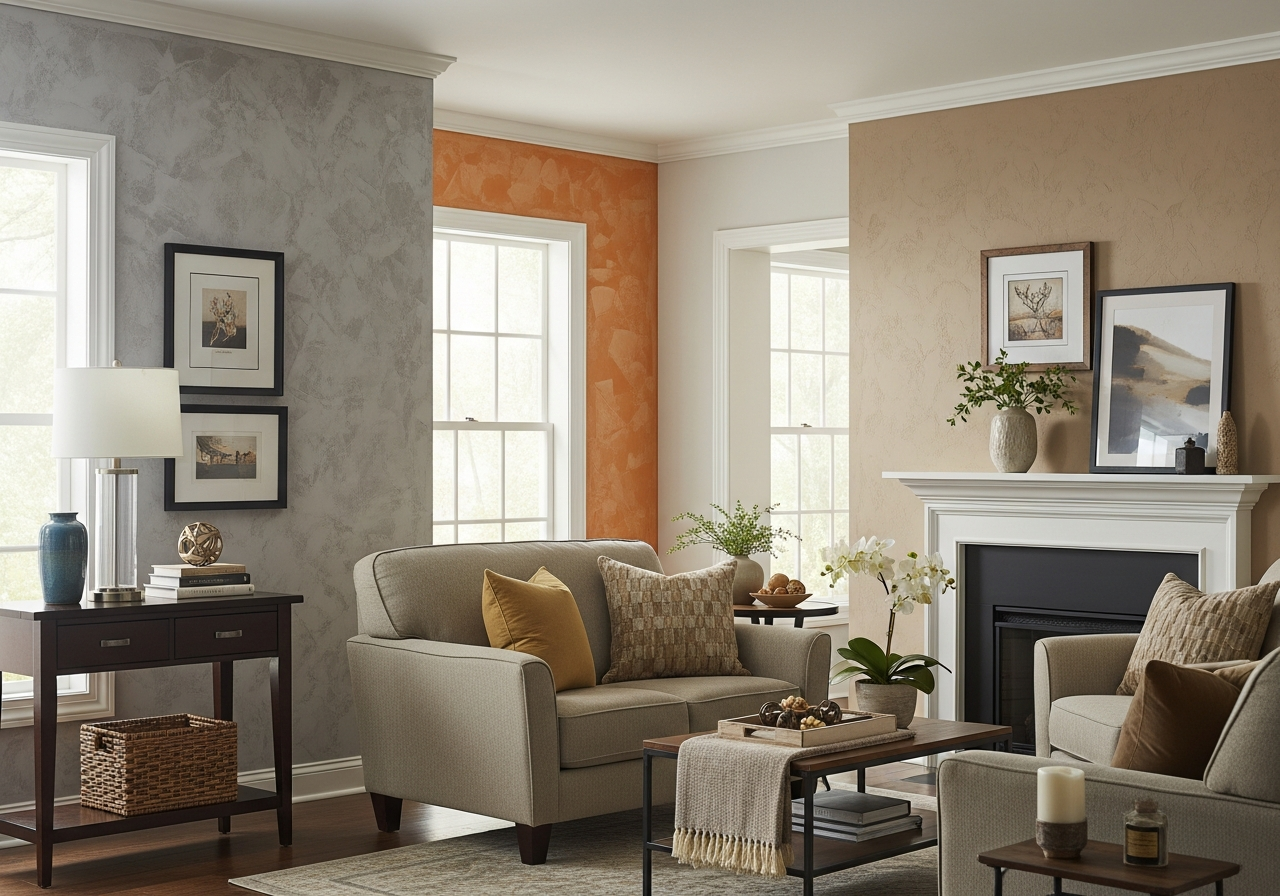

Living Room Texture Paint Design Ideas That Transform Your Space
Adding texture paint to your living room walls can completely change the feel of the space. Unlike regular flat paint, texture paint brings life and depth to your walls, making them an eye-catching part of your room’s design. It’s an affordable way to add style without needing costly renovations or decorations. Whether you want a smooth, subtle finish or something bold and dramatic, texture paint offers many options to suit your taste. This guide covers what makes texture paint special, popular styles, and how to apply it right.
1. What Makes Living Room Texture Paint Design So Special
Texture paint is different from regular paint because it adds a tactile surface and visual interest. While normal paint sits flat and smooth, texture paint creates layers and patterns on your walls. This gives your living room walls a sense of depth and dimension that changes based on how light falls on them. The result is a space that feels more dynamic and inviting.
One practical advantage of texture paint is its ability to hide wall flaws. Small cracks, dents, or uneven surfaces become less noticeable under a textured finish. This can save you time and money on repairs before painting.
Cost-wise, texture paint tends to be more affordable than wallpaper or panel installations. While some options may take more effort to apply, they often cost less and offer more flexibility if you want to change the look later.
Types of Texture Paint Finishes
- Sand Texture: Adds a gritty, sandy feel that can mimic outdoors or rustic surfaces.
- Knockdown: Features a stucco-like pattern where raised areas are gently smoothed down.
- Orange Peel: Small, bumpy dots resembling an orange’s skin, common in modern homes.
- Popcorn: A rough, thick texture often used on ceilings but adaptable to walls for strong visual impact.
Benefits Over Traditional Paint
- Durability: Textured surfaces tend to resist chips and dents better than flat paint.
- Sound Absorption: Texture can help soften noises in a room, adding to its comfort.
- Unique Character: Each texture pattern creates a one-of-a-kind look that regular paint can’t match.
2. Popular Living Room Texture Paint Design Styles
Choosing a texture paint style depends on the vibe you want for your living room. For a relaxed yet sophisticated look, Mediterranean stucco effects bring warmth and old-world charm. These rich textures remind you of sun-drenched villas with softly uneven walls.
If you prefer clean lines, modern minimalist textures focus on subtle tactile details that don’t overpower your space. Think smooth knockdown or light orange peel finishes that add interest without distraction.
Rustic and weathered textures suit cozy spaces with natural furnishings. Rough sand textures or heavy knockdown paint evoke barn wood and worn plaster walls from countryside homes. These styles add comfort and history to your room.
Geometric patterns offer a contemporary twist. Raised shapes and repeated designs can elevate accent walls and make a bold artistic statement that fits trendy urban interiors.
Matching Texture to Room Size
Room size plays a role in picking texture. Smaller rooms benefit from lighter, less busy textures so the walls don’t feel overwhelming. Simple orange peel or smooth knockdown offers gentle depth without crowding the space.
Large living rooms allow for bolder textures that become part of the room’s character. Heavy knockdown, textured patterns, or even popcorn finishes can stand out beautifully in larger areas.
Trending Texture Combinations
Two-tone textures are popular now. Painting walls in complementary colors with different textures creates visual interest and subtle contrast. For instance, pairing a smooth wall with a sandy texture in a darker shade adds depth to a neutral palette.
Accent walls with texture paint concentrate the effect in one spot, letting the rest of the room stay calm. This works well behind sofas, fireplaces, or focal points to draw attention without overwhelming the room.
3. Step-by-Step Process for Texture Paint Application
Preparing your walls and using the right tools are key to getting texture paint that looks professional. Missing steps or rushing will show in uneven texture and poor finishes.
Essential Prep Work
Start by cleaning the walls thoroughly to remove dust, grease, or loose paint. Fill cracks or holes with patching compound and sand smooth. Protect edges with painter’s tape to keep textures neat and avoid spills.
Apply a primer suited for texture paint. This creates a good base for paint to stick to and evens out the surface color.
Tools Needed
- Rollers: Use textured rollers for patterns like orange peel or sand textures.
- Brushes: Smaller brushes help with edges and detailed areas.
- Trowels: Essential for knockdown and stucco effects to spread and knock down the paint.
- Sponges: Useful for creating irregular patterns or softening hard edges.
Application Techniques
Different textures need specific methods. For sand texture, roll paint evenly and let it set briefly before adding layers. Knockdown requires applying texture with a trowel or spray, then flattening peaks with a wide knife after some drying.
Orange peel texture works by using a special roller or spray gun to create little bumps. Popcorn texture usually involves applying thick paint mix with a brush or hopper spray.
Drying Times and Second Coats
Texture paint can take longer to dry due to thickness. Follow manufacturer recommendations for timing. Applying a second coat is sometimes needed for full coverage and color intensity but be sure the first layer is fully dry and firm to avoid flattening the texture.
Conclusion
Living room texture paint design adds depth, character, and style to your space. It differs from regular paint by creating a tactile surface that hides imperfections and lasts longer. To start, decide the texture style that fits your room size and decor. Prepare walls carefully and use the right tools for your chosen texture. Apply paint in steps, allowing proper drying time for the best finish.
Consider testing small patches before committing to a full wall. Keep tools clean and follow safety measures. Texture paint design can refresh your living room and make it a space you enjoy every day.