
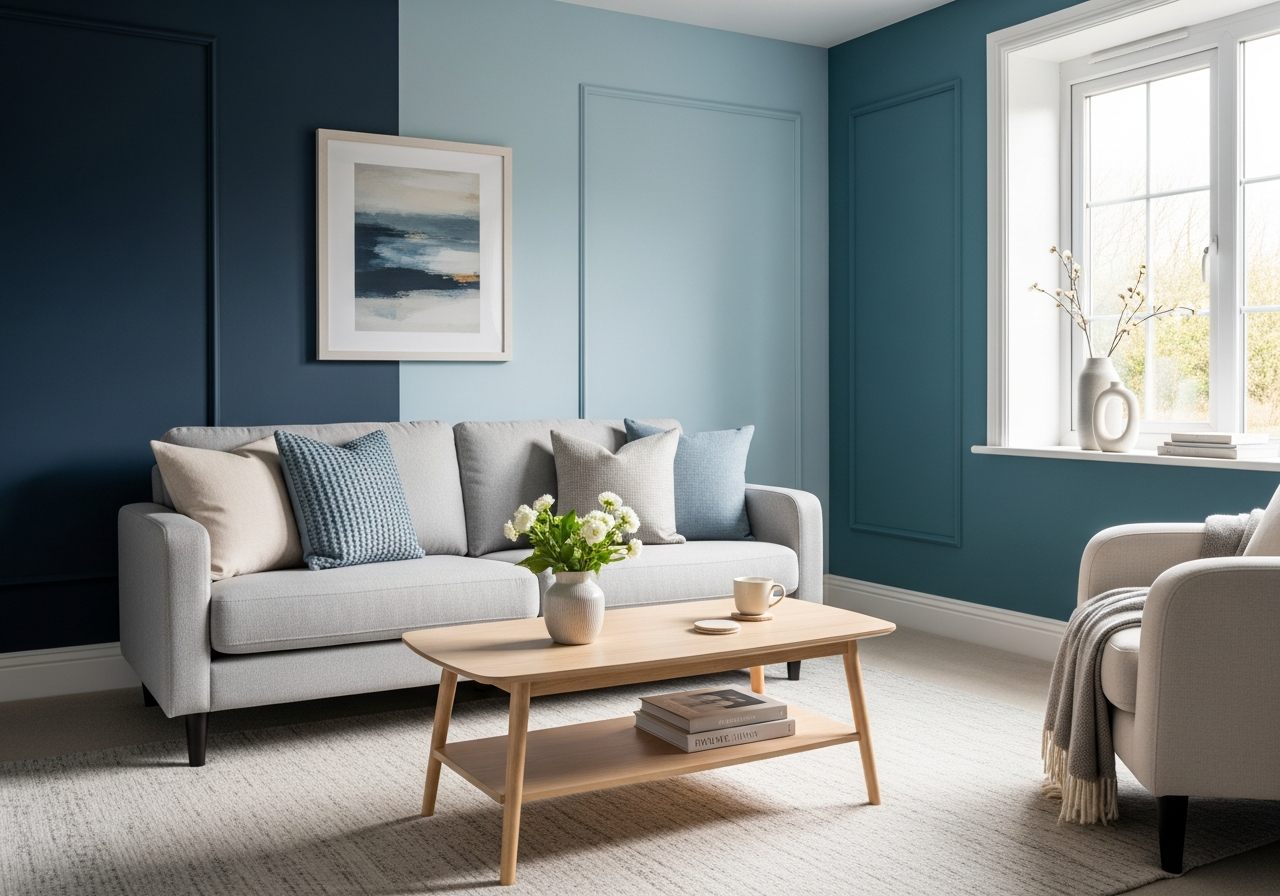

Why Blue Living Room Paint Creates the Perfect Atmosphere
Blue paint has a unique power to shape the mood of a living room in ways many other colors can’t. Whether it’s a deep navy wrapping the walls in calm confidence or bright turquoise adding a burst of energy, blue sets a distinct tone the moment you step inside. It combines beauty and versatility, offering a range of feelings from peaceful to invigorating.
One reason blue works so well is its strong psychological impact. It symbolizes calm, trust, and stability, making it a natural choice for a family gathering spot. Blue tends to soothe nerves and ease tension, which helps create a relaxing atmosphere where people feel comfortable and safe.
The Science Behind Blue’s Calming Effect
Science shows that blue light waves have a calming effect on the human brain. Blue reduces heart rate and lowers blood pressure, leading to a sense of peace. That’s why many people associate blue with serenity and quiet moments. The color’s connection to the sky and water also encourages feelings of spaciousness and freedom. This is why spaces painted blue often feel less chaotic and more orderly.
The way blue influences mood depends on its shade. Lighter blues bring softness and openness, like a clear sky. Darker blues add depth and a grounded feeling, which can make a living room feel more secure and intimate. Either way, blue creates an environment that invites relaxation while remaining mentally refreshing.
How Blue Paint Makes Small Rooms Feel Bigger
Blue has a clever way of visually expanding space, which can be a big help in cozy living rooms. Light blues mimic the vastness of the sky or ocean, making walls seem to stretch farther than they actually do. This optical illusion tricks the eye into seeing more room, which can make a small or cramped area feel refreshing and open.
Even in darker shades, blue works better than many colors at avoiding a cramped feel. Unlike heavy reds or yellows, blue cools down a room’s look, making it appear airier and less cluttered. When paired with good lighting, blue walls can create a sense of calm that’s not overwhelmed by the room’s size.
Besides perceived size, blue often affects how warm or cool a room feels. Cool blues bring a fresh, crisp vibe that counters any stuffy or overly warm impressions. This temperature association affects comfort levels, especially in warmer climates where a blue living room feels inviting and breathable.
Blue is truly a color that balances mood, space, and style. Its effects reach beyond aesthetics to touch how a room feels on a psychological and sensory level. Because of this, blue paints are a top choice for living rooms designed as both personal retreats and social hubs.
Popular Blue Living Room Paint Ideas by Shade Family
Choosing the right blue can change a living room completely. There’s a blue for every style and mood, ranging from dramatic and intense to soft and serene. Picking the perfect shade often comes down to how you want your living room to feel and look throughout the day.
Dark Blues: Navy, Midnight, and Sapphire
Dark blues like navy, midnight, and sapphire add drama and elegance to any room. These shades feel grounded and timeless, perfect for creating a rich backdrop. They work well in rooms where you want a cozy, intimate atmosphere—especially larger living spaces.
Dark blue walls pair beautifully with white trim or warm wood tones to balance the depth with light. These colors also highlight metallic accents like gold or brass, adding a touch of sophistication. Because dark blues absorb more light, these shades suit rooms with plenty of natural or artificial light to prevent feeling too heavy.
Light Blues: Sky, Powder, and Baby Blue
Light blues bring brightness and freshness to a living room. Shades like sky blue, powder blue, and baby blue create an airy, welcoming vibe. These colors are ideal for traditional or coastal-inspired spaces that want to feel gentle and warm.
Light blues reflect light well, making rooms feel open and cheerful. They serve as excellent neutrals paired with white, cream, or pastel-colored decor. Light blue walls invite softness and are calming without being dull or cold.
Blue-Greens: Teal, Turquoise, and Aqua
Blue-greens such as teal, turquoise, and aqua add energy and modern flair. These shades are vibrant and lively, blending the calming effect of blue with the nature-inspired freshness of green. They’re great for creative, contemporary living rooms that want a splash of personality.
These colors can brighten darker corners and complement bold patterns or eclectic decor. They work well with natural textures like rattan or jute, and blend seamlessly with white or gray furniture. Blue-green shades energize the space while keeping it balanced and inviting.
Muted Blues: Dusty Blue and Blue-Gray
Muted blues encompass dusty blue and blue-gray tones that edge toward neutral territory. These shades bring elegance without overwhelming the senses. They fit well in sophisticated, minimalist, or industrial-era rooms that call for subtle color with depth.
Muted blues add texture and complexity, making walls interesting but restrained. They pair especially well with other neutrals like beige, taupe, or charcoal, supporting a relaxed, timeless look. These tones work beautifully to soften a room while maintaining a strong design presence.
Sample Paint Testing Methods
Testing paint samples is essential to find the right blue paint for your living room. It’s best to try samples on large poster boards and place them in different spots around the room. This helps you see how the color changes with varying light throughout the day.
Try observing each sample in the morning, midday, and evening under natural and artificial light. Pay attention to how the color interacts with your furniture and flooring. Testing also prevents surprises after the entire room is painted.
Additionally, applying a large swatch on the wall itself can help visualize the overall impact before committing. Taking photos of the samples on your phone under different lighting can also aid in comparing options over time.
How Natural and Artificial Light Changes Your Blue Paint
The blue you pick in the store rarely looks the same once it’s on your wall. This happens because light changes the way color appears, sometimes dramatically. Understanding how natural and artificial light affect blue paint can save a lot of guesswork and ensure your living room looks just right.
Natural Light: North, South, East, and West Facing Rooms
Natural light varies depending on which direction your room faces. Rooms with northern exposure get cooler, softer light throughout the day. This makes blue paint look calmer and sometimes deeper, highlighting cooler undertones. Darker blues may feel slightly colder in northern rooms but still look rich and soothing.
South-facing rooms enjoy the strongest, warmest light, especially in the afternoon. Blue paint in these spaces can look warmer and brighter. Lighter blues will pop vividly, while darker shades may glow with a hint of purple or green, depending on the exact hue.
East-facing rooms get bright, crisp morning light. Morning sunlight can make blue walls appear fresh and bright, especially lighter blues and blue-greens. Over the day, the sunlight softens, which allows the blue to move from lively to calming.
West-facing rooms receive the warm tones of late afternoon and evening sun. Blues on west-facing walls often have a warmer, golden tint in the evening light. This warmth can soften cooler blues, making them feel cozier as the sun sets.
Artificial Light: Warm, Cool, and LED Options
Artificial lighting also plays a critical role in how your blue paint looks. Warm bulbs—such as incandescent or warm LEDs—cast a yellow-orange light. These lights can soften and warm up blue walls, sometimes muting cooler shades or bringing out hidden green or gray undertones.
Cool or daylight bulbs emit a whiter, bluer light. This enhances the crispness of blues but can make darker blues feel colder or more intense. Cool light works well in rooms with little natural daylight or in spaces that want a sharp, modern look.
LED lighting offers both warm and cool options, giving flexibility for customizing the mood. Positioning your artificial lights is also key—overhead lighting, lamps, and task lighting all influence how your blue walls read.
Because light shifts throughout the day and with seasons, it’s wise to observe your chosen paint under all light conditions. This awareness allows you to make adjustments to furniture placement, lighting choices, or paint shades to perfect your living room atmosphere.
Conclusion
Blue living room paint ideas bring calm, style, and versatility to your home. By choosing the right shade of blue and understanding how light influences color, you can create a space that feels welcoming and balanced.
Start by considering the mood you want and the natural lighting in your room. Test samples on your walls during different times to see how the color shifts. Finally, think about pairing blue walls with complementary decor and lighting to enhance the atmosphere. With these steps, your blue living room can become a refreshing retreat that fits your style and comfort perfectly.