
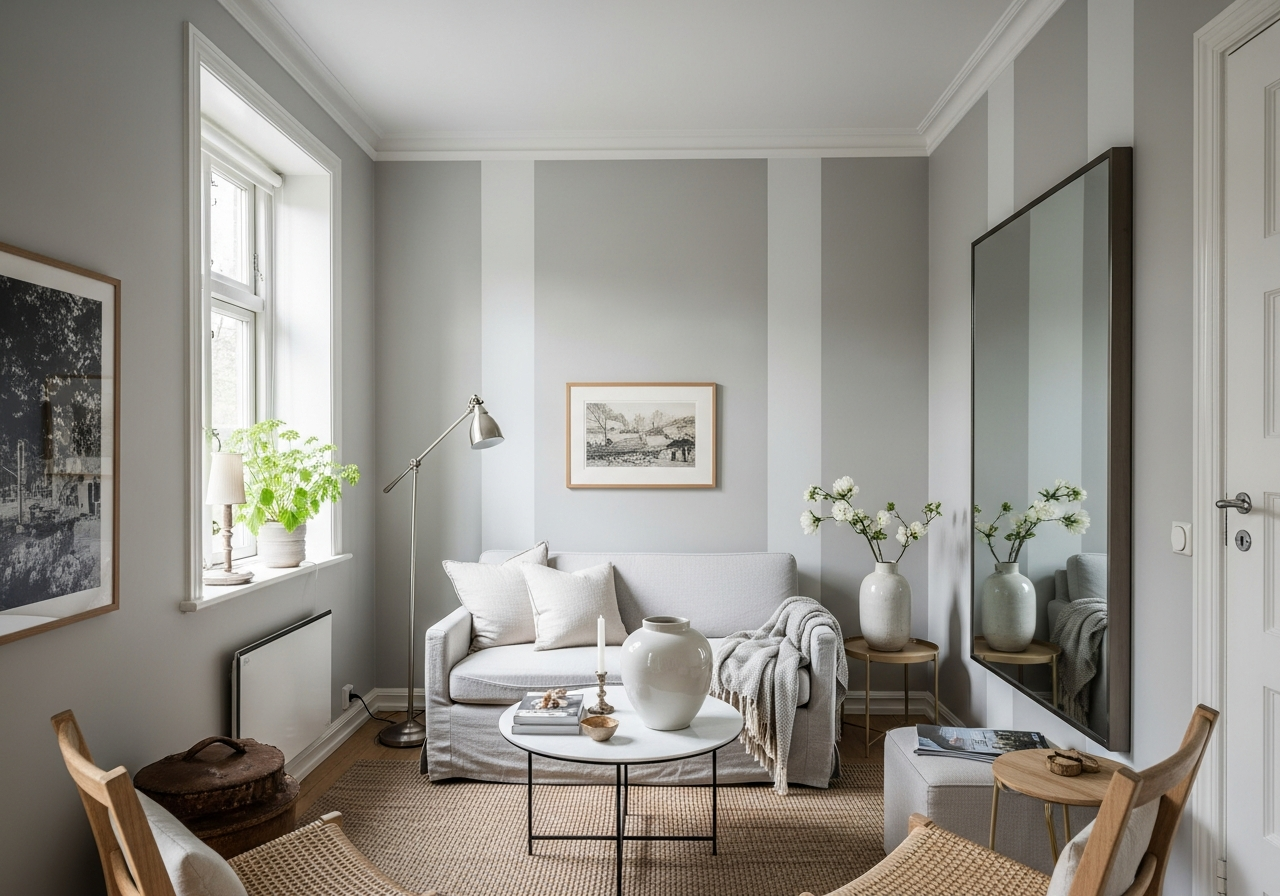

1. Why Paint Choices Matter More in Small Living Rooms
The right paint color can make your compact living room feel twice as big—or accidentally shrink it to closet-size. Choosing paint thoughtfully is key to shaping how you and visitors experience your space. In smaller rooms, colors and finishes don’t just decorate; they define the room’s size and mood.
The Science Behind Color and Space Perception
Colors influence how we perceive space because of the way light interacts with surfaces and our brains interpret these signals. Light colors, like soft whites and pale pastels, bounce more light around the room. This bounce creates an illusion of openness and airiness. Dark shades tend to absorb light, which can make walls feel closer and the room seem smaller. Some colors, especially blues and greens, can appear to recede visually, pushing the walls outward, while warmer tones like reds and oranges may seem to come forward, reducing spatial perception.
Understanding this science helps you select hues that either enlarge or properly define your small living room. Consider too that the surrounding colors affect perception; contrast between walls and ceilings or trim can influence whether the room feels boxed in or free-flowing.
Paint Finish Effects on Room Dimensions
The finish of your paint matters as much as the color itself. Glossy or semi-gloss finishes reflect much more light, brightening corners and surfaces, which visually expands the room’s dimensions. Matte or eggshell finishes absorb light, creating softness. While matte finishes hide imperfections, they may also make walls feel flatter and corners less distinct, sometimes shrinking the impression of space.
For small living rooms, a balance is essential. Using satin or eggshell for walls provides subtle light reflection without glare, keeping the space feeling cozy yet open. High gloss finishes work well on architectural details or trims to highlight and draw the eye along boundaries, enriching the sense of depth and flow. Paint finish can also affect how furniture looks against the walls; shiny surfaces reflect furniture shapes, which can avoid the boxy feeling smaller rooms sometimes suffer from.
Overall, the combination of color and finish greatly impacts how spacious and welcoming a tiny living room can feel. Thoughtful pairings guide furniture placement and movement, improving the overall balance and function of the room.
2. Top Paint Colors That Make Small Living Rooms Look Bigger
These specific shades trick the eye into seeing more square footage than actually exists. Choosing the right color can brighten, open up, or smartly shape a small living room, making it appear larger than it really is.
Light and Airy Neutrals
Whites and off-whites remain the most trusted for expanding small spaces. Pure white can sometimes feel stark, so off-whites with slight warmth or cool undertones often work better to soften the effect while maximizing light reflection. Shades like Benjamin Moore’s “Simply White” (OC-117) or Sherwin-Williams’ “Alabaster” (SW 7008) provide crisp, clean walls that bounce daylight beautifully. Soft beige or warm gray tones like “Revere Pewter” from Benjamin Moore blend neutrality with warmth, enhancing spaciousness without feeling cold.
Strategic Use of Dark Colors
While light colors dominate small-room painting advice, dark hues can work surprisingly well when used with care. Deep colors like navy blues or charcoal grays create contrast and depth by pushing walls visually backward. When applied on a single wall or lower half of the room with a lighter color above, these shades add dimension and protect the feeling of openness. Farrow & Ball’s “Hague Blue” or Sherwin-Williams’ “Iron Ore” are popular choices that can make ceilings look higher and corners less boxy.
Accent Wall Options
Accent walls add personality without shrinking the space if chosen wisely. A vibrant but muted tone on one wall—think sage green or dusty rose—pulls interest and breaks monotony. Avoid overly bright or neon shades that overpower small rooms. For even more impact, geometric patterns or vertical stripes painted softly can elongate walls and raise the ceiling visually.
Colors to avoid include intense reds, oranges, and yellows in large amounts, as they tend to make spaces feel enclosed. Extremely dark browns or blacks should be limited to accent walls or details, because otherwise, they can quickly close in the room.
3. Choosing Paint for Small Living Room Based on Natural Light
That perfect gray you picked might look purple in north-facing light—here’s why matching your paint to the room’s exposure matters. Lighting changes how paint colors appear, so understanding your space’s natural and artificial light is crucial for getting the right hue.
Natural Light Direction Guide
North-facing rooms tend to have cool, indirect light that can mute or dull warm colors, sometimes giving them a blue or purple cast. For these rooms, warmer whites like “Navajo White” or soft creams help counteract the cool tones and maintain brightness without feeling cold.
South-facing rooms receive abundant bright light throughout the day, which intensifies colors but can also highlight imperfections. Cooler shades like light grays, soft blues, or pale greens work well here, as direct sunlight tempers their vibrancy and creates a calming atmosphere.
East-facing rooms get warm morning light that gradually softens. Colors with warm undertones, such as peach or light taupe, benefit from this gentle illumination. West-facing rooms catch warm evening light which can deepen colors late in the day, so choosing shades that won’t become overwhelming—soft neutrals or muted blues—makes most sense.
Try painting a small section or board with your intended color and observe it over several hours to see how natural light alters its appearance throughout the day.
How Artificial Lighting Changes Paint Colors
Artificial light sources vary in color temperature and intensity, influencing wall color perception in a small living room. Warm bulbs with yellow tones bring out the warmth in paint, while cool white bulbs can enhance blues and greens. Incandescent lights often deepen tones, while LEDs may either brighten or dull colors depending on their specifications.
Layering ambient, task, and accent lighting allows more control over how colors read. When testing paint colors, check samples both during daylight and after dark with your room’s lighting to ensure you like the tone at all times.
4. Paint Techniques to Maximize Small Living Room Space
Using certain painting styles can trick the eye and create the feeling of more space. Techniques that play with line, texture, and layering add architectural interest and push the boundaries of a small room.
Vertical Stripes for Height
Painting vertical stripes can elongate walls and give the illusion of higher ceilings. Use two shades of the same color, either in glossy and matte finishes or slightly different tones, for subtle but effective height enhancement. Narrow stripes usually work best in tight spaces, preventing overwhelming the room.
Ombre and Gradient Walls
Shades that fade from dark at the bottom to light at the top aid in making walls feel taller and less confined. This smooth gradient softly draws the eye upward and away from floor-level boundaries, offering an airy feel.
Feature Walls with Texture
Adding texture—through sponging, rag-rolling, or stencil patterns—on one wall can create depth without shrinking the room. Soft patterns in lighter tones introduce interest while remaining open and bright.
Ceiling Treatments
Painting the ceiling a lighter color than the walls can make it appear higher and roomier. Some homeowners choose a soft blue or pearl white ceiling to simulate an open sky, which psychologically opens the space above. Avoid dark or bold ceiling colors in small rooms.
Two-Tone Walls
Painting the lower half of the wall a darker shade with a lighter color above can ground the furniture and expand the perceived height of the room. The division breaks up the wall surface, making the space feel more dynamic rather than boxed in.
Conclusion
Choosing the right paint for a small living room means selecting colors and techniques that create openness and depth. Light, reflective shades combined with thoughtful finishes and painting styles can make a tiny space feel much larger.
Begin by assessing your room’s lighting and testing samples at different times. Consider soft neutrals and strategic accents to brighten corners and add dimension. Finally, explore paint techniques like vertical stripes or two-tone walls to visually expand your living room’s floor plan and ceiling height for a more comfortable, welcoming feel.