
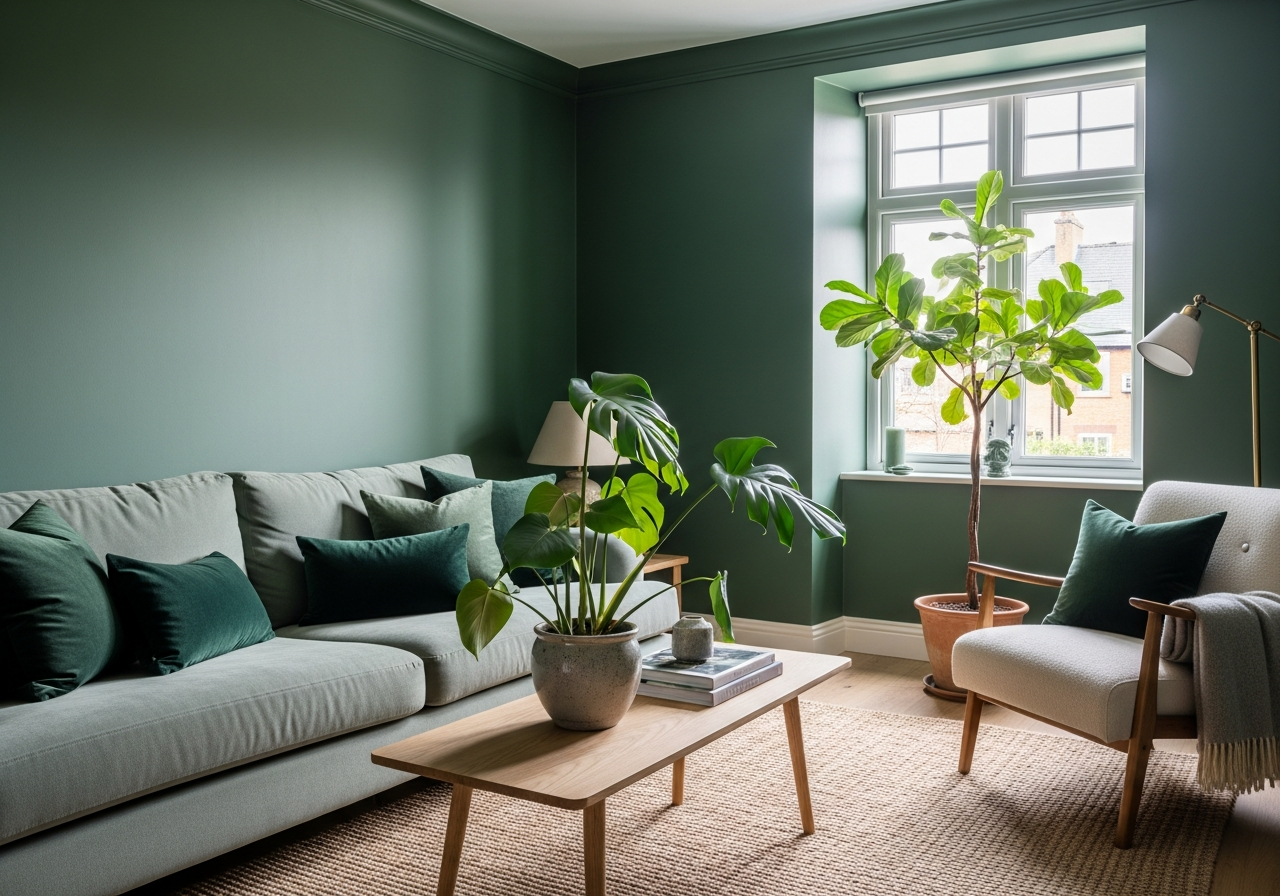

Understanding Green Paint Psychology and Living Room Impact
Green paint strikes a unique balance between energy and calm, making it an excellent choice for living rooms. This shade can invigorate the senses while also helping people feel grounded and relaxed. Since the living room serves as both a place to unwind and a spot to entertain friends or family, green creates an environment that supports both moods naturally.
Energizing vs. Calming Green Tones
Different green shades evoke different feelings. Bright, yellow-based greens tend to be energizing. They feel lively and bring a fresh, upbeat vibe. These shades work well in living rooms where a sense of vitality and activity is welcome. On the other hand, blue-based greens lean toward calm and soothing qualities. These colors induce tranquillity and make the space feel like a peaceful retreat. Selecting the right tone depends on how you want to use your living room—for lively gatherings or quiet relaxation.
Balancing these tones is important. For example, a soft moss green offers calmness with just a hint of energy, creating an inviting yet serene atmosphere. The right green encourages positive moods without overwhelming the senses.
How Light Reflective Value Changes Room Perception
Besides emotional impact, green paint also influences how large or bright a room feels. Light Reflective Value (LRV) is a measure that shows how much light a color reflects. Greens with high LRV, like pale mint or seafoam, bounce more light around, making the room seem bigger and more open.
Darker greens have a lower LRV and absorb light, which can add coziness but might make a space feel smaller. This effect can be particularly useful in large living rooms that need a sense of intimacy or warmth. Conversely, using lighter greens in smaller rooms helps maximize natural light and prevent the area from feeling cramped.
Green’s ties to nature naturally improve ambiance. It brings the outdoors inside, connecting people with greenery and fresh air symbolically. This link to nature can help reduce stress and boost feelings of well-being in the living space.
Popular Green Living Room Paint Colors by Shade Family
From soft sage to bold emerald, the range of green shades available allows you to give your living room its own personality. Each family of greens offers a unique mood and style dimension. Understanding these groups makes it easier to find a green that fits the feeling you want.
Soft Greens: Sage, Moss, and Celadon
Soft green tones like sage, moss, and celadon create peaceful, soothing spaces. Sage is a muted, slightly gray-green that works well in rooms aiming for understated elegance. It is perfect if you want a gentle touch of color that blends seamlessly with natural materials like wood or linen.
Moss green introduces a deeper, earthier feel, adding richness to the living room while maintaining calmness. This shade pairs beautifully with neutral accents and plants to enhance the room’s natural vibe.
Celadon is lighter and slightly bluish, often feeling fresh and airy. This cool green opens up a space and pairs nicely with whites and soft pastels to create a light, inviting look.
Bold Greens: Emerald and Forest
In contrast, emerald and forest greens bring drama and sophistication. Emerald is a jewel tone with a vibrant, luxurious feel. It can transform the living room into a bold, stylish space that demands attention. Pairing emerald green with gold or brass accents amplifies this elegant mood.
Forest green is deeper and moodier, offering a grounded and timeless quality. It works well for creating cozy retreats that still feel vibrant but not overpowering. Both colors are great choices if you want your living room to make a strong design statement.
Warm Greens: Olive and Khaki
Warm greens like olive and khaki add depth and earthiness. Olive is a familiar, natural green with brown undertones. It makes your living room feel inviting and lived-in, perfect for spaces that emphasize comfort.
Khaki green has a slightly tan base, which can soften the greenness while providing warmth. These shades blend effortlessly with rustic or vintage styles and pair well with leather or textured fabrics.
Best Green Paint Brands and Specific Color Recommendations
Choosing the best green paint means knowing which brands and colors have a proven record of looking beautiful in real living rooms. A paint’s finish, undertone, and quality can all affect how the color performs over time.
Designer Favorites from Major Brands
Benjamin Moore offers some top green picks known for their richness and depth. Popular shades include “Saybrook Sage” (HC-114), a soft green perfect for calming spaces, and “Hunter Green” (2041-10), a darker, classic forest green. Another favorite, “Pine Grove” (2144-30), sits beautifully between mid and dark green with natural undertones.
Sherwin-Williams features standout greens like “Clary Sage” (SW 6178), a subtle sage green that feels fresh but muted. “Evergreen Fog” (SW 9130) offers a sophisticated, misty green tone that blends well with both traditional and modern furnishings. Their “Ripe Olive” (SW 6209) is a warm olive shade, excellent for cozy living rooms.
Farrow & Ball is known for luxurious, painterly greens. “Vert de Terre” (No. 282) has a dusty olive appeal that adds depth without heaviness. “Green Blue” (No. 78) brings a soft, calming blue-green perfect for tranquil spaces. These paints are prized for their smooth finish and rich pigments.
For budget-friendly options, brands like Behr and Valspar provide reliable green shades that don’t sacrifice quality. Behr’s “Soft Fern” or Valspar’s “Gentle Olive” imitate higher-end tones while fitting modest budgets. These paints often come in easy-to-find retail stores and perform well in both natural and artificial lighting.
Conclusion
Green living room paint ideas range from soft, calming shades to bold, dramatic tones, each transforming your space in unique ways. Choosing the right green involves understanding how different hues affect mood and light, as well as selecting trusted paint brands and colors that perform well.
Start by identifying the atmosphere you want in your living room, then explore green palettes that fit that feeling. Test paint samples on your walls at different times of day to observe light interaction. From there, coordinate furnishings and accessories to highlight your chosen green for a harmonious look.