
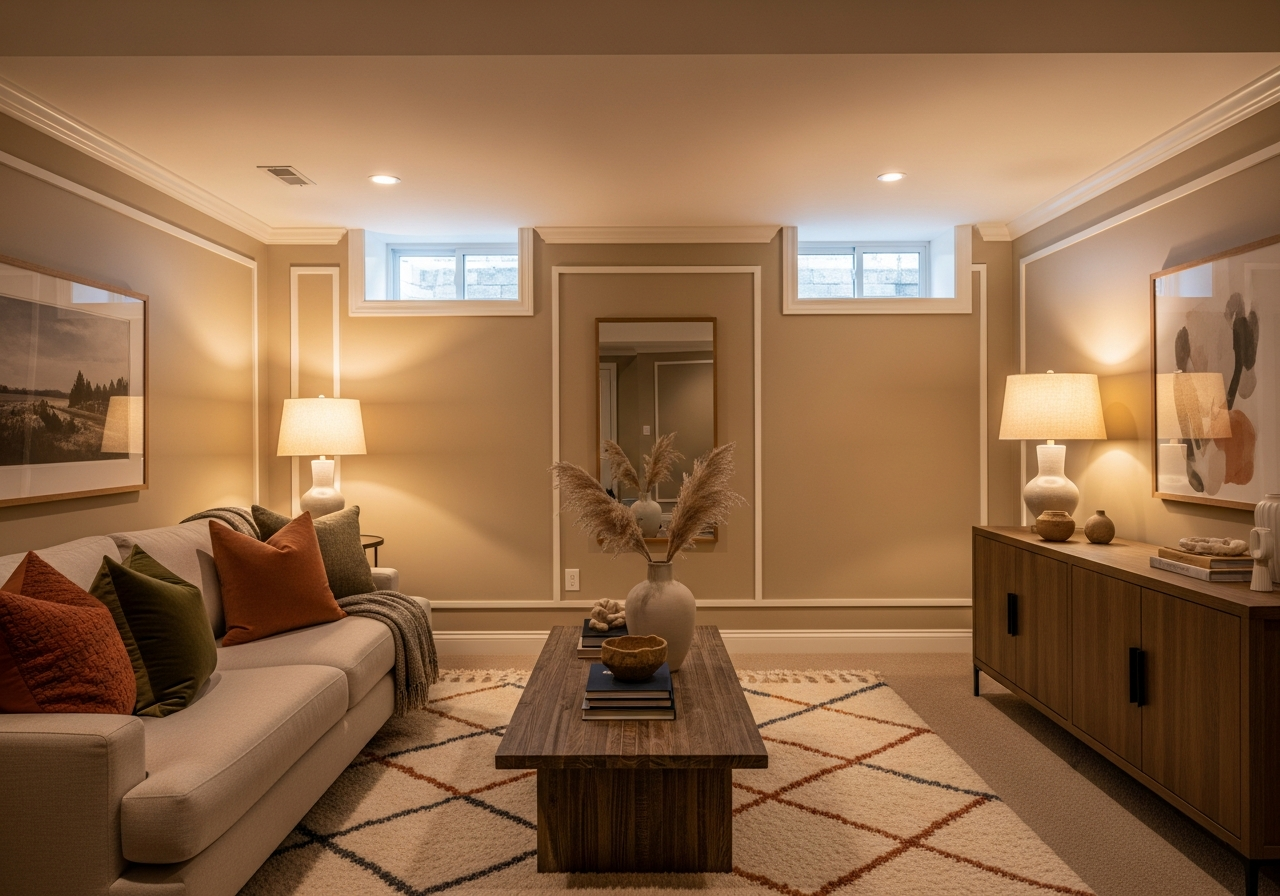

Why Basement Family Room Paint Colors Need Special Consideration
Your basement family room faces unique challenges that make choosing the right paint color more complicated than in other rooms. Unlike upstairs spaces, basements usually have little or no natural light, which changes the way colors look on the walls. Picking the wrong color can make the room feel dark, gloomy, and uninviting. But the right paint color can brighten the space, make it feel cozy, and enhance the overall atmosphere.
Limited natural light in basements means colors often appear darker and less vibrant than they do in well-lit rooms. This effect is why simple reusing colors from other parts of the house might not work here. Instead, colors with warm undertones tend to brighten the space subtly without creating glare or harsh contrasts. Warm colors mimic sunlight and reflect the artificial lighting better, making the room feel friendlier.
Artificial lighting also plays a key role in how paint colors show up on basement walls. The quality, type, and placement of lights can change a paint’s appearance. You need to consider what lighting you have and plan around it when choosing colors. Additionally, the function of the basement family room influences your color choice. A space used for relaxation or family time might benefit from soothing, comfortable colors, whereas an area meant for play or hobbies could use brighter, more energizing shades.
The Science Behind Color in Low-Light Spaces
Colors in low-light environments tend to absorb more light than reflect it. In basements, this means colors often look deeper and sometimes muddier than expected. Blues and greens can appear colder and darker, while cool grays may turn more shadowy. This happens because the lack of natural light removes many color cues our eyes rely on, making it harder for the brain to interpret the hues accurately.
To counter this effect, colors with higher light reflectance values (LRV) work better as they bounce more light around the room. This improves both mood and visual clarity. Lightness isn’t the only consideration; the undertones in paint can also impact the feeling of warmth or coldness in your basement. Selecting colors that include subtle warmth helps to counterbalance the natural dimness.
Warm vs Cool Undertones in Basements
Warm undertones like soft yellows, gentle reds, and creamy beiges tend to enhance the feeling of coziness in a basement room. These tones reflect light as a soft glow, making walls feel inviting rather than cold. On the other hand, cool undertones — such as blue or green — may deepen shadows and reinforce the dim feeling, unless they are very pale or paired with warm lighting.
Warm shades don’t have to be bright or overwhelming. Muted warm hues work best because they won’t overpower the space. They can subtly improve the space’s balance by offsetting the artificial lighting’s sometimes harsh tone. It’s also important to test samples at different times of the day and with your lights on to judge how undertones behave in the basement environment. Choosing between warm and cool undertones boils down to how you want the space to feel: warm and cozy or calm and cool.
Top 12 Basement Family Room Paint Colors That Actually Work
Transforming a dark basement into a welcoming family room starts with choosing the right paint. Certain colors have been proven to work well in low-light spaces, brightening the room without making it look washed out or dull. These colors are carefully selected for their light reflectance and suitability with basement lighting.
The best paint colors for basements can be divided into three groups: light shades with high light reflectance values (LRV), mid-tone warm neutrals, and darker colors that add depth without overwhelming the space. Here are some excellent choices you can trust.
Best Light Colors (LRV 60+)
Light colors with a high LRV bounce the most light around the room, making basements feel larger and airier. Off-whites and soft whites provide a classic, clean look without being too stark.
- White Dove: A soft white with a slight warmth. It’s bright but gentle, perfect for ceilings and walls to open up the space.
- Ballet White: Offers a touch of pink undertones, giving warmth while keeping the look fresh and bright.
- Muslin: An off-white that blends warmth and neutrality well, ideal for rooms with little natural light.
Perfect Mid-Tone Options (LRV 30-60)
Mid-tone colors with warm neutral undertones create a cozy feel without darkening a basement too much. These colors give personality and can anchor furniture and decor beautifully.
- Baby Fawn: A light beige with subtle warmth that helps create a calm, inviting atmosphere.
- Collingwood: A soft gray with warm undertones to add sophistication without feeling cold.
- Heron Plume: A warm, creamy neutral that keeps the basement feeling soft and easy on the eyes.
- Sea Salt: A soft, muted green with a blue tint that balances cool and warm for a fresh yet cozy look.
Bold Dark Choices (LRV Under 30)
Dark paint colors can work wonders in basements when chosen carefully. They create drama and depth, making the room feel grounded and snug, especially when offset with adequate lighting and complementary furnishings.
- Iron Ore: A deep charcoal with subtle warmth that can transform a basement into a stylish, moody retreat.
Understanding LRV helps you pick the perfect shade. Higher LRV means more light reflected; lower means the color absorbs light, making the room feel darker. This is critical in basements where lighting is limited, so choosing the right balance based on your lighting and room size is essential.
How to Choose Paint Based on Your Basement’s Lighting
The amount and type of light in your basement directly affect how paint colors perform. Lighting can make a color look warm, cold, bright, or dull. Assessing your basement’s lighting conditions carefully ensures you pick paint that truly works for your space.
Start by looking at your basement’s natural light. Basements often have small windows or none at all, so understanding how much sunlight filters in, and from which direction, informs your color decisions. Natural light changes throughout the day and seasons, so consider testing samples during various times to see the shifts.
Artificial lighting becomes critical in basements. Setting up layers of lighting including ambient, task, and accent lighting helps mimic natural light and balance shadows. Use warm white bulbs (around 2700K to 3000K) to support warm hues and add comfort. Avoid cool white or daylight bulbs that could clash with warm undertones, making the space feel colder than intended.
Always test paint colors on multiple walls and under different lighting conditions. Colors can look very different under a single test swatch versus full walls with all lights on. Observe samples during the day and at night to see how they shift and find the shade that performs consistently.