
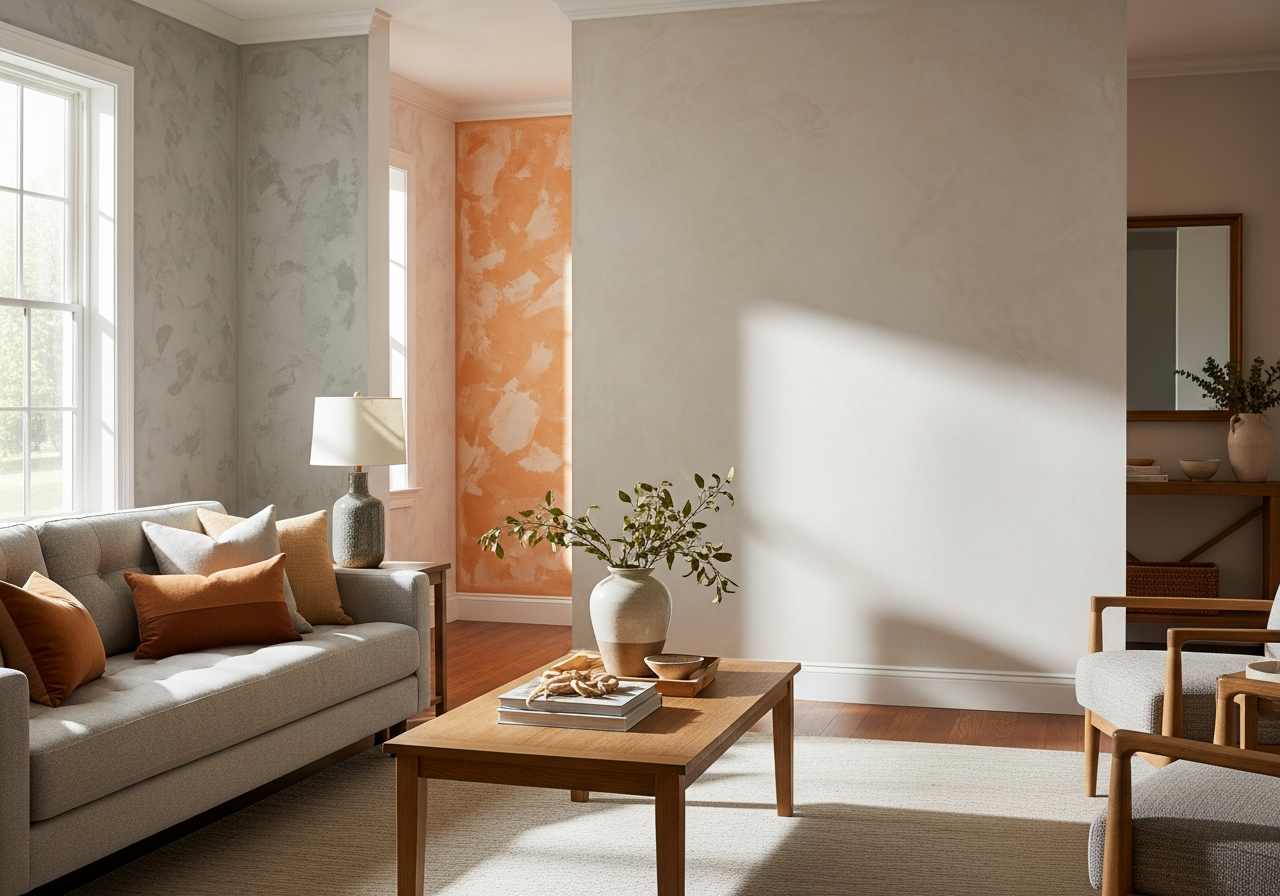

Why Living Room Texture Paint Ideas Beat Flat Walls Every Time
Texture paint does something magical to a room—it adds depth, hides imperfections, and gives your walls personality that flat paint never could. Unlike plain surfaces, textured walls create a sensory experience that draws the eye and feels inviting. This added complexity can make a living room feel warmer and more interesting without overwhelming the space.
One major advantage of texture paint over other wall treatments like wallpaper is cost. While wallpaper can be pricey and require professional installation, texture paint is often more budget-friendly. It also offers durability; it hides small dents, scratches, or unevenness better than smooth paint. This means textured walls remain looking fresh for longer, even in high-traffic living areas.
Texture also affects how a room feels. It can subtly change light reflection, adding a sense of depth that makes the room appear larger or cozier as needed. People often find textured walls more welcoming, as the extra dimension creates a feeling of comfort and craftsmanship that flat paint simply cannot offer.
The Psychology of Textured Walls
Walls with texture tap into our natural appreciation for variation and touch. Humans respond well to surfaces that have some complexity because they suggest richness and detail. Textured walls can make your living room feel more grounded, less sterile, and more personal. This effect can boost relaxation and even create a calming atmosphere simply through visual and tactile stimulation.
In contrast, flat walls are often associated with plainness or emptiness. They don’t engage the senses in the same way, making a space feel less lively. That’s why textured paint can uplift a room’s mood and create emotional warmth.
Texture Paint vs Other Wall Treatments
When comparing texture paint to wallpaper or paneling, a few things stand out. Wallpaper patterns can add visual interest but can be less forgiving if damaged. Wallpaper removal can be a hassle and expensive. Textured paint, however, wears well and is easier to touch up. It also allows more flexibility in design since you can repaint over it without removing the texture.
Paneling or wood accents add physical texture but may not always suit modern or minimalistic styles. Texture paint fits any decor style, from rustic to sleek, making it a versatile choice. It’s also less risky for renters or those who like to change styles often.
Overall, texture paint offers a cost-effective, durable, and beautiful way to enhance living rooms, beating flat walls every time.
Popular Texture Paint Techniques for Living Rooms
From subtle sand swirls to bold Mediterranean stucco, the right texture technique can match any style you’re going for. Each method creates a distinct look and feel, allowing homeowners to personalize their living space with texture that complements the room’s mood and design.
One of the most popular methods is the knockdown texture. It starts by spraying or rolling a thick joint compound onto the wall, then flattening peaks with a trowel to produce a mottled effect. Variations in how much the compound is flattened can create either more defined texture or softness.
The orange peel finish offers subtler dimension. It looks much like the skin of an orange—small, uniform bumps that add a gentle tactile feel without overwhelming the wall. This finish is great for modern or minimalist rooms where a bit of texture is desired but not a bold statement.
Skip trowel texture brings rustic charm through random sweeping motions with a drywall knife, leaving irregular peaks and valleys. This style is perfect for homes wanting a warm, handcrafted look reminiscent of old-world craftsmanship.
For a more upscale and smooth finish, Venetian plaster is applied in multiple thin layers, sanded and polished to create a marble-like sheen. It adds luxury and sophistication, ideal for living rooms with classic or contemporary elegance.
Sand swirl patterns combine subtle grit with artistic swooshes or circles, giving an earthy yet striking finish. This technique can tie in well with natural or coastal decor themes.
Modern Minimalist Textures
Minimalist interiors often benefit from textures like orange peel or very fine knockdown. These add just enough detail to prevent walls from feeling flat or sterile but maintain the sleek, clean lines essential to the style. Fine textures also help soften light reflections and hide minor flaws, allowing furniture and other accents to shine.
Classic Traditional Patterns
Traditional decor pairs beautifully with textures like skip trowel or Venetian plaster. Both add warmth and character, fitting perfectly with wood furniture, rich fabrics, and classic color palettes. These textures offer a timeless quality that complements crown molding, wainscoting, and other architectural details.
Bold Statement Textures
For those who want their walls to be a real focal point, heavier knockdown or sand swirl patterns work well. These techniques bring strong tactile and visual impact, turning walls into art. Bold textures are best balanced with simpler furniture to avoid overwhelming the room and maintain harmony.
How to Choose the Right Texture for Your Living Room
Picking the perfect texture isn’t just about what looks good—it’s also about matching your lifestyle, lighting, and existing decor. Texture that clashes with furniture or the size of the room can feel off, no matter how trendy it looks.
Start by thinking about the size of your room. Small rooms often benefit from fine textures like orange peel that add interest without making walls feel too busy or closed in. Larger rooms can handle bolder textures like skip trowel or Venetian plaster, which fill the space and add character.
Consider the style of your furniture next. Sleek, modern sofas and glass accents pair well with smooth or subtle textures. More traditional or rustic furniture works better with rougher or more layered textures that complement wood and fabric details.
Matching Texture to Room Size
In small living rooms, heavy textures can weigh down the space visually and make it feel cramped. Opting for lightly textured walls adds depth without distraction. Conversely, large spaces can support textured walls that create cozy pockets or visual breaks, making them feel more inviting.
Textures also affect how light moves across the room. Bright rooms benefit from soft textures that diffuse light, while dimmer rooms gain dimension and brightness from reflective finishes like Venetian plaster.
Working with Your Existing Furniture
Textures should work with your furniture style and finishes. For example, glossy Venetian plaster pairs well with polished metals and leather furniture, creating a sleek and luxurious atmosphere. Rustic skip trowel textures complement wooden or vintage pieces, reinforcing warmth.
Neutral or subtle textures work well if your furniture has bold patterns or colors, keeping the room balanced. On the other hand, strong textured walls can support simple furniture, so the room’s focus stays on the walls.
Maintenance needs also play a role. Textures that are rough or raised collect dust more easily and can be harder to clean, important to think of if you have kids or pets. Smooth or lightly textured walls tend to be more forgiving in busy homes.
Conclusion
Living room texture paint ideas add visual depth, hide flaws, and enhance a room’s mood better than flat walls. They offer a range of styles to match any decor, from subtle finishes to bold patterns.
To choose the right texture, consider your room’s size, natural light, furniture style, and lifestyle needs. This ensures the texture feels like a natural part of your living space.
Start by testing small sections or samples to see how the texture plays with your light and furniture. Keep maintenance in mind, especially if you have children or pets. With the right texture, your living room can become a welcoming, beautiful place that stands out while staying practical.