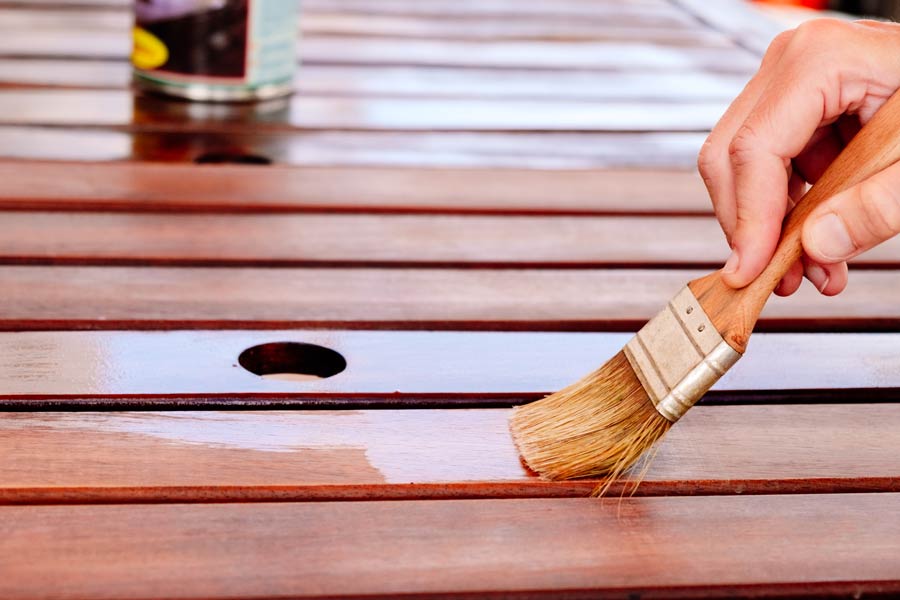
Deck Painting in Valencia, CA
A deck takes more concentrated abuse than almost any other surface on a residential property. It bears foot traffic, furniture weight, direct sun on horizontal surfaces, standing water from irrigation and rain, and the expansion and contraction of wood or composite material cycling through temperature changes year-round. In Valencia, where UV radiation is intense, Santa Ana conditions drive rapid moisture loss in wood fiber, and pool and irrigation systems introduce chronic surface moisture, deck surfaces deteriorate faster than most homeowners plan for. VanArm handles deck painting and staining in Valencia as a surface protection project from the ground up—correct diagnosis, substrate-appropriate materials, and application that holds up under the conditions a deck actually lives in rather than failing at the first seasonal transition.
Why Deck Surfaces in Valencia Fail Faster Than Homeowners Expect
Horizontal surfaces are inherently more demanding than vertical ones. Water that hits a vertical wall runs off. Water that hits a horizontal deck surface pools, sits, and works its way into every crack, check, and end grain exposure available. UV radiation on a horizontal deck surface is more intense than on a vertical wall because the surface faces the sun directly rather than at an angle. Wood fiber on a deck in Valencia can cycle through wet and dry conditions multiple times in a single week during certain seasons—expanding with moisture and contracting as it dries, stressing the coating above it with every cycle.
The result is that deck coatings in Valencia fail faster than coatings on vertical surfaces, require more rigorous preparation to perform adequately, and need to be specified with horizontal surface exposure in mind rather than treated as a standard exterior paint application on a flat plane. A coating system that works well on a fence or exterior wall will underperform on a deck surface exposed to the same conditions—because the exposure geometry and traffic demands are fundamentally different.
Deck Surfaces We Paint and Stain in Valencia
Wood Decks
Wood decking in Valencia residential properties spans a wide range of species and conditions—redwood and cedar on older construction, pressure-treated pine on contractor-built additions, exotic hardwoods like ipe and mahogany on higher-end installations, and reclaimed or repurposed lumber on custom projects. Each species behaves differently under coating: redwood and cedar are dimensionally stable and take stain well but are naturally oily in fresh condition and require weathering or cleaning before stain penetrates correctly. Pressure-treated lumber requires adequate drying time after installation before any coating is applied—coating green pressure-treated wood causes immediate adhesion failure as the preservative treatment continues off-gassing. Dense exotic hardwoods like ipe are extremely resistant to coating penetration and require specific surface preparation and penetrating oil finishes rather than film-forming paint or stain systems. We identify wood species and condition before specifying coating approach—not after the first coat has already been applied and rejected by the substrate.
Composite and PVC Decking
Composite decking is marketed as low-maintenance, and within its design parameters it is—it doesn't rot or check the way wood does. But composite decking in Valencia's UV environment fades, stains from tannin bleed and organic deposits, and develops a chalked, tired appearance over time that homeowners want to address. Painting or staining composite decking requires specific surface preparation and a bonding primer formulated for non-porous substrates—standard exterior deck paint applied directly to composite without proper primer adhesion work fails quickly and peels in sheets. PVC decking presents similar adhesion requirements. We assess composite and PVC deck surfaces before recommending a coating approach, and we advise honestly when a surface's condition or profile makes painting a poor long-term solution versus cleaning and sealing.
Concrete and Masonry Decks
Concrete pool decks, patio slabs used as deck surfaces, and masonry deck areas are common in Valencia residential construction and require a fundamentally different coating approach than wood or composite. Concrete is alkaline, porous, and subject to hydrostatic pressure from below in certain site conditions. Deck coatings on concrete must be formulated for masonry surfaces, applied over properly profiled and primed concrete, and specified for the traffic and moisture exposure the specific surface receives. Concrete pool decks carry additional requirements—chemical resistance to pool water and treatment products, non-slip surface texture for wet foot traffic safety, and the ability to handle thermal cycling from sun-heated surface temperatures that can exceed ambient air temperature by 30 degrees or more in Valencia summer conditions.
Elevated and Second-Story Decks
Elevated decks present a moisture management challenge that ground-level decks don't: water that penetrates a ground-level deck surface drains into soil. Water that penetrates an elevated deck surface drains into the structure below it—framing, ledger boards, beam ends, and the living space or garage ceiling beneath. Coating failure on an elevated deck in Valencia is not just a surface maintenance issue—it's a structural and interior water damage risk. We assess elevated deck framing, flashing, and waterproofing details during the initial assessment, not just the surface coating condition, because the complete moisture management picture determines what the surface repair scope needs to accomplish.
Deck Stairs, Rails, and Trim
Stair treads, handrails, and trim components on a deck take different wear patterns than the main deck surface and fail at different rates. Stair treads concentrate foot traffic on a small surface area and require maximum durability and non-slip texture. Handrails take hand contact, UV exposure on all four sides, and moisture at end grain and joints. Trim and fascia at deck edges take direct water exposure at horizontal surfaces and are often the first areas to show coating failure and wood deterioration. We address stairs, rails, and trim as a complete scope item rather than as an afterthought to the main deck surface—because failure at these components leads directly to structural deterioration and safety concerns.
Paint vs. Stain vs. Sealer for Decks in Valencia
The coating system choice for a wood deck in Valencia is one of the most consequential decisions in the project—and one of the most frequently made on the basis of incomplete information. The right answer depends on the wood species, the existing coating history of the surface, the homeowner's maintenance preferences, and the visual result they want to achieve.
Deck Paint
Solid-color deck paint forms a film over the wood surface, provides maximum UV protection and color retention, and completely obscures wood grain. It's the right choice when wood has significant weathering, previous solid-color coating history, or surface variation that needs to be covered rather than highlighted. The tradeoff is that film-forming coatings on horizontal surfaces are subject to peeling as the wood moves beneath them—and when they peel, they require more involved preparation to recoat than penetrating products. High-quality 100% acrylic deck paints with flexibility additives perform significantly better on Valencia decks than standard exterior paint applied to a horizontal surface.
Solid and Semi-Transparent Deck Stain
Penetrating deck stains—both solid and semi-transparent—work by absorbing into the wood fiber rather than forming a film above it. Because they don't form a film, they don't peel the same way paint does. They fail by fading and wearing rather than by delaminating, which makes recoating preparation less demanding. Semi-transparent stains preserve wood grain visibility and are appropriate for good-condition wood that hasn't been previously coated with a solid product. Solid stains provide full color coverage with UV protection comparable to paint while maintaining the penetrating, non-peeling performance profile. For most Valencia wood decks that are being coated for the first time or recoated from a previous stain, solid or semi-transparent penetrating stain is the specification that delivers the best long-term maintenance cycle.
Clear Sealers and Water Repellents
Clear sealers and water repellents provide moisture protection with minimal color impact on natural wood. They're appropriate for dense exotic hardwoods where penetration is the limiting factor, for newer wood where preserving natural color is the priority, and for applications where the homeowner wants to maintain the weathered gray appearance of aged wood while protecting against moisture damage. Clear sealers provide the least UV protection of any coating option and require more frequent reapplication than stain or paint on surfaces with full sun exposure. In Valencia's UV environment, a clear sealer on an exposed deck surface without UV inhibitors is a short-term solution regardless of product quality.
Our Deck Painting Process in Valencia
Deck surfaces demand more preparation per square foot than almost any other residential painting application. The combination of horizontal exposure, traffic wear, and the wood movement that characterizes outdoor surfaces in Valencia's climate means that coating performance is almost entirely determined by what happens before the first coat goes down.
Step 1 — Deck Assessment and Condition Evaluation
Every deck painting project begins with a complete condition assessment. We evaluate wood species and moisture content, assess structural condition including framing, ledger connections, and post bases where accessible, identify rot, checking, and end grain exposure requiring repair, assess existing coating condition and type to confirm compatibility with proposed new coating, check elevated deck flashing and drainage details for moisture management failures, inspect railings, stairs, and trim for structural integrity and coating condition, and identify any areas where coating alone is not the correct solution and repair or replacement is required. An accurate deck painting quote cannot be produced without this assessment—scope surprises mid-project on deck work are almost always the result of skipping it.
Step 2 — Cleaning and Surface Preparation
Deck preparation is the most labor-intensive part of the project and the most directly correlated with how long the finished coating performs. Our deck preparation process includes:
- Pressure washing the full deck surface, stairs, rails, and trim to remove dirt, mildew, algae, and surface contamination
- Applying deck cleaner or brightener to restore wood pH and open wood fiber for better stain penetration where applicable
- Scraping and sanding failing or peeling paint and stain to remove loose coating and feather edges
- Sanding the full deck surface where coating history, weathering, or mill glaze requires it for adhesion
- Treating mildew and fungal growth with appropriate antifungal solution before coating is applied
- Allowing complete drying after cleaning—wood moisture content must be within the coating manufacturer's specified range before application begins
- Checking moisture content with a moisture meter before applying any coating, particularly on Valencia decks that have been irrigated recently or are shaded and slow to dry
Coating applied to a deck surface that is still above acceptable moisture content fails at the adhesion level—blistering, peeling, and separating as the trapped moisture works its way out through the coating above it. We do not apply coating to wet wood on a schedule. We apply it when the wood is ready.
Step 3 — Repairs
Surface and structural repairs identified during the assessment are completed before any coating is applied. Wood repairs include replacing damaged, cracked, or rotted boards and deck components, treating and consolidating early-stage rot where structural integrity is maintained, securing loose boards and fasteners, replacing corroded fasteners that are failing to hold deck components, and treating end grain exposure at board ends, post bases, and cut sections with penetrating end grain sealer. Structural repairs—ledger flashing, post base replacement, stair stringer repair—are scoped and addressed before surface coating work begins. Painting over a structurally compromised deck surface is not a repair. It is a delay.
Step 4 — Priming
Primer requirements for deck applications depend on the substrate, the existing coating history, and the topcoat being applied. Bare or newly sanded wood benefits from a penetrating wood primer or stain-blocking primer at repaired areas and end grain exposure points. Previously painted surfaces being recoated with paint require a bonding primer where adhesion is questionable. Composite and PVC surfaces require a bonding primer formulated for non-porous substrates regardless of topcoat selection. Concrete and masonry deck surfaces require a concrete primer or etching treatment to provide the surface profile needed for coating adhesion. We prime based on what the surface and the coating system require—not based on whether priming adds time to the schedule.
Step 5 — Coating Application
Deck coating application on horizontal surfaces requires attention to conditions that vertical surface painting does not. Ambient temperature and direct sun on the deck surface affect working time—deck surfaces in Valencia direct sun can be 20 to 30 degrees hotter than air temperature, which dramatically shortens the open time of water-based coatings and can cause lap marks and uneven penetration if application pace and section size aren't adjusted accordingly. We apply deck coating in sections that allow wet-edge maintenance, at times of day appropriate to the specific product and surface temperature, with the number of coats specified by the coating manufacturer for the surface type and exposure condition. Two thin coats applied correctly outperform one heavy coat applied fast in both adhesion and longevity on deck surfaces.
Step 6 — Final Inspection and Cure Guidance
Once coating is applied, we inspect coverage on all deck surfaces under natural light, address any thin areas or missed sections at board edges and end grain, and clean the site. We provide cure guidance to homeowners—most deck coatings require 24 to 48 hours before light foot traffic and five to seven days before furniture is replaced and full use resumes. In Valencia's climate, direct sun on a freshly coated deck accelerates surface dry time while the coating beneath is still curing—placing furniture on a surface that feels dry to the touch but hasn't fully cured produces permanent impressions and marks in the coating that require spot repair or full recoating to correct.
Deck Restoration vs. Deck Replacement in Valencia
Not every deck in Valencia that looks bad is a painting problem. Wood that has deteriorated past surface checking into structural rot, boards that are soft underfoot, post bases rusted through, and ledger connections that have been compromised by moisture intrusion are structural issues that painting will not address. A freshly painted deck on failing structure is a liability, not an improvement. We assess structural condition honestly during the initial walkthrough and advise on whether painting, partial repair and painting, or full replacement is the correct scope for the specific deck's condition. We do not paint over structures that aren't safe, and we do not tell homeowners a deck needs replacement when painting and repair will legitimately extend its service life by a decade or more.
Common Deck Painting Problems We Correct in Valencia
Deck coating failures follow predictable patterns in Valencia's climate. Problems we regularly correct include:
- Paint peeling in sheets from deck surfaces coated over existing failing paint without adequate preparation or compatibility assessment
- Stain failing to penetrate and sitting on the surface from application over mill-glazed, recently pressure-washed, or still-wet wood
- Blistering and bubbling from coating applied to wood above acceptable moisture content or in direct hot sun that accelerated surface drying before adhesion was established
- Lap marks and uneven color from coating applied in sections too large for the working time available at deck surface temperatures
- Early rot developing under coating from application over mildew-affected wood without antifungal treatment
- Coating failure at board ends and end grain from inadequate end grain sealing before topcoat application
- Composite deck coating peeling in sheets from application without bonding primer formulated for non-porous substrates
Every one of these failures traces to a preparation or specification decision made before the coating was applied. Correcting them requires removing the failed coating to a sound substrate, addressing the root cause, and rebuilding the coating system correctly with the right materials, right preparation, and right application conditions.
How Often Should Valencia Decks Be Repainted or Restained?
Deck coating longevity in Valencia depends on coating type, preparation quality, wood species, and exposure conditions:
- Solid deck paint on well-prepared wood with full sun exposure: three to five years before recoating is needed
- Solid penetrating stain on well-prepared wood: three to five years with easier recoating preparation than paint
- Semi-transparent stain on good-condition wood: two to three years in Valencia's UV environment before fading requires reapplication
- Clear sealer or water repellent: one to two years on exposed horizontal surfaces—more frequent than most homeowners expect
- Concrete pool decks with quality elastomeric coating: five to seven years under normal pool and foot traffic conditions
Decks with pool exposure, full western or southern sun, heavy irrigation contact, or significant shade that keeps wood damp will trend toward the shorter end of these ranges. Annual inspection for checking, peeling, and fading catches problems at the maintenance stage rather than the restoration stage—and maintenance-stage deck recoating costs a fraction of restoration-stage deck recoating that involves extensive prep and repair.
Deck Painting and Outdoor Living Value in Valencia
In Valencia's year-round outdoor living climate, a deck is not a seasonal amenity—it's a primary living space that buyers and appraisers treat as functional square footage. A deck in poor condition—gray, peeling, with visible wood deterioration and unsafe rails—reduces the perceived value of the entire property and raises immediate concerns about deferred maintenance. A professionally painted and well-maintained deck extends that living space visually and functionally, signals property care, and directly supports the outdoor lifestyle that Valencia homes are purchased for. For homeowners preparing to sell, deck restoration is one of the highest-visibility pre-sale improvements available. For long-term owners, it's the maintenance investment that keeps a primary outdoor space usable and structurally sound for the long term.
Get a Deck Painting Estimate in Valencia
VanArm provides free deck painting and staining estimates for homeowners throughout Valencia and the greater Los Angeles area. We assess deck surface condition, wood species, existing coating history, structural condition, and exposure factors before recommending a coating system and providing a written scope. No generic estimates, no coating applied over surfaces that aren't properly prepared, no advice driven by what's fastest rather than what's correct for the specific deck.